
One of the most dramatic moments in the Polish mission’s history was the death of three officers in a plane crash, on November 1955, in South Korea.
The Neutral Nations Supervisory Commission
Based on the ceasefire agreement signed in Panmunjom on July 27, 1953, both Korean states couldn’t introduce any new types of weaponry other than the ones who were already present there at the time of the signing. They were only allowed to replace old equipment or their parts with new ones of the same type or one to one. That was also the case when it came to military personnel rotation, here it was also down to the rule of one to one.
In order to oversee the aforementioned rotation of people and military equipment, a Neutral Nations Supervisory Commission was set up, to which communist China and North Korea nominated Poland and Czechoslovakia, while the United Nations Command nominated Sweden and Switzerland.
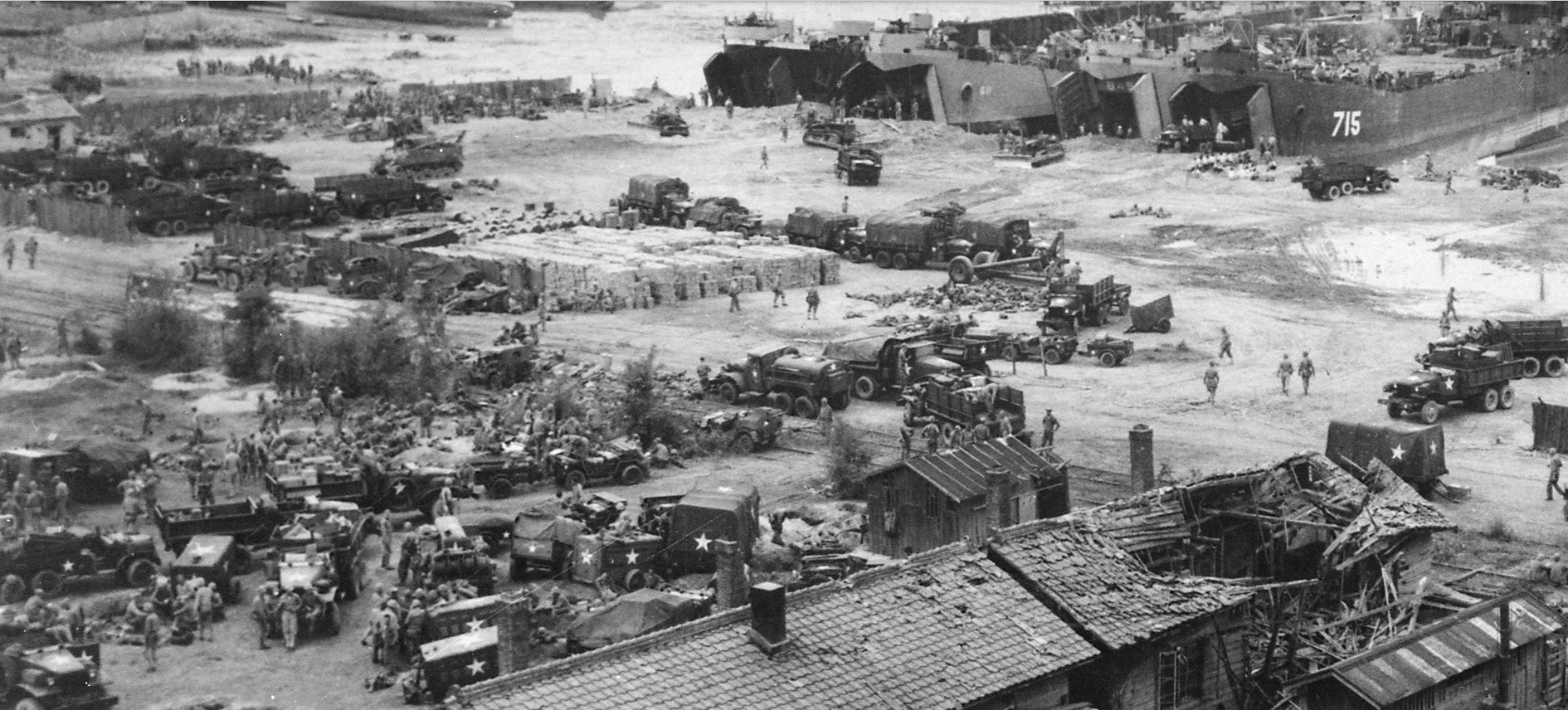
The replacing of the military personnel could also be applied to the armies supporting both Koreas in the war meaning to the Chinese in the north and United Nations Command (UNC) in the south, but first and foremost the Americans. It was to be done mainly through the ten, clearly marked, so-called entry ports (naval or airports), five in the North and five in the South.
In order to oversee the aforementioned rotation of people and military equipment, a Neutral Nations Supervisory Commission was set up, to which communist China and North Korea nominated Poland and Czechoslovakia, while the United Nations Command nominated Sweden and Switzerland. NNSC was meant to oversee the rotation in the entry ports through inspection groups working there permanently. Moreover, at the request of any of the ceasefire sides, the Committee could send mobile inspection groups to any point on the Korean Peninsula in order to conduct an investigation there if there was a serious suspicion of a ceasefire violation.
Disaster near Kunsan
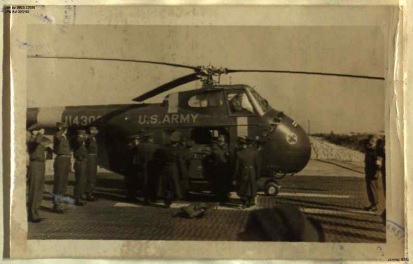
In autumn 1955, major Jakub Zygielski, captain Władysław Rudnik and lieutenant Zygfryd Zieliński from the Polish delegation worked at the South Korean entry port in the city of Kunsan. On November 7, 1955, they were meant to be transported with an American military plane from Kunsan to Seoul, and then near Panmunjom, to the NNSC headquarters.
They didn’t, however, reach their destination, because the plane piloted by 22-year-old American officer, second lieutenant Harold S. Salvage, crashed on the side of a mountain a few dozen kilometres north of Kunsan, fell into the valley and burst into flames. All four men died in the crash and fire.
They didn’t, however, reach their destination, because the plane piloted by 22-year-old American officer, second lieutenant Harold S. Salvage, crashed on the side of a mountain a few dozen kilometres north of Kunsan, fell into the valley and burst into flames. All four men died in the crash and fire.
Upon learning of the disaster, the NNSC, at the request of the Polish mission, decided to organise a six-people group tasked with establishing the cause of the crash. At the same time, the diplomatic mission of the Polish People’s Republic filed for a thorough investigation to the US embassy in Warsaw and requested a detailed report on its outcome. The Americans from the UNC allowed a team from the NNSC to go the crash site, identify the victims and collect their belongings. They underlined, though, that it was a gesture of good will and that only the Nations Command had the right to conduct the investigation.
Representatives of the NNSC reached the site of the disaster on November 9. The sight was so drastic that one of the three Polish delegates went into a paralysing shock, which made him incapable of working for the next several days. When the remains of the Polish communist officers were handed over to the Polish mission a few days later, the doctor decided that their state was so poor that they needed to be cremated before handing them over to their families.
Investigation and propaganda
Almost immediately after the crash, the Polish mission, backed by the Czechoslovaks as well as the Chinese and North Koreans, launched a political witch hunt surrounding the disaster and its causes. The Chinese and the Koreans even suggested making an accusation of sabotage, if not American, which in the context of the death of an American pilot would seem ridiculous, then at least South Korean.
In the end, the Polish mission in the NNSC focused first and foremost on precisely establishing the cause of the crash and used it as one of the main propaganda arguments in accusing the UNC of insufficient protection of the Committee members during their transportation over the territory under the UN control.
The sight was so drastic that one of the three Polish delegates went into a paralysing shock, which made him incapable of working for the next several days. When the remains of the Polish communist officers were handed over to the Polish mission a few days later, the doctor decided that their state was so poor that they needed to be cremated before handing them over to their families.
The United Nations Command published the results of its investigation already on November 23, 1955, but they were formulated in a general manner, which caused the Polish mission to demand more detailed documentation regarding the flight and the investigation. According to the Americans, weather conditions were to blame for the disaster, as the pilot tried to return but failed to do so. At the same time, they ignored the pressure from the communist Polish foreign ministry which demanded a more detailed investigation, and instead referred them back to the report from November 23, 1955.
The US authorities did not want to reveal more detailed flight data, because they knew that any errors and malfunctions would be blown out of proportion by the communist propaganda in the NNSC, the foreign office of the Polish People’s Republic and possibly the Chinese and North Koreans. The American documents prepared by the UNC make it clear that they decided not to release the information to the public about other factors, apart from the weather, that might have contributed to the crash. They therefore withheld the information that the 22-year-old pilot lacked proper experience with flights of this kind; that he ignored the unfavourable weather forecasts; that proper procedures on the go-ahead from ATC were not followed; that the full passenger register wasn’t written out and that the plane itself was not equipped with a radio navigation system.
The US authorities did not want to reveal more detailed flight data, because they knew that any errors and malfunctions would be blown out of proportion by the communist propaganda in the NNSC and perhaps the foreign office of the Polish People’s Republic.
In the middle of December 1955, the Polish diplomatic mission in the NNSC signalled that it would demand compensation from the United States for the deaths of the Polish officers. But the case dragged forever. The Chinese and Koreans believed the Americans wouldn’t pay, so from their perspective it was merely another element of the propaganda war against the UNC and the US. The Polish People’s Republic’s authorities must have thought the same, since the current head of the Polish mission to the NNSC, Albert Morski, communicated in his talks with the Chinese and Korean “friends” that the victims’ families received state pensions, and that the crux of the matter was for the US to bear “moral and political” responsibility.
The desire for using the compensation case for propaganda purposes, especially during the heated discussions between the sides of the truce on the future of the NNSC, only caused the United States to ignore all communication from the Polish People’s Republic. In the end, under completely different political circumstances, when the NNSC was a de facto symbolic body without inspection groups and possibility of Poles and Czechs entering South Korea, the United States decided to pay out 10 thousand dollars to each of the victims’ families. This took place four years after the incident, in November 1959.
Handing over of coffins with the bodies of Polish communist officers by the US military to the Polish mission to the NNSC, November 1955 (photo from the IPN archives)
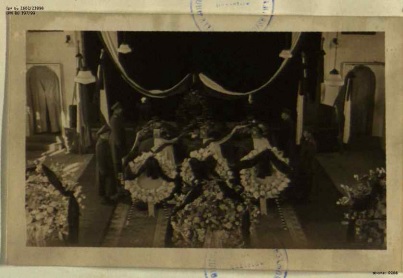
Display of coffins with the bodies of Polish communist officers in the Polish-Czechoslovak camp in Panmunjom, November 1955 (photo from the IPN archives)
Investigation and propaganda
Almost immediately after the crash, the Polish mission, backed by the Czechoslovaks as well as the Chinese and North Koreans, launched a political witch hunt surrounding the disaster and its causes. The Chinese and the Koreans even suggested making an accusation of sabotage, if not American, which in the context of the death of an American pilot would seem ridiculous, then at least South Korean.
In the end, the Polish mission in the NNSC focused first and foremost on precisely establishing the cause of the crash and used it as one of the main propaganda arguments in accusing the UNC of insufficient protection of the Committee members during their transportation over the territory under the UN control.
The sight was so drastic that one of the three Polish delegates went into a paralysing shock, which made him incapable of working for the next several days. When the remains of the Polish communist officers were handed over to the Polish mission a few days later, the doctor decided that their state was so poor that they needed to be cremated before handing them over to their families.
The United Nations Command published the results of its investigation already on November 23, 1955, but they were formulated in a general manner, which caused the Polish mission to demand more detailed documentation regarding the flight and the investigation. According to the Americans, weather conditions were to blame for the disaster, as the pilot tried to return but failed to do so. At the same time, they ignored the pressure from the communist Polish foreign ministry which demanded a more detailed investigation, and instead referred them back to the report from November 23, 1955.
The US authorities did not want to reveal more detailed flight data, because they knew that any errors and malfunctions would be blown out of proportion by the communist propaganda in the NNSC, the foreign office of the Polish People’s Republic and possibly the Chinese and North Koreans. The American documents prepared by the UNC make it clear that they decided not to release the information to the public about other factors, apart from the weather, that might have contributed to the crash. They therefore withheld the information that the 22-year-old pilot lacked proper experience with flights of this kind; that he ignored the unfavourable weather forecasts; that proper procedures on the go-ahead from ATC were not followed; that the full passenger register wasn’t written out and that the plane itself was not equipped with a radio navigation system.
The US authorities did not want to reveal more detailed flight data, because they knew that any errors and malfunctions would be blown out of proportion by the communist propaganda in the NNSC and perhaps the foreign office of the Polish People’s Republic.
In the middle of December 1955, the Polish diplomatic mission in the NNSC signalled that it would demand compensation from the United States for the deaths of the Polish officers. But the case dragged forever. The Chinese and Koreans believed the Americans wouldn’t pay, so from their perspective it was merely another element of the propaganda war against the UNC and the US. The Polish People’s Republic’s authorities must have thought the same, since the current head of the Polish mission to the NNSC, Albert Morski, communicated in his talks with the Chinese and Korean “friends” that the victims’ families received state pensions, and that the crux of the matter was for the US to bear “moral and political” responsibility.
The desire for using the compensation case for propaganda purposes, especially during the heated discussions between the sides of the truce on the future of the NNSC, only caused the United States to ignore all communication from the Polish People’s Republic. In the end, under completely different political circumstances, when the NNSC was a de facto symbolic body without inspection groups and possibility of Poles and Czechs entering South Korea, the United States decided to pay out 10 thousand dollars to each of the victims’ families. This took place four years after the incident, in November 1959.