
Apoloniusz was born on 1899 near Będzin. He attended a junior high school there, and one of his friend was Mieczysław Lepecki who later became Piłsudski’s soldier and author of many travel books. After the First World War broke out, he joined the Polish Military Organisation and then Piłsudski’s Legions in 1916. When the Polish-Bolshevik war ended, he was in the rank of a corporal. He served in the elite 1st Legions Infantry Regiment.
Where travel and politics met
As an officer of the Polish Army, he began studying geography at the University of Warsaw and then at the Jagiellonian University, where he got his doctorate in 1931. The subject of his paper were Polish settlers in Brazil. In 1922, he went there on the first of many of his scientific and intelligence expeditions. He visited the large communities of Polish immigrants who colonised the relatively wild territories of the Paraná state. He worked in education there for three years, but also helped enrich the social lives of Poles by setting up cultural and sporting associations. Moreover, he also explored the possibility of further Polish settlement in Brazil.
Upon his return to Poland, he shortly served as the adjutant of Marshal Józef Piłsudski. He engaged in the activities of the Maritime and Colonial League. He was one of the experts in charge of both the cooperation with various Polish diasporas across the globe, but also with finding potential new territories for Polish colonisation. The took the next trips in 1928 to Brazil and Peru. There, he penetrated the basin of Ucayali River, covered in thick Amazonian jungle. After returning home, he was put in charge of the Emigration Policy Department of the Ministry of Foreign Affairs. He stayed at that position until 1939.
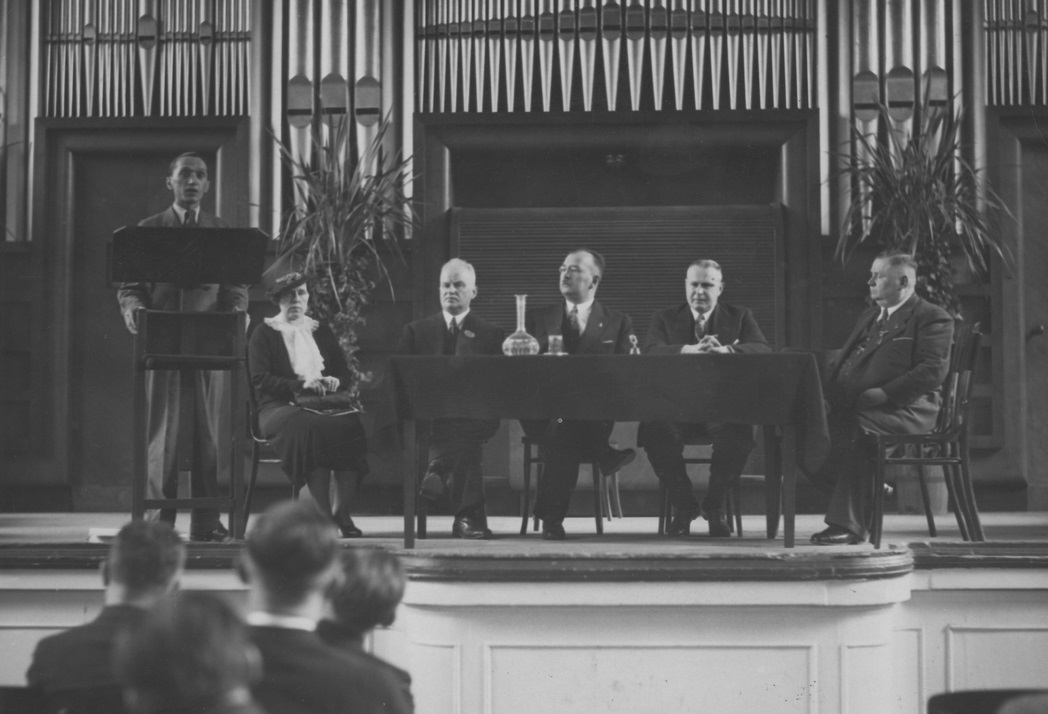
The Presidium of the Congress of Polish Choir Singers from Poland and Abroad in Warsaw. Apoloniusz Zarychta, Head of the Emigration Policy Department of the Ministry of Foreign Affairs, is speaking in the Warsaw Conservatory hall. Seated from left: Franciszek Ratke (USA); Antoni Ponikowski (former Polish Prime Minister), Professor at the Warsaw University of Technology; Leon Surzyński, President of the Greater Poland Association of Singing Clubs; Bronisław Hełczyński, Deputy President of the Wor
In the forests of South America, Apoloniusz became fascinated with the bows that the local residents of the Amazon used for hunting. Archery became his passion from that point forward. He wrote a Polish archery manual and helped popularise the sport among the youth. He was an excellent shot himself, as he was capable of hitting an apple from 25 metres away. In 1927, he founded the Polish Archery Association, and in 1931 organised the first ever World Archery Championship in Lwów.
While he worked in the foreign ministry, he also took on the issue of Polish Jews’ emigration to Palestine. He worked together with the Zionist organisation called Irgun, which was an underground resistance against the Arabs and English, who were the British mandate of the League of Nations. He co-organised training camps for Irgunists in Poland, including near Andrychów, where they gained military diversion skills. On the other hand, he was one of the organisers, although not participants, of the expeditions to Madagascar, which was then a French colony. Their goal was to establish whether the island could be populated with Jews from Poland. The expeditions did not bear fruit, in part because of the cold attitude of the French colonial administration.
War time fate
In September 1939, without a military assignment, he evacuated on his own from Warsaw to Romania. After moving to France and reporting to the government-in-exile, he was told to go to Cerizay as one of many of Piłsudski’s officers who weren’t trusted by Gen. Władysław Sikorski. The place was quickly dubbed Cereza, which was a reference to Bereza Kartuska: a prison for political opponents of the Sanation government
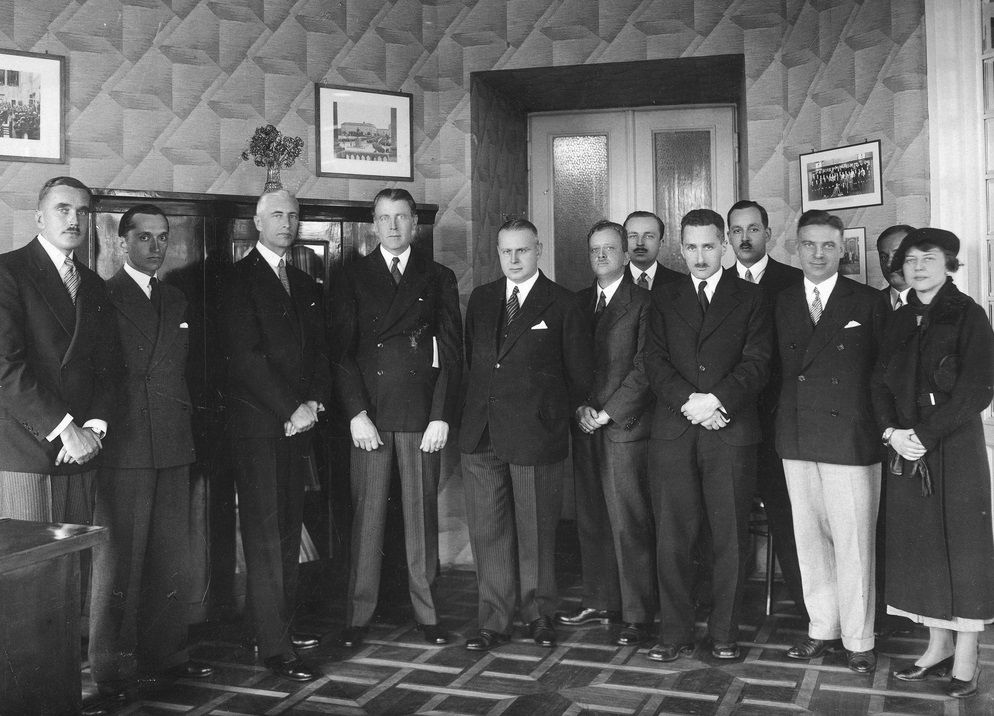
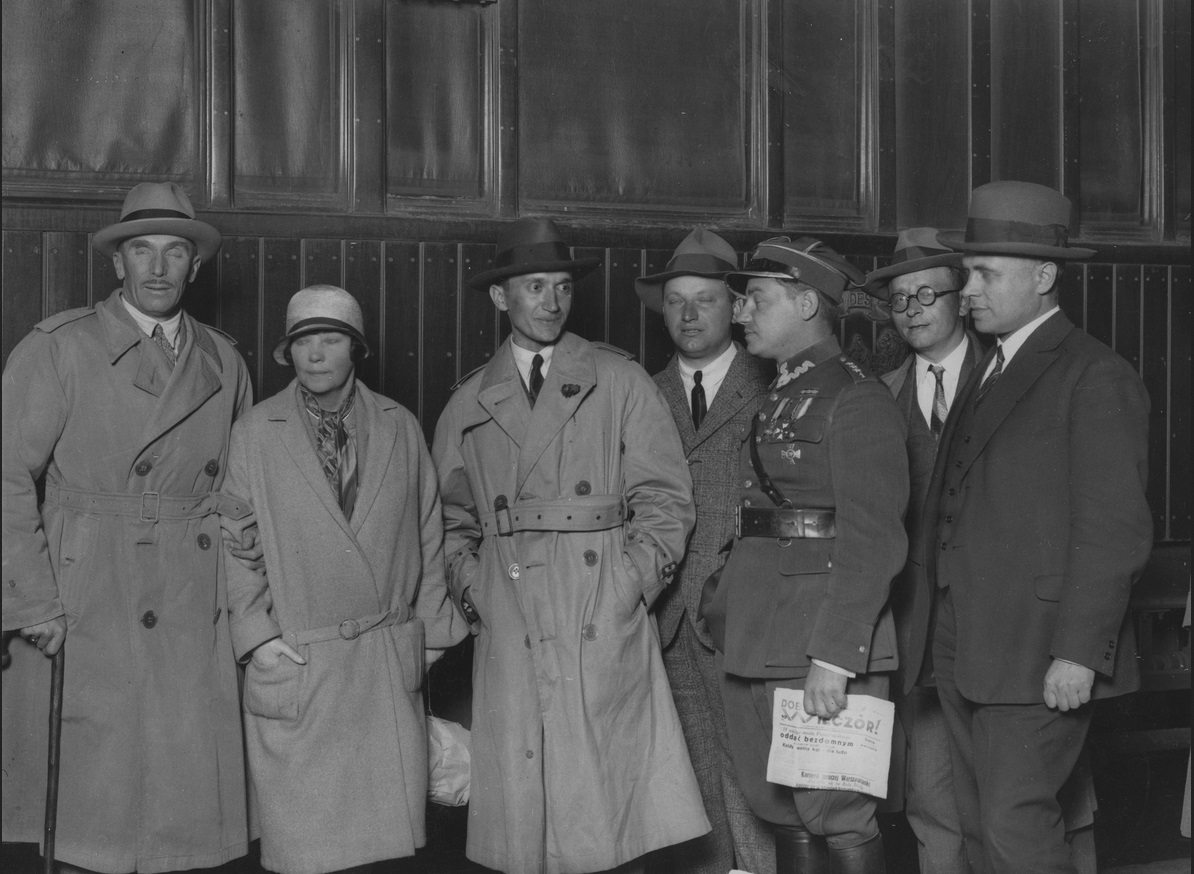
Apoloniusz Zarychta (second from left), head of the Ministry of Foreign Affairs' Emigration Policy Department, stands next to Władysław Raczkiewicz (third from left), future president of the Republic of Poland, here in his role as President of the World Association of Poles Abroad, during a meeting with U.S. Ambassador to Poland John Cudahy (fourth from left). Photo from circa 1936-1937. (Photo from the National Digital Archives)
After France surrendered, the officers got transferred to Rothesay, on the Scottish Isle of Bute. For Major Zarychta, always full of energy and ideas, the state of enforced inactivity was unbearable. He organised English language courses for fellow soldiers and sent various memoranda to the Polish government-in-exile, primarily concerning future Polish colonies. He kept a diary, which served as his confidante. It is a rather unpleasant testimony to his frustration and illness. He then gave lectures on topography at courses for the Polish Officers' Legion in Glasgow. He also prepared studies on the geography of Germany for the Allied forces. In 1945, he wrote a memorandum on Poland's geopolitical situation, commissioned by Tomasz Arciszewski, Prime Minister of the Polish government-in-exile.
Stay in Brazil and return to Poland
After the war, Apoloniusz chose neither a dangerous return to communist-ruled Poland nor to remain in emigration. He chose Brazil, which fascinated him and became like a second homeland. He had extensive contacts among the local Polish community, which allowed him to establish a stable life. His schoolmate Mieczysław Lepecki also ended up in Brazil. Zarychta amassed a considerable wealth mining gemstones. He did not start his own family, and his brother Marian was his closest companion. In 1961, they both decided to return to their homeland.
Apoloniusz Zarychta's arrival caused a minor sensation among Polish geographers. Due to his undeniable scientific achievements, he found employment at the Institute of Geography of the Polish Academy of Sciences, where he became head of the Cartography Department. He fascinated young Polish scientists who, in the gray reality of Poland under Gomułka, dreamt of scientific expeditions. One of them, Witold Michałowski, devoted a chapter of his book about Polish travelers to Zarychta.
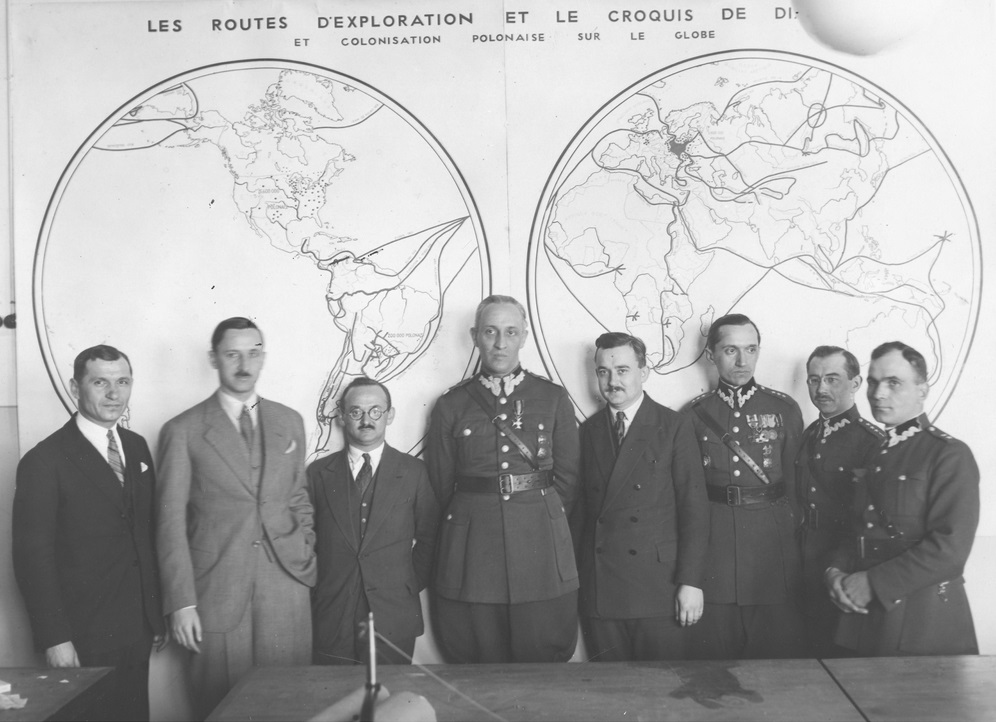
Captain Apoloniusz Zarychta (third from right) with his colleagues from the Maritime and Colonial League. In the centre stands General Gustaw Orlicz-Dreszer, President of the League. The background is a world map with marked settlements of the Polish diaspora and the journeys of Polish explorers. Photo from the interwar period. (Photo from the National Digital Archives)
Apoloniusz Zarychta's lectures and public readings were very popular, partly because he represented a different, pre-war world. He attracted only a brief interest from the communist Security Service. Zarychta's colleagues at the Institute mentioned some "sad gentlemen" attending his lectures, but aside from documents related to his re-emigration, I found no records of his case in the archives of the Institute of National Remembrance.
Apoloniusz Zarychta died in Warsaw in 1972. He left behind an academic legacy, including the first study of Poland's geopolitical situation, published in 1939, and a geographical monograph on Brazil, published in 1972. He was a geographer and traveler who loved fieldwork. He devoted his many talents to the service of his homeland and, despite the many injustices he suffered, he remained faithful to it.