
Known for his friendly attitude towards Poland and Poles, Bliss-Lane became the advocate of the Polish cause in the U.S. State Department. He based the opinions and analyses that he delivered to the U.S. administration on the knowledge and experience that he got by serving on two diplomatic missions in Warsaw.
U.S. ambassador
During each mission, Bliss-Lane witnessed events which were crucial for Poland when it came to the integrity and sovereignty of the state. For the first time, Arthur Bliss-Lane stayed in Warsaw from April 1919 to December 1920.
While serving as the second secretary of the American diplomatic facility, led by Hugh S. Gibson, he witnessed the enthusiasm of Poles who just regained their independence.
He also saw the effort of rebuilding the country from the destruction of the First World War, and from the conflict with Bolshevik Russia won by Poland.
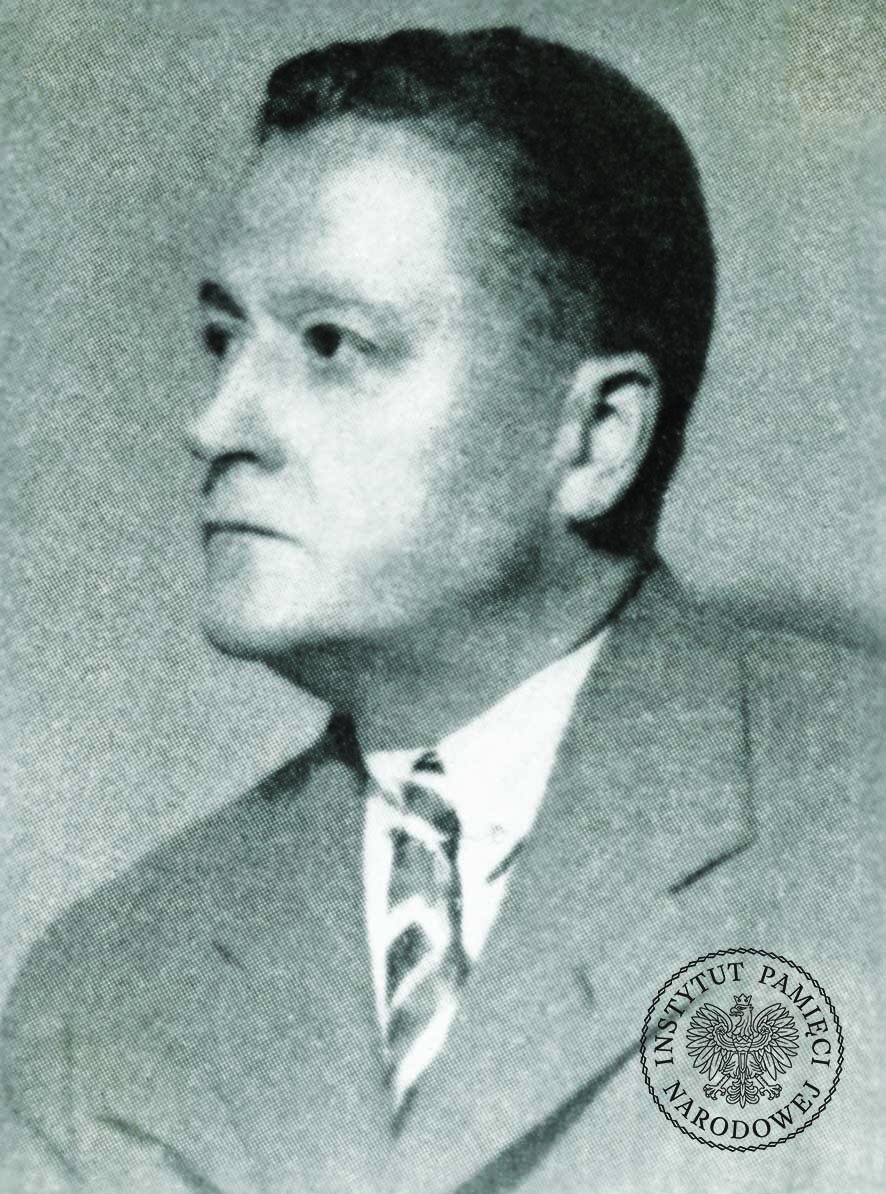
Portrait of Ambassador Arthur Bliss-Lane, attached to the investigative files concerning Bishop Czesław Kaczmarek of Kielce (photo from the archives of the Institute of National Remembrance)
I saw Poland betrayed
Drastically different circumstances surrounded the Arthur Bliss-Lane’s nomination for U.S. ambassador to the Polish government-in-exile in September 1944. As the Red Army entered the Polish lands and Poland’s situation on the international scene deteriorated, President Franklin D. Roosevelt decided to suspend the diplomatic mission.
At the end of July 1945, Arthur Bliss-Lane reached the ruins of Warsaw and led the works of the American facility there until February 19, 1947. During that time, he often informed the State Department about the gradual Sovietisation of Poland. He correctly read public moods and reported on the crimes of the NKVD and the Red Army committed in the Polish territories.
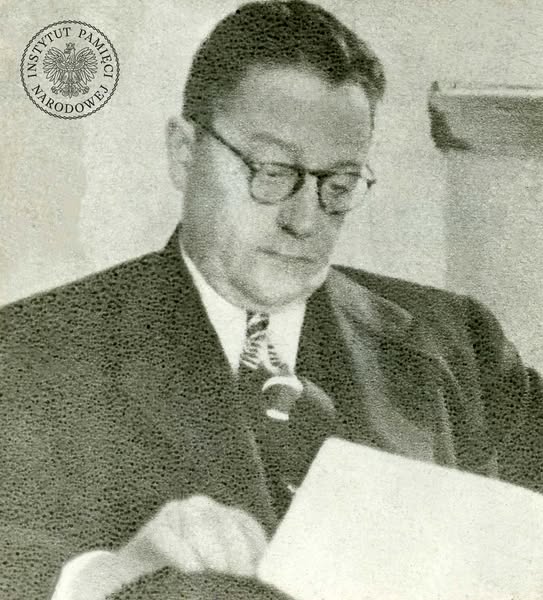
Portrait of Ambassador Arthur Bliss-Lane (photo from the archives of the Institute of National Remembrance)
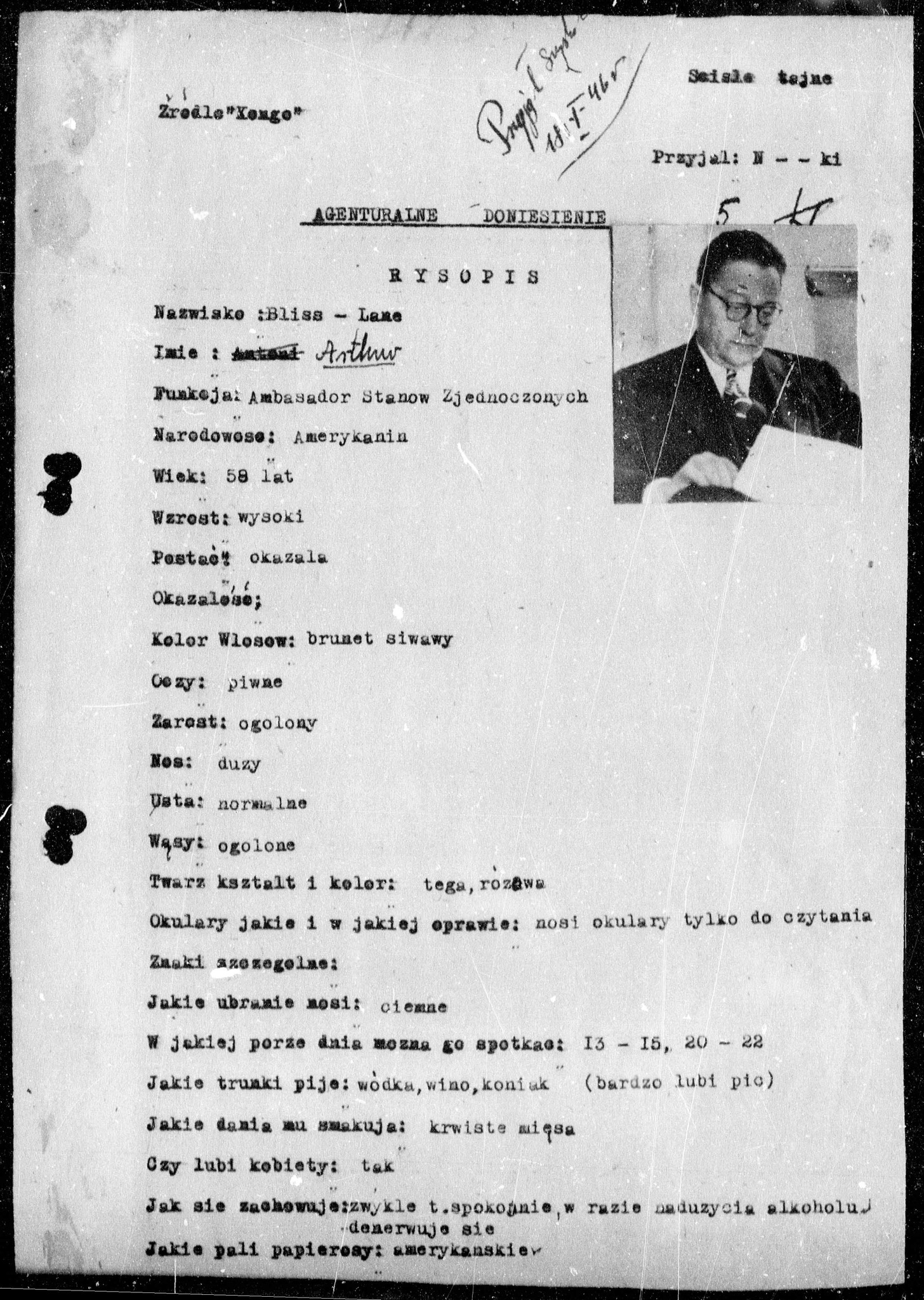
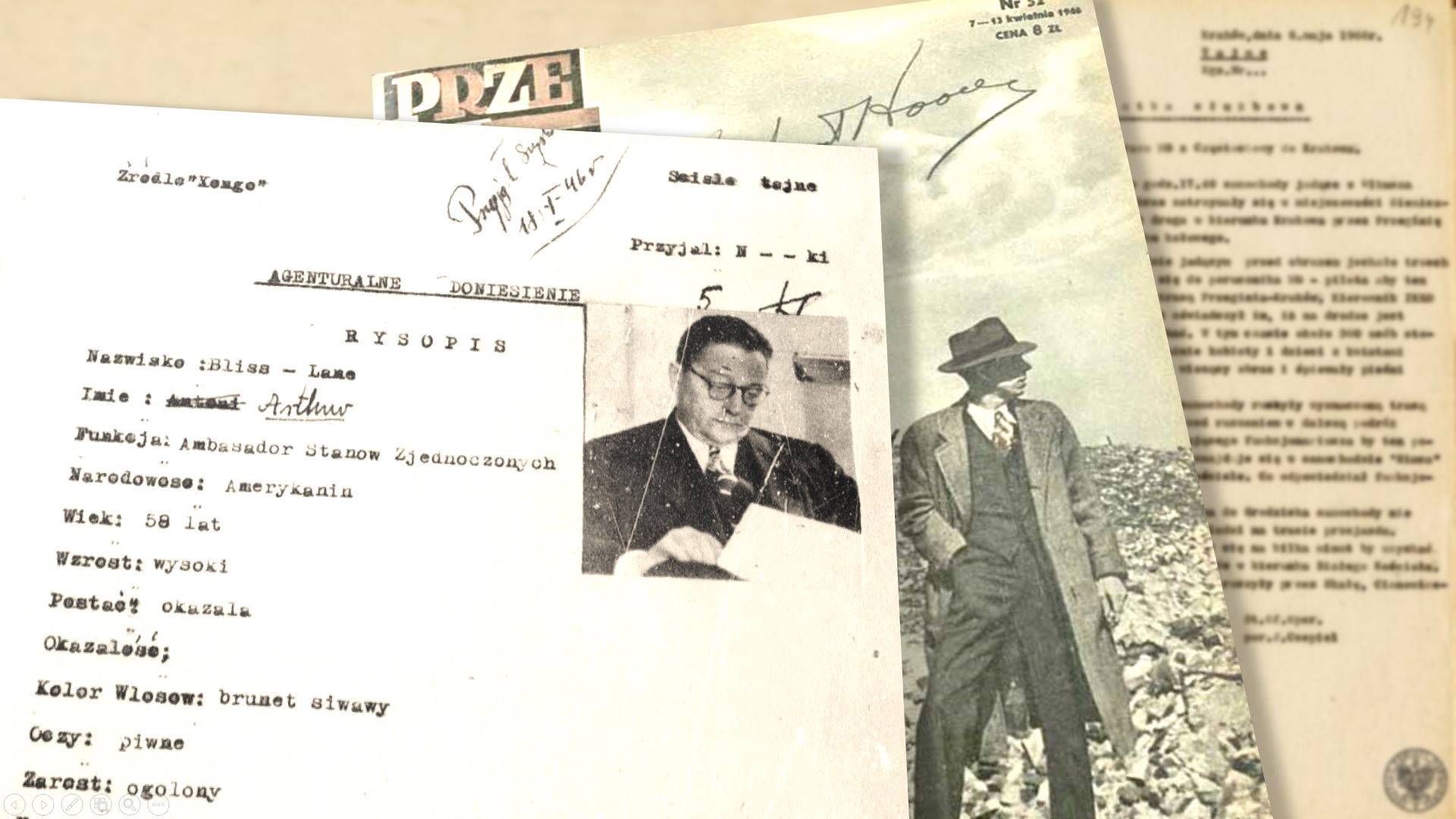
Secret Service report on Arthur Bliss-Lane. It describes his appearance as well as day-to-day activities and personal preferences, including whether he liked women, what was his favourite type of meal and what kind of alcohol he would drink (from the archives of the Institute of National Remembrance)
He tirelessly appealed to Washington to defend Poland’s independence. This activity drew the attention of the communist Security Service.
After the rigged parliamentary elections, Arthur Bliss-Lane resigned from his post. The diplomat argued that to continue serving as the U.S. ambassador would mean giving legitimacy to the actions of the Communists in Poland. Upon his return to the United States, Bliss-Lane left the diplomatic service and turned to writing mostly about Poland’s fate.
The things he saw between 1945-1947 left a strong impression on the former diplomat. After ending his mission to Warsaw, he wrote the book I saw Poland betrayed: An American Ambassador reports to the American People (1948), which was translated into Polish after 1984 and published by the underground publishing house Krąg, under the title Widziałem Polskę Zdradzoną.
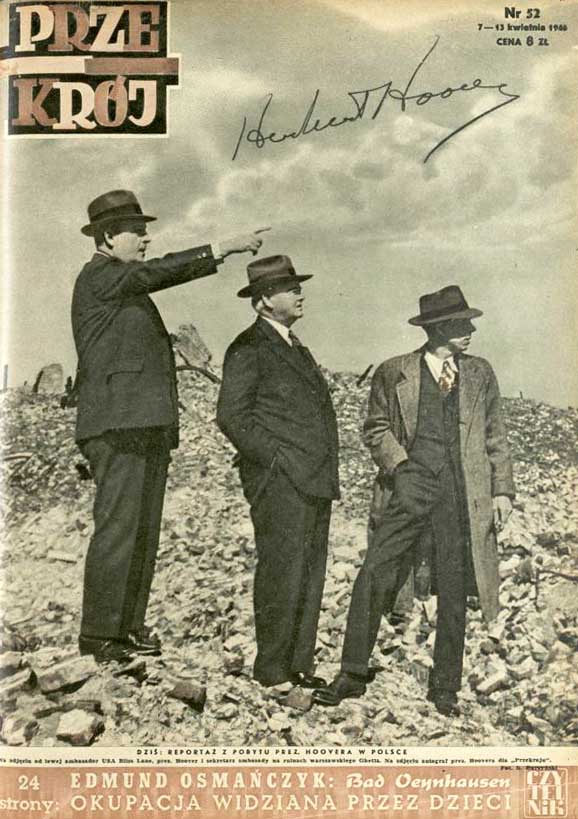
Cover of Przekrój magazine, April 1946. Arthur Bliss-Lane (first from the left) and Herbert Hoover (second from the left) in the ruins of the Warsaw Ghetto (photo: public domain)
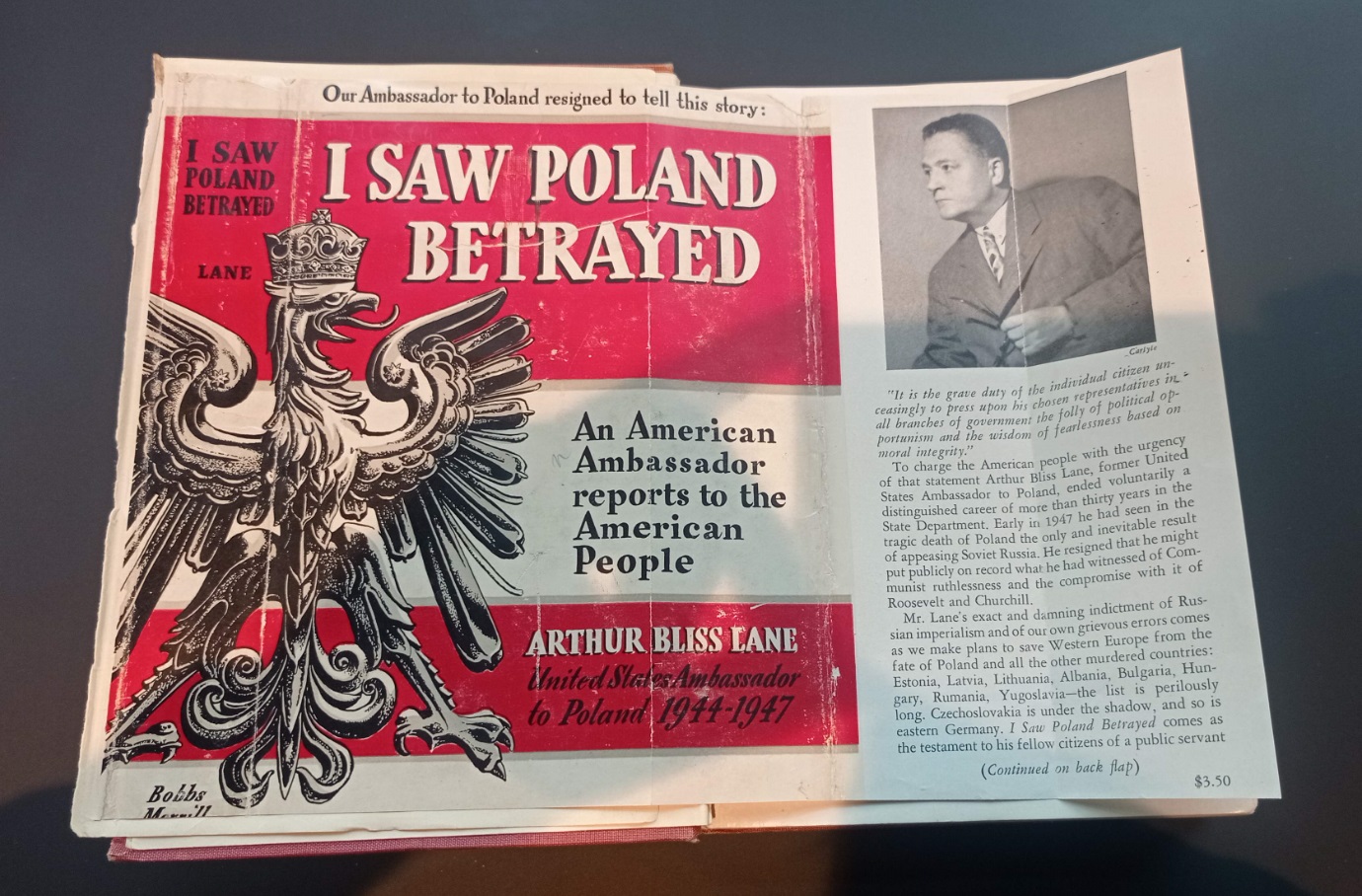
Cover of Arthur Bliss-Lane's book I saw Poland betrayed: An American Ambassador reports to the American People (1948)
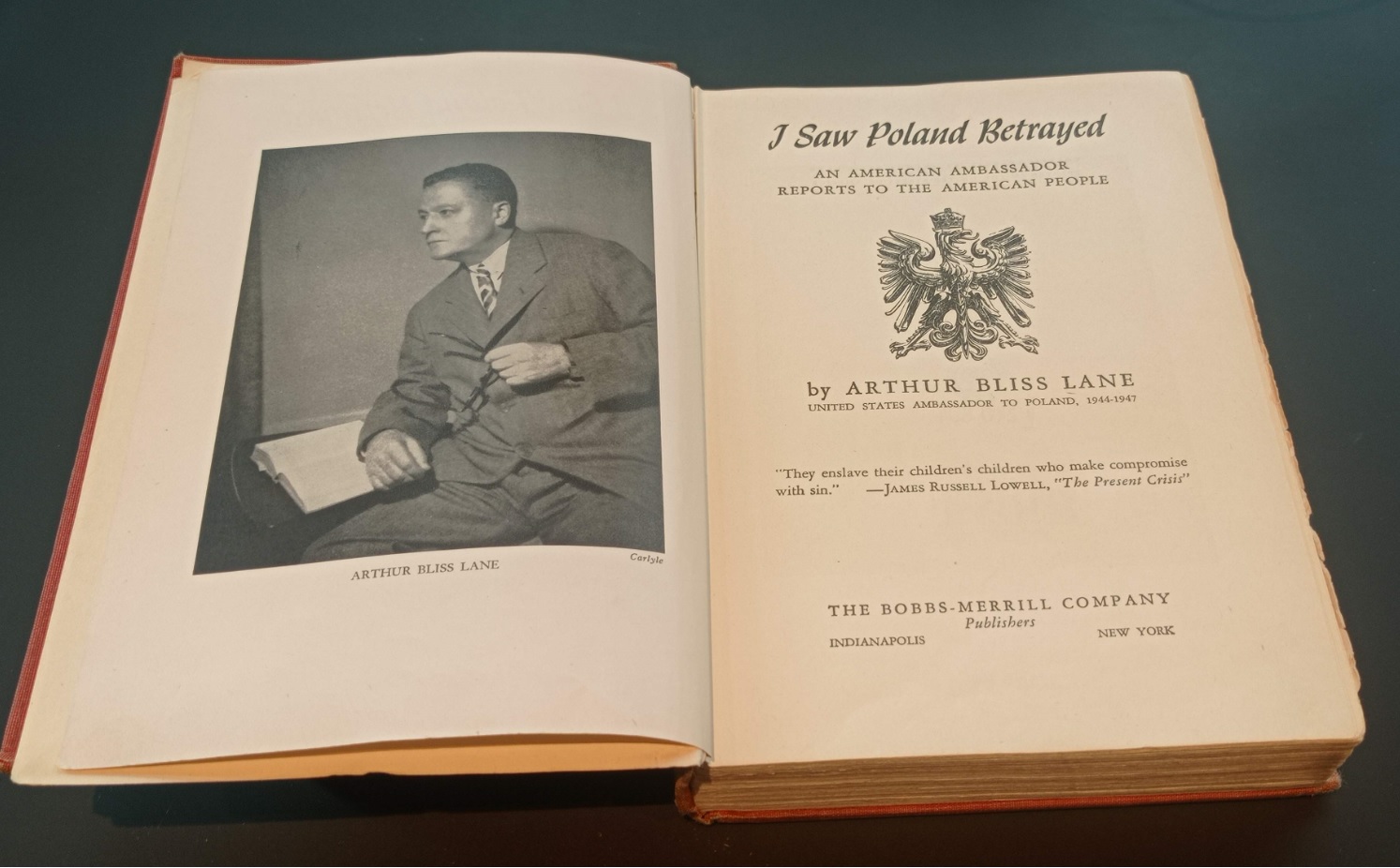
First pages of Arthur Bliss-Lanes book
* * *
The archives of the Institute of National Remembrance include the files describing the surveillance of ambassador Bliss-Lane by the Security Service officers, as well as the copy of Widziałem Polskę Zdradzoną published illegally by the Krąg publishing house. The Institute’s archives also include copies of correspondence between Arthur Bliss-Lane and Michał Sokolnicki (Polish politician and diplomat, Poland’s ambassador to Turkey between 1936-1945), acquired from the Józef Piłsudski Institute in the United States.