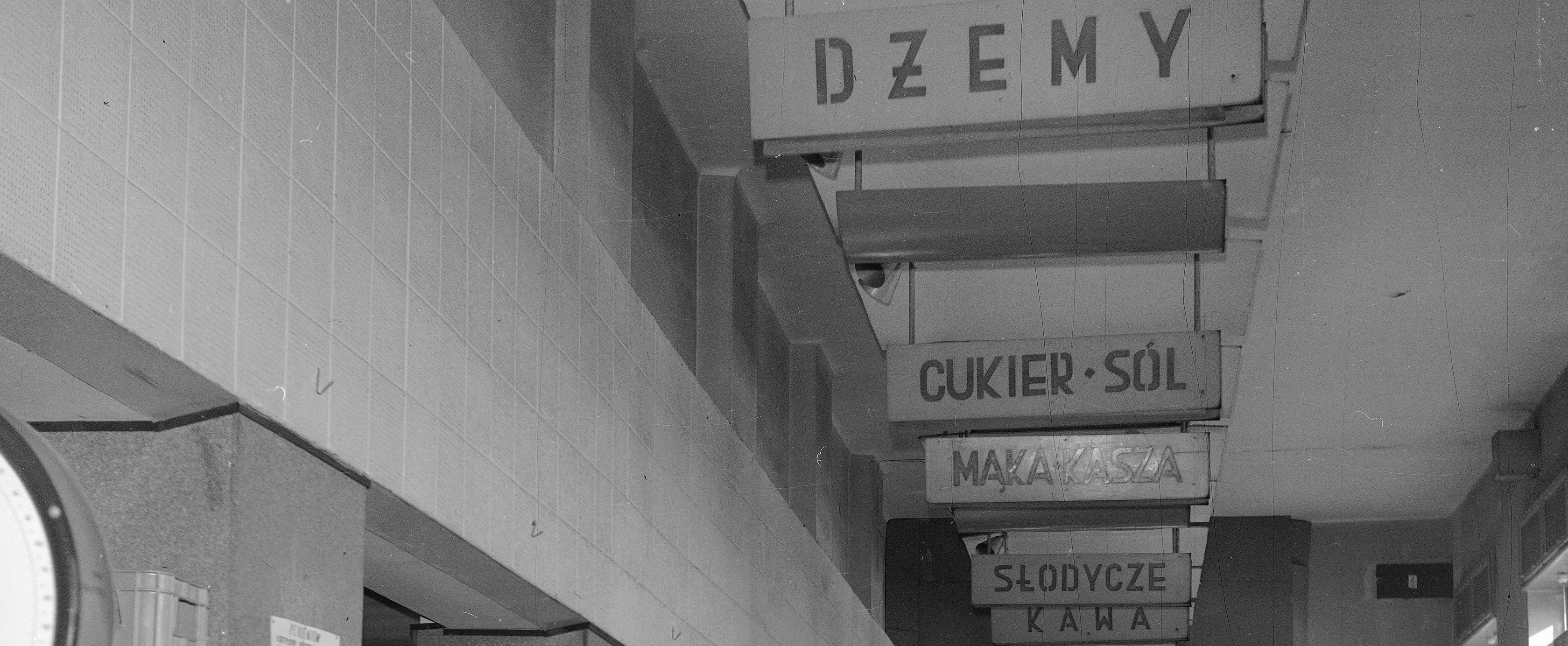

In April, 1987, the 6th Department of the Provincial Office of Internal Affairs in Ciechanów, by law dealing with protection of agriculture and the agricultural-food industry (because of that commonly referred to as the “pig intelligence”), opened a case on sugar produced by a sugar factory in Glinojeck. Laboratory research showed that it wasn’t safe to consume.
Ash and shavings (could contain sugar)
The tests, conducted by the provincial sanitary-epidemiological station, showed a low presence of sucrose and glucose, as well as lactose, but they did register… ash, iron shavings and other unidentified “foreign objects”. Despite this “sugar” not meeting any food standards whatsoever, it ended up in regular retail sales.
The factory had just finished its sugar production campaign, and not meeting the production plans would be a much bigger catastrophe than 100 tonnes of bad quality sugar…
Not long after, the producer started to receive returns from angry customers: a total of 102 tonnes of faulty product. The sugar factory’s management tried to sweep the scandal under the rug, but their efforts were thwarted by a secret collaborator, codename “Janek”.
The officers of the communist Security Service who raided the business, almost immediately noticed that the silos, packaging halls and warehouses were in complete disarray with absolutely no control from any of the crew (as they wrote in their report: “striking filth, total lack of disinfection and a strong stench of urine coming from the men’s restrooms”).
Powdering a corpse
The communist officers pointed to the sugar factory’s director and the head of the lab as the main suspects in the case. They, however, defended themselves very efficiently, in the typical manner of managers with lots of responsibilities during the communist times, which is through blaming other institutions: the silos were filthy because the design office hadn’t gone through with the draining plans, while another construction company hadn’t renovated the working spaces, hence the mould on the walls and an unidentified substance leaking from the centrifuges to the blocked drains.
The sugar factory’s lab also showed reports that the sugar produced there hadn’t been in good condition and that it should have been re-qualified as a non-consumable sugar, but the decision had been postponed time and again due to the pressing requests (and demands) of the buyers who constantly lacked this product. Moreover, the factory had just finished its sugar production campaign, and not meeting the production plans would be a much bigger catastrophe than 100 tonnes of bad quality sugar…
The management of the communist Association of Sugar Producers “Cukropol” also defended the Glinojeck sugar factory attempting to prove that the sugar hadn’t differed in quality from other factories.
It was also entirely possible that the recipients themselves contaminated the sugar in their warehouses. These also lacked proper renovations, which often resulted in increased humidity and the abundance of dirt. The sugar factory’s director was also completely aware of the fact that his sugar was low quality, but his reasoning behind it was the lack of proper investments in the factory: only part of the staff graduated from Post-secondary Vocational Studies on Sugar Production, while some of the machinery had to be bought with foreign currency etc. The director also claimed that thanks to the returns of sugar, the PKS Mława [coach transport company] noted higher turnover, so not everyone suffered losses as a result.
The management of the communist Association of Sugar Producers “Cukropol” also defended the Glinojeck sugar factory attempting to prove that the sugar hadn’t differed in quality from other factories, and the most likely reason behind the complaints was the higher concentration of sugar dust. That sugar dust didn’t fall under any norms and was supposedly the result of:
“Crystal abrasion during the sugar’s long journey before packaging.”
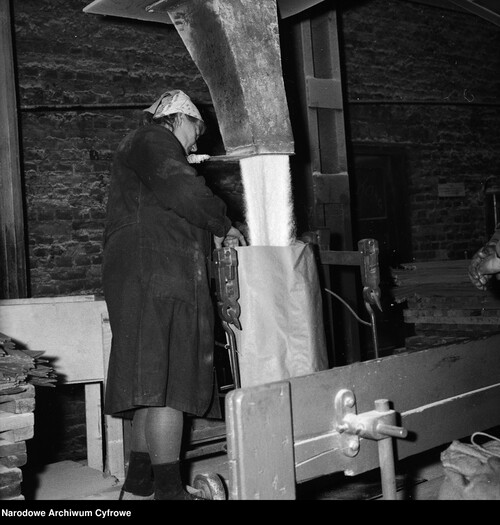
A woman operates a device pouring sugar into a bag, 1968. Photo: National Digital Archives
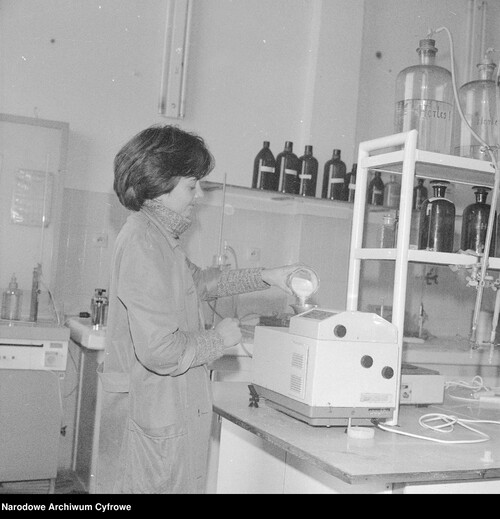
Woman weighing sugar on a WS-21 laboratory scale, 1982. Photo: National Digital Archives
A vicious circle
The sugar production in Glinojeck was suspended on the decision of the State Sanitary Inspection until 400 tonnes of sugar was sorted into safe for consumption and not meeting the norms. The officers of the 6th Department handed over the case to the Investigations Department of the Ministry of Interior in Ciechanów, which filed a motion to the prosecution.
In the case files, the communist state prosecutor found a violation of the provisions on "health conditions of food and nutrition", and at the same time discontinued the proceedings and requested a one-year probation period for the suspects. He also filed for a cash payment to the account of the National Federation “May Your Dreams Come True”. A year later, secret collaborator “Janek” reported that:
“The same mistakes as with the previous sugar production campaign have been made,”
…and the sugar was low quality…