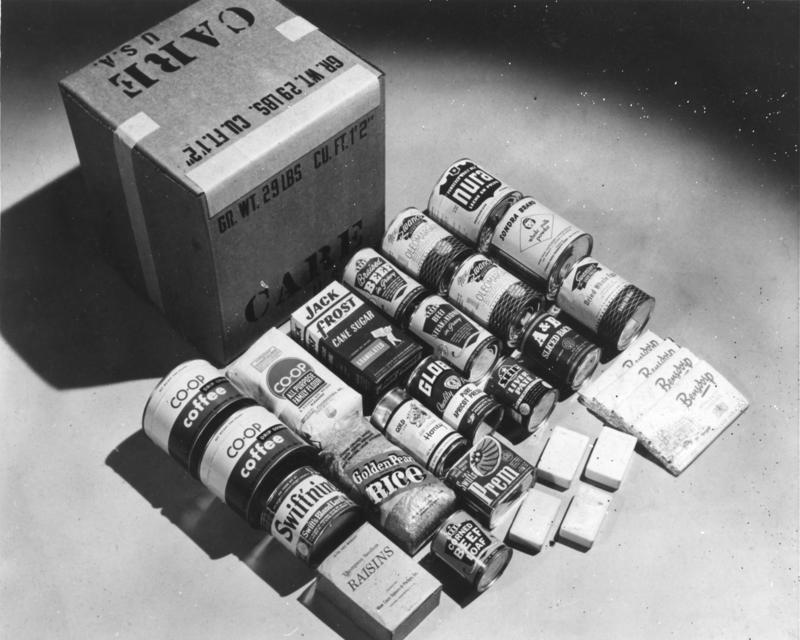

During the Cold War, the organisation came to Poland on three occasions: between 1946-1949 (delivering aid to the country destroyed during the Second World War); between 1958-1970 (when the political changes after 1956 allowed them to do so); and between 1982-1983 (delivering aid during the Martial Law in the Polish People’s Republic).
CARE’s activity in Poland between 1946-1949
The contract with CARE was signed in May 1946 after long and difficult negotiations with the Polish communist government. The packages were to be delivered to the port in Gdynia, and then handed over to their recipients through the SPOŁEM general store chain. Between May 1946 and December 1949, the organisation delivered a total of 201,872 packages worth 2,067,528 U.S. dollars.
As time passed, however, the economic situation improved, Moscow put more pressure on Warsaw and the political conflict with the West kept growing. This made CARE’s activity in Poland a thorn in the communists’ side (as did the work of other charity organisations).
The packages were received with great gratitude of ordinary Poles (countless thank you letters have been preserved). At the same time, it must be pointed out how the communist authorities and their special services approached the organisation with cynicism and rather cold attitude. In October 1946, president Bolesław Bierut attended a public presentation of the packages.
Between 1946 and 1948, some charity workers received state medals (some of them led charity work for Poland even earlier, during the Second World War). As time passed, however, the economic situation improved, Moscow put more pressure on Warsaw and the political conflict with the West kept growing. This made CARE’s activity in Poland a thorn in the communists’ side (as did the work of other charity organisations). American sources mention the growing reluctance towards the foundation, going as far as open hostility, which caused the organisation to shut down its operations in Warsaw by the end of 1949.
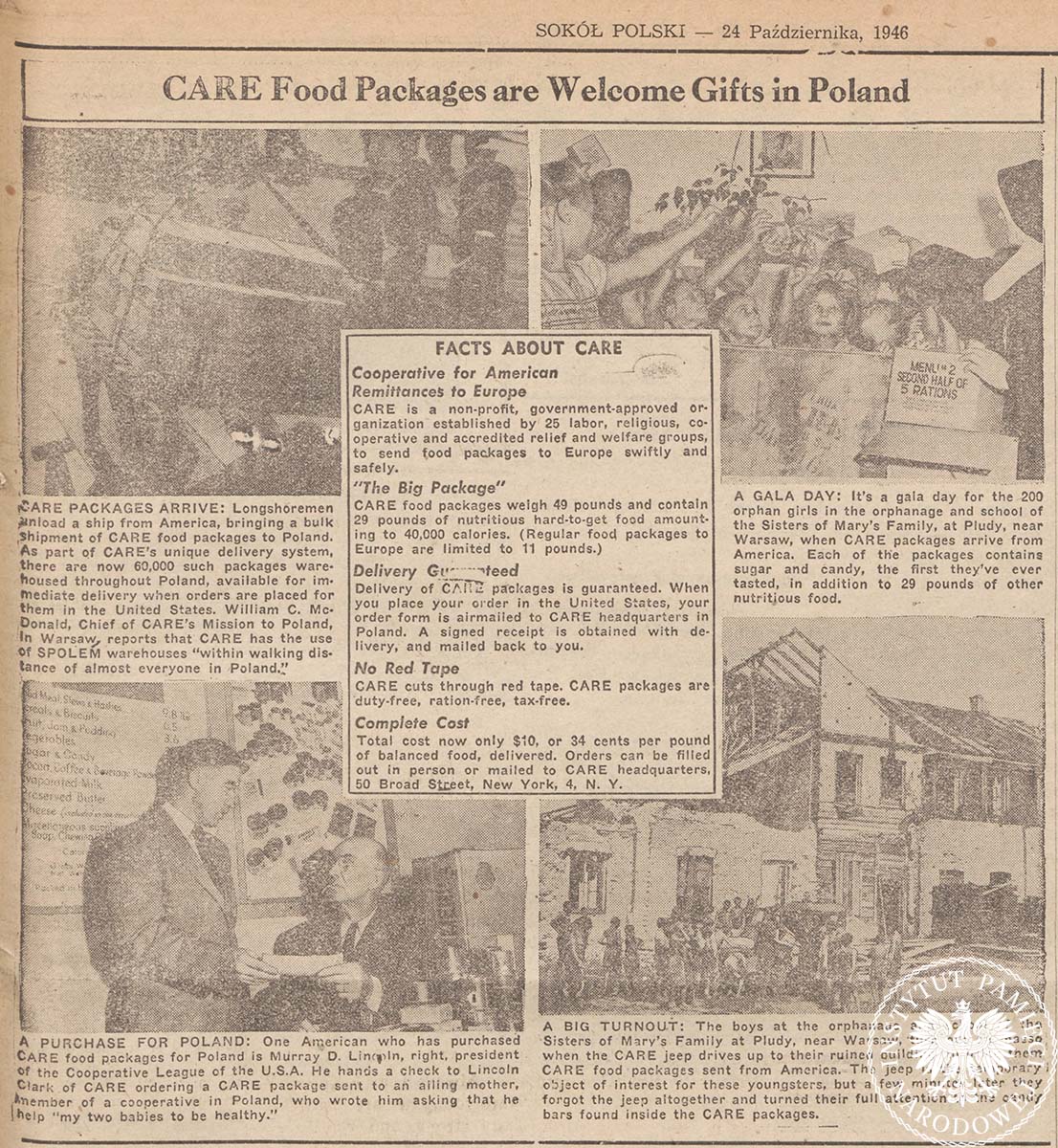
Page from an article in Polish diaspora daily Polish Falcon, from October 24, 1946, informing about the activity of CARE. The article was donated to the Institute of National Remembrance Archive by the Polish Falcons’ Alliance of America in 2019.
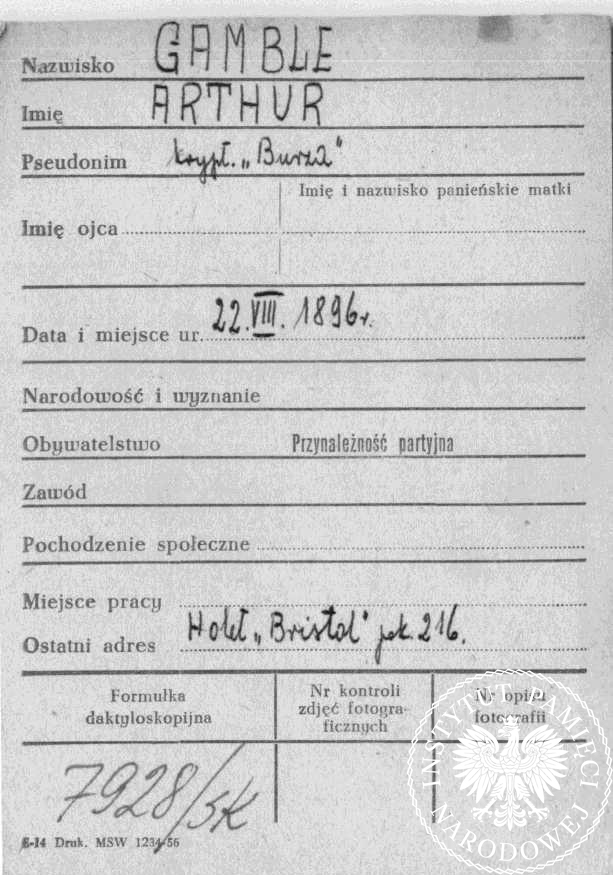
An index card from the Ministry of the Interior collection concering Mr. Arthur Gamble, the head of the CARE mission in Poland between 1947 and 1949 (source: IPN Archives). Below Mr. Gamble's name and last name an operational case codenamed "Burza" ("Tempest") was listed. At the bottom of the card we can also see his latest address in Warsaw: Bristol Hotel, Room 216.
![1. The organization runs a large-scale charity campaign in Poland, providing clothing and other products to various charitable institutions (usually under the influence of the clergy), such as orphanages, shelters for the homeless or the elderly, religious sects, etc., and private individuals.
2. People from the above-mentioned communities, having been given food or a package of clothing by the ARP, consciously or not, are serving foreign intelligence [support the interests of foreign countries].
3. Below is an example of a letter by American Relief for Poland (signed by Director Edmund Nadarski) to some families of arrested members of an underground [anti-Communist] organization:
Dear Madam,
The American Relief for Poland has obtained a CARE food package for you. You have also received a notification from the CARE organization about how the package is to be delivered.
To this notice received from CARE, please write down the address of the person who purchased the package and, upon receipt of the package, send a thank-you note to that person in America [ in order to establish contact].
Please also send a notification upon receipt of the package to the ARP branch in Warsaw (Hotel Polonia, room 102), so that we know whether the package announced by us in this letter has been delivered to you.”
4. In their thank-you letters to the US, such “petitioners” are trying to depict the current political situation in Poland in the worst possible light in order to obtain further assistance by begging.](/dokumenty/zalaczniki/166/166-185422.jpg)
A counterintelligence report from 1948 (exact date not indicated) on operational actions taken against Rada Polonii Amerykańskiej (American Relief for Poland, or the ARP) in connection with the distribution of CARE packages in Poland. IPN Archives, IPN BU 00231/17, p. 12. It's worth to mention the propaganda language, typical for the late 1940s in communist Poland.
International aid through the lens of communist security services
CARE, similar to UNRRA and other aid organisations, was invigilated by the cells of the communist Security Office.
The communist Security Office, using the foreign intelligence cells, also gathered information on the Polish diaspora organisations cooperating with CARE, i.e. the Polish War Relief.
The secret police systematically gathered information not only on the CARE workers in Poland, but also on the recipients of the packages (especially if they were suspected of anti-communist activity or even pro-American sympathies).
The communist Security Office, using the foreign intelligence cells, also gathered information on the Polish diaspora organisations cooperating with CARE, i.e. the Polish War Relief. Poles living in the United States were eager to help their compatriots.
According to the preserved accounts, some of them would send packages to Poland only to find out if their relatives survived the war. Some packages were sent without addressees, i.e. “for the orphans” or “for those in need”. Such parcels were first delivered to hospitals and child care homes.
Source: Bloomstein’s Research Files, New York Public Library, CARE Collection, Box 2 F, Folder Poland
Find out more about CARE International Project (wilsoncenter.org)