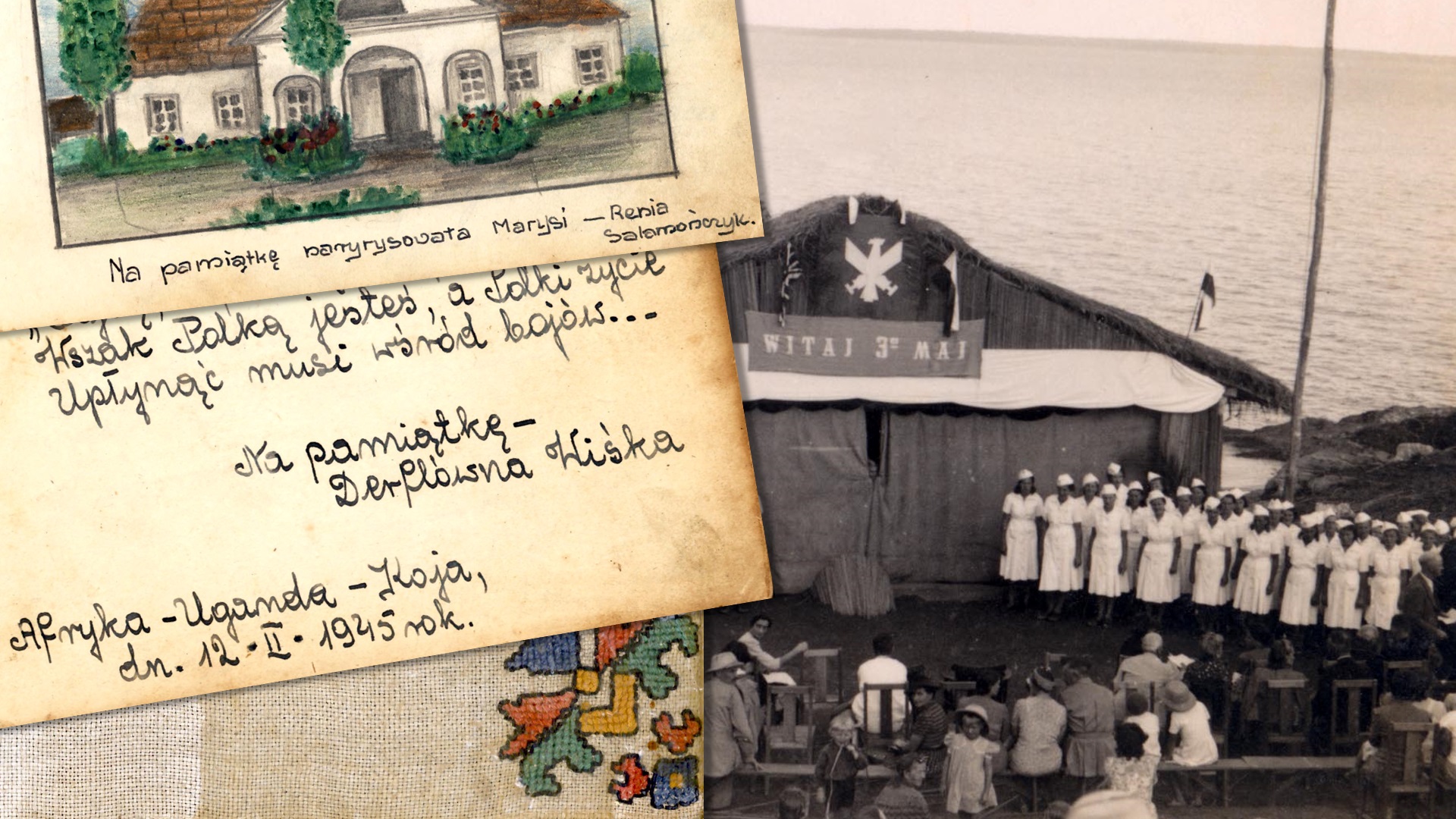

Thanks to the Archive Full of Memory project, led by the Institute of National Remembrance, the users of the Institute’s Archives were able to access this unique artefact from the Black Continent: a diary of a Polish girl deported deep into the Soviet Union after the outbreak of the Second World War, who later ended up with other children in Africa.
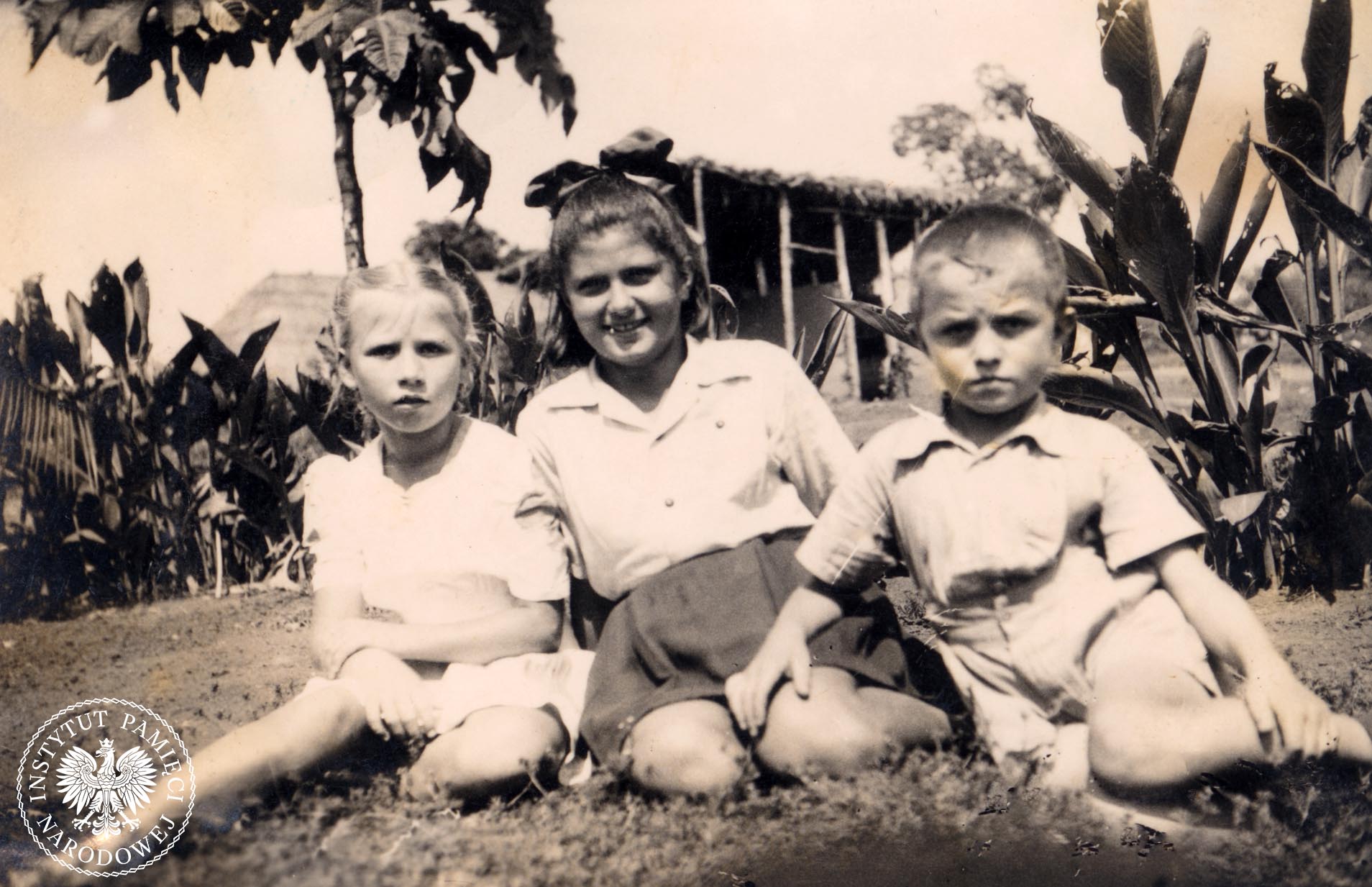
Children of deported Poles in a Polish refugee camp in Koja, Uganda, 1945. (Photo from the Archives of the Institute of National Remembrance)
Poland beyond Poland
In 1942, thousands of Poles who had been deported and made forced labour in the USSR were evacuated to Iran with the army of General Władysław Anders. Among them were about 40 thousand women and children.
Since Iran was only supposed to be a temporary stop on the Polish refugees’ way and the territories near the Caspian Sea were in danger of becoming another war zone, the Polish emigration authorities looked for other regions outside of Europe which could provide living conditions to such a huge number of people. One such direction soon became the British East Africa.
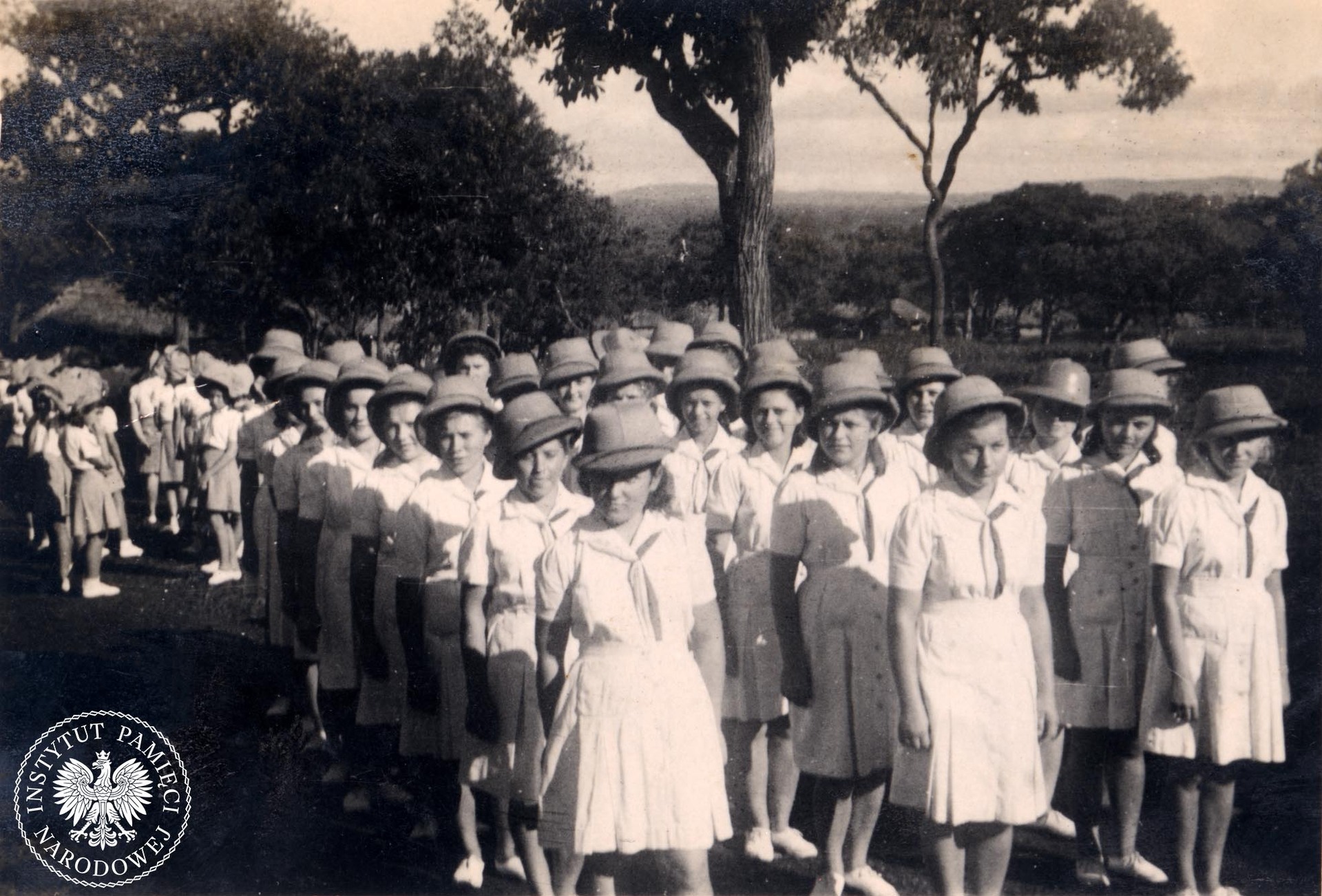
Female scout team at the Polish refugee camp in Uganda, 1940s. (Photo from the Archives of the Institute of National Remembrance)
The diary of Maria Leszczełowska (married name Ostrowska), often referred to as her “golden thoughts”, is a testimony of the difficult times Polish children had to go through for several years in Africa. The diary included memorable quotes, aphorisms and poems taken down on its pages by Maria’s friends who were there with her. Under the Archive Full of Memory project, Maria Ostrowska’s daughter shared her family memorabilia with the Institute’s Archives and gave permission to include their digital copies in the IPN’s collections.
Maria Leszczełowska’s war path
Maria Leszczełowska was born on September 6, 1929, in Brest-on-the-Bug. During the interwar period, he worked at the Polesie Provincial Office as a counterintelligence clerk. In 1940, he was arrested by the Germans in Warsaw and taken in the first transport to the German concentration camp Auschwitz-Birkenau, where he died a year later.
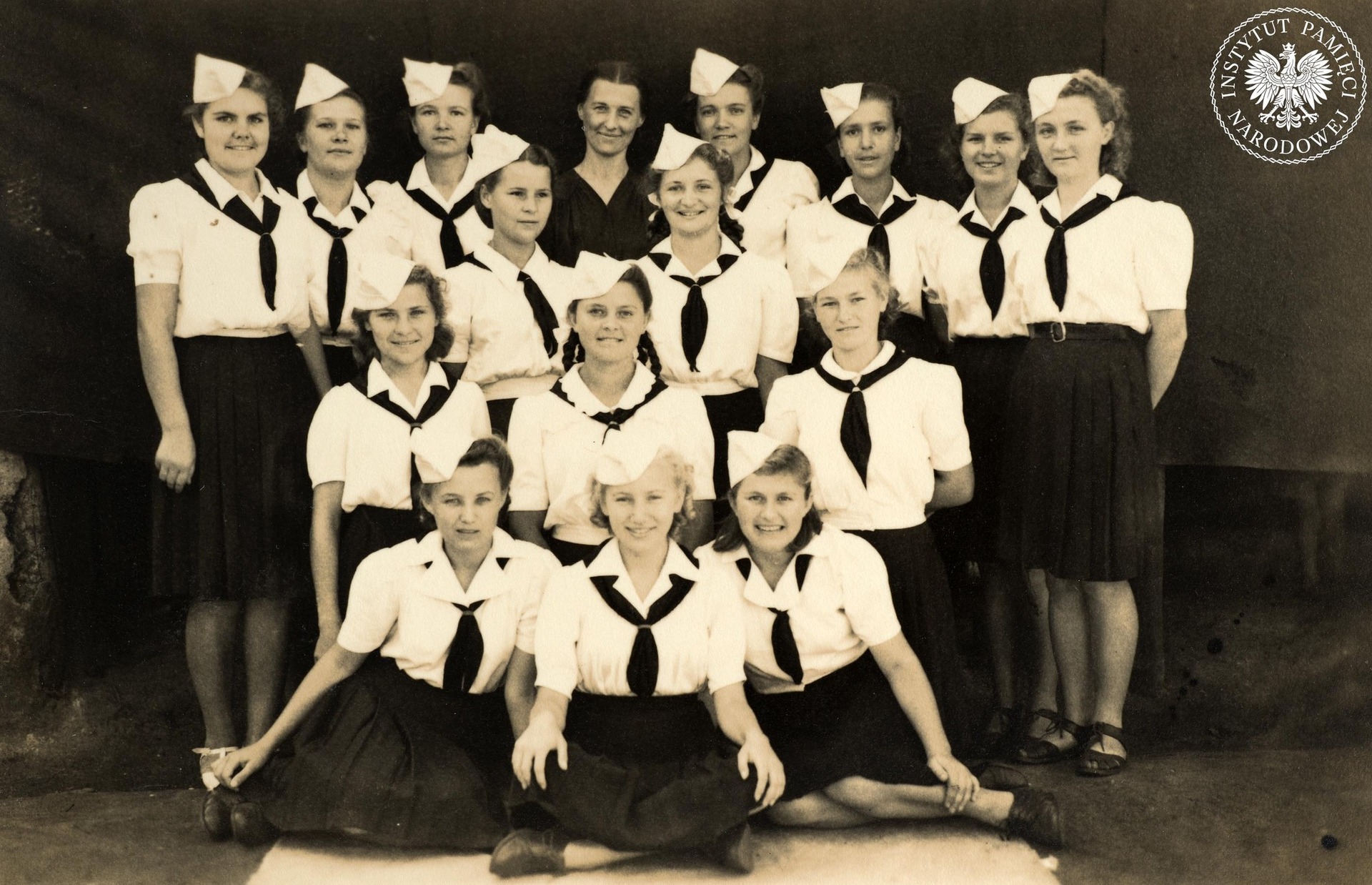
Maria Leszczełowska (seated in the middle) in the 13th scout team at the Polish refugee camp in Uganda, 1940s. (Photo from the Archives of the Institute of National Remembrance)
Maria, along with her mother Bronisława and sister Wanda, after they were evacuated from the USSR and left Iran, stayed in Uganda between November 1942 and August 1948. They stayed at two neighbourhoods for Polish refugees: in Koja, near Lake Victoria, and more than 90 miles away in Masindi. Maria went to school there and was on the local scout team. Her mother, since 1943, took part in organising and teaching at the pre-school for Polish children in Koja, and then in March 1945 she became a teacher at the pre-school in camp Masindi.
After leaving Africa, Maria Leszczełowska settled in Great Britain. After the war, she stayed at a Polish resettlement camp near the Husbands Bosworth village, in Leicestershire county. She was active in the life of the Polish society there, she was i.e. in a theatre group, which performed on national holidays as well.

Cover of Maria Leszczełowska’s diary with notes from her friends from the Polish refugee camp in Koja and Masindi, Uganda, 1944-1948. The inscription says “Africa” and then Maria’s initials “L.M.” (Photo from the Archives of the Institute of National Remembrance)
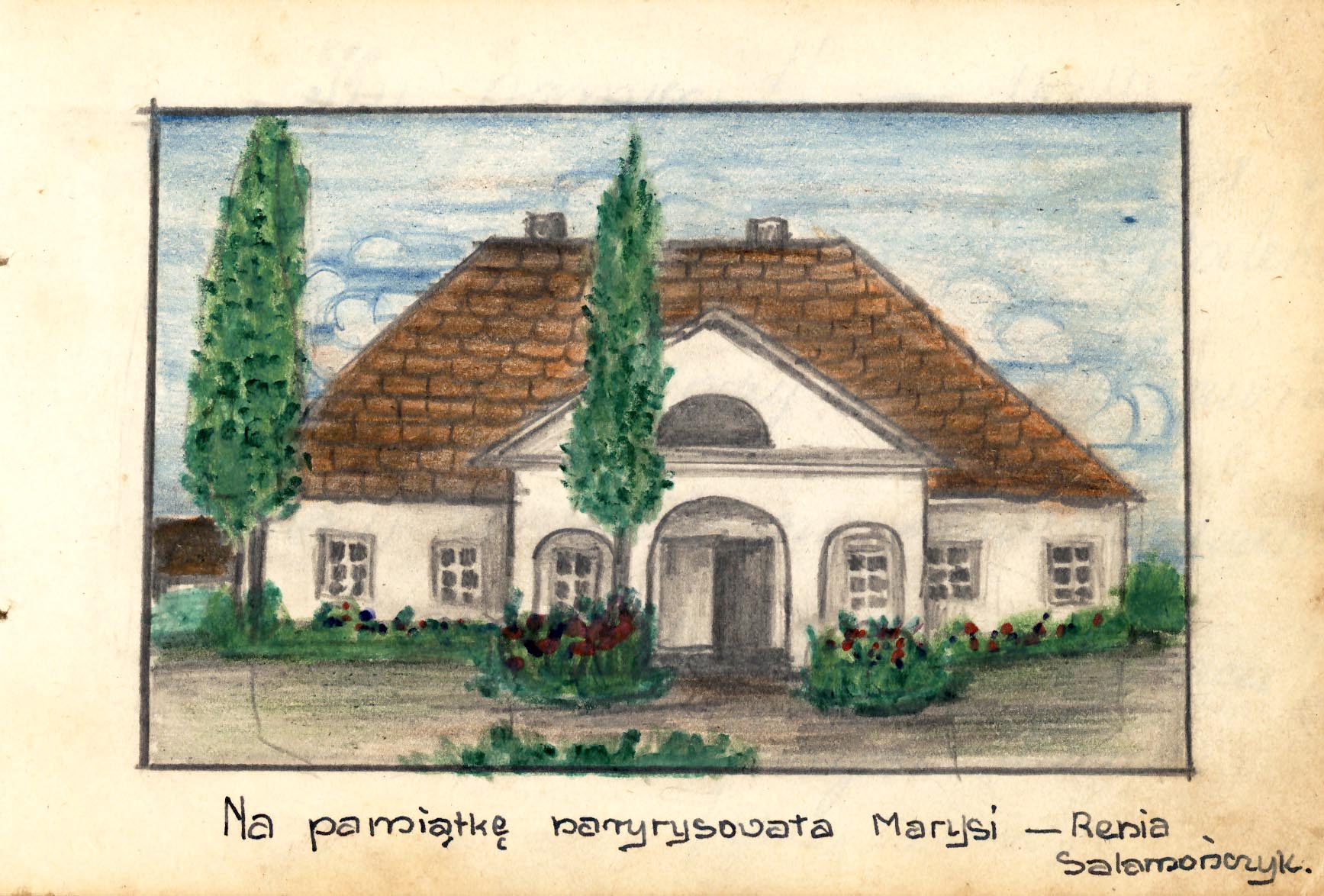
Drawing in Maria Leszczełowska’s diary made in the Polish refugee camp in Koja, Uganda, 1940s. The inscription says “Drawn as a keepsake for Marysia by Renia Salamończyk.” (From the Archives of the Institute of National Remembrance)

Note in Maria Leszczełowska’s diary written in the Polish refugee camp in Koja, Uganda, on February 12, 1945. The note says: “…never say, tired with life: <<I’ll go and rest in peace>>, since a Polish girl you are. And a Polish girl’s life means to fight all your life… For a keepsake — Wiśka Derflówna. Africa - Uganda - Koja, 12.02.1945”
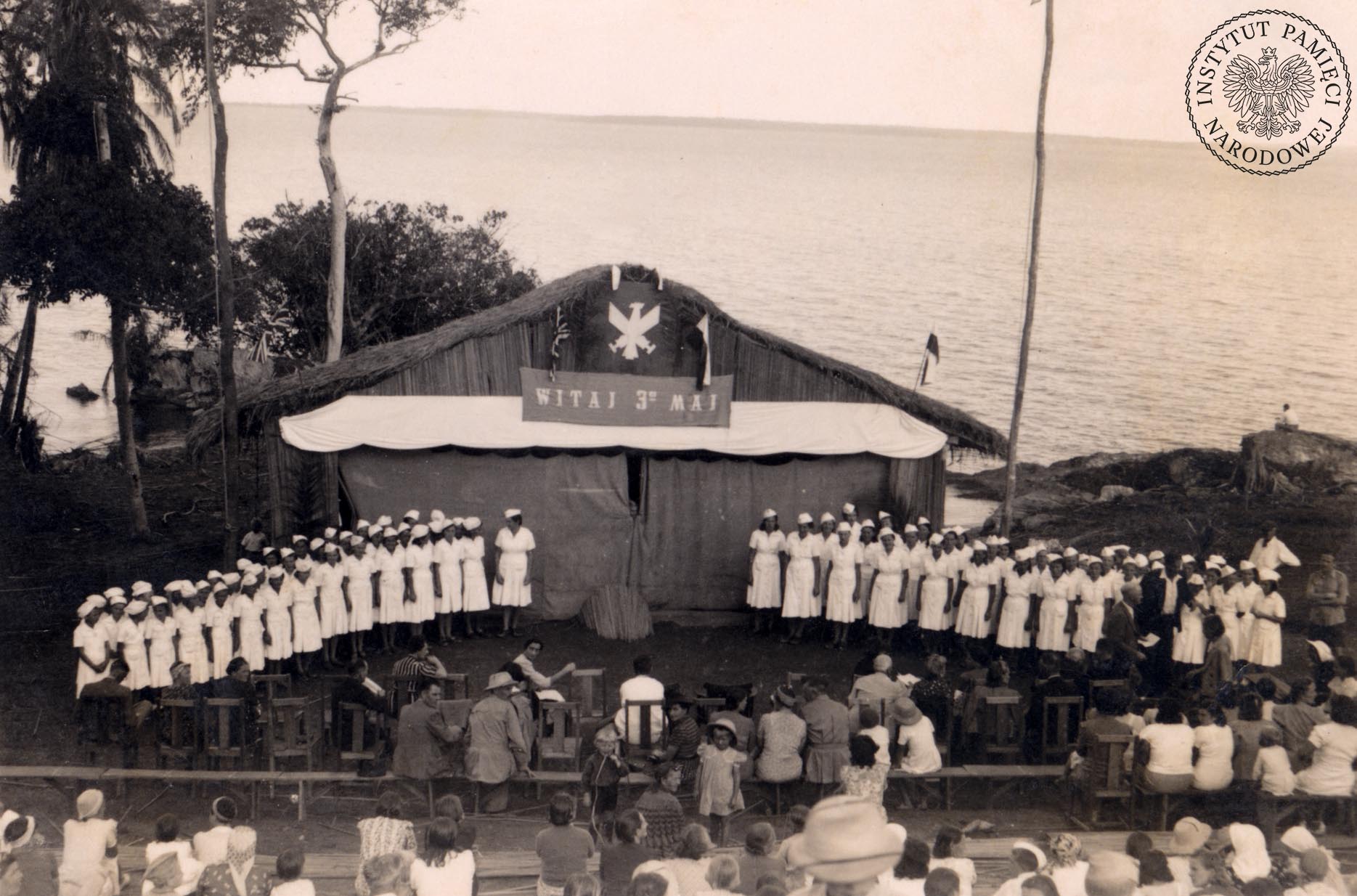
Celebrations of May 3rd Constitution Day at the Polish refugee camp in Koja, Uganda, 1943. (Photo from the Archives of the Institute of National Remembrance)
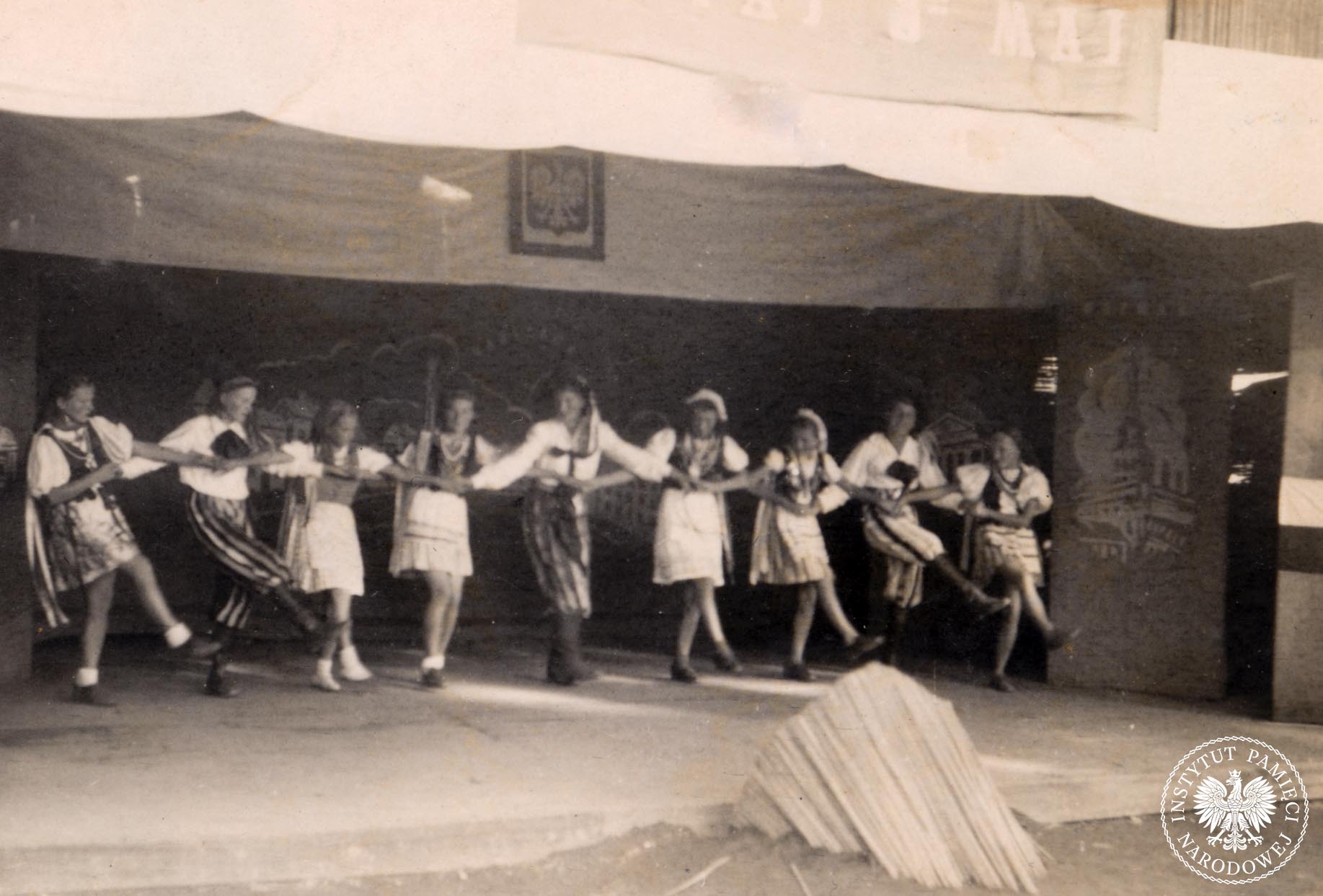
Children performing the traditional folk dance during the celebrations of May 3rd Constitution Day at the Polish refugee camp in Koja, Uganda, 1943. (Photo from the Archives of the Institute of National Remembrance)

Renia Kiejko, one of Maria Leszczełowska’s friends at the Polish refugee camp in Koja, Uganda, January 18, 1945. (Photo from the Archives of the Institute of National Remembrance)