
Crime by the Drawa river
In 1955, Józef Mackiewicz’s essay Crime in the Drawa River Valley was published on the front page of the London-based Wiadomości [News] (issue 43 from October 23). Two years later, the writer’s excellent novel Kontra was published, referring to an event previously described in Wiadomości: the tragedy of the Don Cossacks, who during the Second World War had chosen to collaborate with the Germans against the communists, surrendered to the Western Allies, and in 1945 were handed over by the British to the so-called “allies” in the Kremlin.
The story of the Cossacks fighting against the Bolsheviks is relatively unknown. If anything, they’re viewed as yet another formation collaborating with the Germans. But facts about more than 30 thousand soldiers and civilians (including officers from the White movement) imprisoned by the British and then handed over to the NKVD have never entered public consciousness.
The entire operation resulted in many victims, killed essentially by both the British and the Soviets. These dramatic events were one of the many consequences of the Yalta Conference agreement, signed in February 1945 during the meeting between Joseph Stalin, Franklin Delano Roosevelt and Winston Churchill.
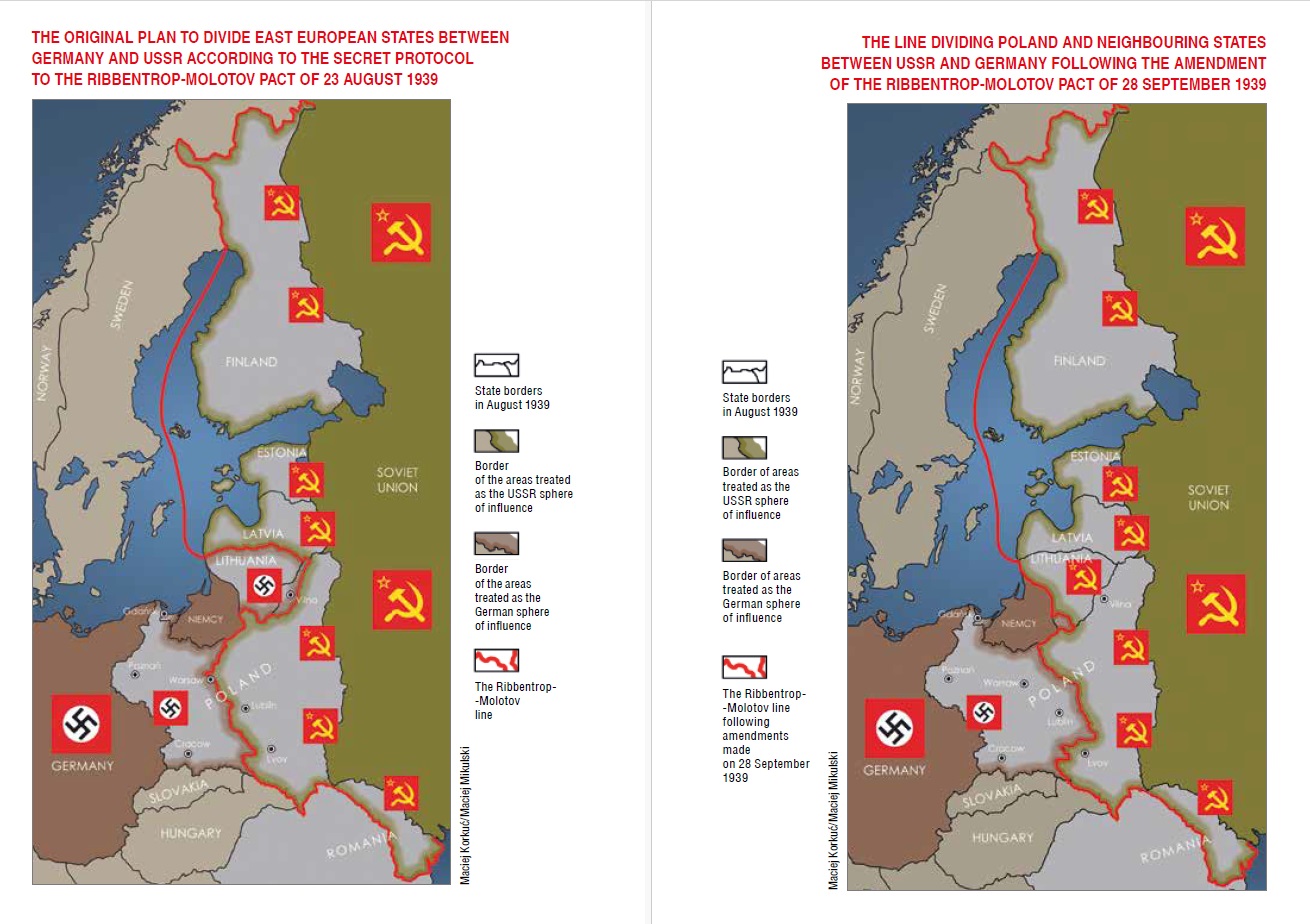
The lines dividing Poland and Central-Eastern Europe based on the 1939 German-Soviet agreement (graphic from M. Korkuć’s book The Fighting Republic of Poland 1939–1945)
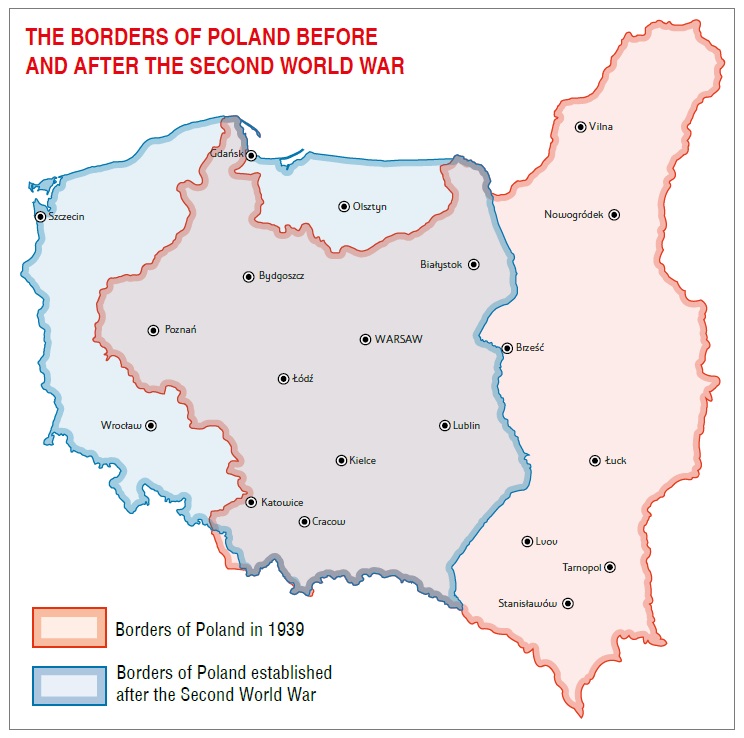
The borders of Poland before and after the Second World War (graphic from M. Korkuć’s book The Fighting Republic of Poland 1939–1945)
How should we understand Yalta?
We are usually concentrating on the Big Three’s decision regarding the post-war government in Poland and the Polish borders. We keep returning to the same questions: were we betrayed by our allies, or did they have no other choice? Were all the agreements made in Yalta in February 1945 realised by all the sides? Or perhaps the truth lies in the pudding, and the Soviet Union simply didn’t keep their side of the deal? If that happened differently, would Poland’s fate be different? Was the Yalta Conference the last meeting between the three superpowers as allies, or was it already the prelude to the Cold War?
We also usually note the way the conference touched on ending the war in Asia and the decisions regarding Germany. After all, it was Germany that started the Second World War and no one had any doubts that both “the Polish question” and the fate of Germany would be pivotal to the future security architecture of Europe and world peace. However, we rarely take a step further and ask how the Big Three conference influenced other Central and Eastern European nations. Indeed, the Yalta Conference not only sealed the fate of millions of Poles or the tragic story of the several dozen thousand Cossacks, described by Mackiewicz.
What about the Lithuanians, Latvians, Estonians? What about the Baltic nations? Let us investigate the meaning of what we, Poles, commonly refer to simply as “Yalta,” from a different point of view than Poland’s.
Perhaps not Yalta after all?
The fate of the Central and Eastern Europe was decided already during the Big Three’s meeting in Tehran. It was there that Churchill’s intention to open up a second front in the Balkans was finally rejected. The British Prime Minister’s idea meant at least a slim chance of not making the Red Army the sole liberator of this part of the continent, meaning the Soviet Union would lose the monopoly on shaping the politics of the region.
Churchill seemed to have perfectly understood the danger stemming from that. However, he failed to convince his American partner to back him on this. Uncle Joe could simply smile beneath his moustache as Roosevelt tried to charm him and blatantly ignored Winston.
The political consequences of this inaction were sealed during the Moscow Conference in October 1944. At that time, the Red Army was already by the Vistula river, Bucharest was taken by the Soviets on August 23, 1944 and Sofia on September 8. On September 24, the Red Army resumed its advance on the southern German front, heading to Budapest and Belgrade. Churchill, noticing the growing risk of the civil war breaking out in Greece, where the communists prepared to take power, sent his troops there.
The British Prime Minister decided to use his autumn visit to Moscow to make agreements with Stalin which would at least create the chance of the Soviets not taking monopoly in the Balkans. He described it himself in his memoirs:
“The moment was apt for business, so I said, >>Let us settle about our affairs in the Balkans. Your armies are in Romania and Bulgaria. We have interests, missions, and agents there. Don’t let us get at cross-purposes in small ways. So far as Britain and Russia are concerned, how would it do for you to have ninety percent predominance in Romania, for us to have ninety percent of the say in Greece, and go fifty-fifty about Yugoslavia?<< While this was being translated I wrote out on a half-sheet of paper:
Romania: Russia 90%, The others 10%
Greece: Great Britain 90% (in accord with USA), Russia 10%
Yugoslavia: 50–50%
Hungary: 50–50%
Bulgaria: Russia 75%, The others 25%
I pushed this across to Stalin, who had by then heard the translation. There was a slight pause. Then he took his blue pencil and made a large tick upon it and passed it back to us. It was all settled in no more time than it takes to set down.
Of course, we had long and anxiously considered our point and were only dealing with immediate wartime arrangements. All larger questions were reserved on both sides for what we then hoped would be a peace table when the war was won.
After this there was a long silence. The pencilled paper lay in the centre of the table. At length I said, »Might it not be thought rather cynical if it seemed we had disposed of these issues, so fateful to millions of people, in such an offhand manner? Let us burn the paper.« »No, you keep it,« said Stalin.”
Not all historians believe the British Prime Minister’s recollections. They doubt such unanimous conclusions, pointing instead to the Soviet leader likely negotiating to increase his influence in Bulgaria and Hungary to 80%, while conceding the limited backing of communists in Italy. American journalist Whittaker Chambers wrote the following in the Time magazine at the time:
“It was sound policy for the Russians to refrain from setting up Communist governments in the Balkan states now occupied by the Red Army. […] But Britons would be less than empire builders if they were not aware that, in the cold-blooded language of politics, the Balkans had become a Russian sphere of influence.”
The agreements made in Moscow only briefly satiated the hunger of the Soviet ruler. In November 1944, Maxim Litvinov, the Deputy People's Commissar for Foreign Affairs, wrote a memorandum in which he stated the ideal “security zone” should cover Finland, Norway, Sweden, Poland, Hungary, Czechoslovakia, Romania, Yugoslavia, Bulgaria and Turkey.
The Declaration of liberated Europe
During the Yalta Conference, on February 10, 1945 to be exact, all sides signed a joint document, earlier proposed by the U.S. President. The Declaration of Liberated Europe was not a long document by any means, but its vague language opened it to interpretation. It declared that all European nations had the right to decide on setting up their own democratic institutions. The three superpowers were to guarantee the correct completion of this process. Their representatives were to sit in the Allied Commission overseeing the course of action in individual states.
The Declaration seemingly referred to the Atlantic Charter from 1941, but fulfilling these noble ideas also in this case depended on who held dominion over the certain regions of the continent.
From incorporating to dependency
It was Stalin who held all the cards in the vast majority of the Central and Eastern Europe. The Baltic states, Poland, Czechoslovakia, Bulgaria, Hungary, Romania, Yugoslavia, Albania and the eastern part of occupied Germany… the Soviet policy towards these countries was not uniform, since all of them experienced the Second World War differently.
Bulgaria, Romania, Hungary and the puppet state of Slovakia were all allies to the Third Reich. This changed only in 1944. What we can note with absolute certainty is the fact that in the three years after the war, Moscow radically moved away from “refraining from setting up Communist governments”, described by Chambers. Lithuania, Latvia and Estonia were all directly joined to the Soviet Union, similarly to part of Czechoslovakia (Subcarpathian Ruthenia), Romania (Bessarabia) and the northern regions of Eastern Prussia.
In Czechoslovakia, Bulgaria, Romania and Hungary, similarly to Poland, the Soviets first set up coalition governments with the large presence of local communist parties. They did not need to have any social backing, although sometimes, like in the case of Czechoslovakia, which aligned itself with the Soviet Union even before the war, they had it. The presence of the Red Army is what mattered more in this case, as did the dominant position of the Soviet Union representatives in the allied commissions. Thanks to that, the smaller communist parties took control over the ministries which were crucial to holding power.
Between 1944-1945, the communists, acting on orders from the Kremlin, took control of the ministries of the interior in Poland, Czechoslovakia, Bulgaria, Romania and Hungary; the ministries of justice in Poland, Romania and Bulgaria; and the ministries of defence in Poland, Bulgaria and Czechoslovakia. Consequently, the secret services and the police were also under their control, implementing political directives by cracking down on all those deemed “enemies of the people.” Political pluralism in these countries was, from the outset, merely a facade.
As time went on, these seemingly democratic procedures disappeared as well. Kremlin’s interference became the new norm, elections were rigged on a smaller and larger scale; there were coups which removed non-communist politicians, even those who accepted the growing influence of the USSR.
When a dozen ministers in Czechoslovakia resigned in the beginning of 1948, hoping for snap elections and the society’s support, President Edvard Beneš accepted their resignations. In their place, violating all the rules of democracy, Prime Minister and leader of the Czechoslovakian Communist Party, Klement Gottwald, installed more communists. The only non-communist minister left was Jan Masaryk, the son of Tomasz Masaryk, one of the founding fathers of the country’s independence in 1918. However, on March 10, 1948, his body was found smashed on the pavement in front of the building of the Ministry of Foreign Affairs. The official cause of death was suicide. The people of Prague, though, joked:
“Masaryk jumped from the highest floor of the Foreign Ministry and closed the window behind him.”
In May, the Parliament adopted a new constitution establishing the Czechoslovakian Republic, describing its system as “the people’s democracy.” Beneš refused to sign it and resigned. During the war, he was Czechoslovakia’s President-in-exile. He was a supporter of cooperating with Moscow, believing it would guarantee stable governing in Prague. After he had returned, he remained in office, accepting compromise after compromise for a long time.
Yugoslavia and Albania
The political circumstances in Yugoslavia and Albania were different altogether. There, during the war, the resistance led by local communists played a crucial role in the fight against the German and Italian occupiers.
Communist activist Josip Broz Tito became the symbol of this resistance. While fighting against the occupiers, he also brutally dealt with the competing underground groups in Yugoslavia, even though they were also anti-German. At the same time, he knew how to politically navigate Moscow and the Western allies. Another communist, Enver Hoxha, became Tito’s counterpart in Albania.
In October 1944, the Red Army entered Yugoslavia, but Tito managed to keep his independence by realising his own vision of communism, by no means less bloody than the Soviet one. He did not implement the enforced agreement with politicians in emigration and instead ruled on his own, cracking down on political and social rights.
Finland and… Sweden
The Soviet Union fortunately did not send its troops to all the countries mentioned in Litvinov’s memorandum, but still exerted pressure where it could. Finland, the victim of the Soviet aggression between 1939-1940, became the Third Reich’s ally until September 1944, when it switched sides and joined the anti-German alliance. Thanks to that, it avoided the Soviets’ direct interference and consequently a system change. It did; however, acknowledge the Kremlin’s dominance over that part of the continent, which was expressed by the rules of a coalition government with the participation of the pro-Soviet Finnish People’s Democratic League.
The situation was entirely different in neutral Sweden, which also did not end up in the Soviet sphere of influence. Nevertheless, the sheer fact of Moscow’s growing influence over the continent meant that both the government and the press avoided any language which could provoke the eastern superpower. Member of the Polish government-in-exile, Michał Sokolnicki, wrote about this in April 1945:
“The Soviet Union’s military and political successes brought about a [transformation] within the Swedish society, particularly among the bourgeois intelligentsia, who have so far been blindly devoted to the cult of Germany as a nation leading the way in all fields of civilisation, and suddenly an equally boundless admiration arose for Soviet Russia.”
In another part of the same document, the Polish diplomat stated the following:
“Cautious voices expressing doubts about the possibility of establishing closer ties with the Russian society are dismissed as being blinded by anti-Russian hysteria, or met with assurances that Russia has been undergoing a process of transformation for decades, that Bolshevism is fading away, and that, in time, […] Russia will come to resemble Western democracies.”
While similar deliberations were taking place in Stockholm, at the same time, the part of Europe already “liberated” by the Red Army was already experiencing the full tragedy of the communist enslavement.
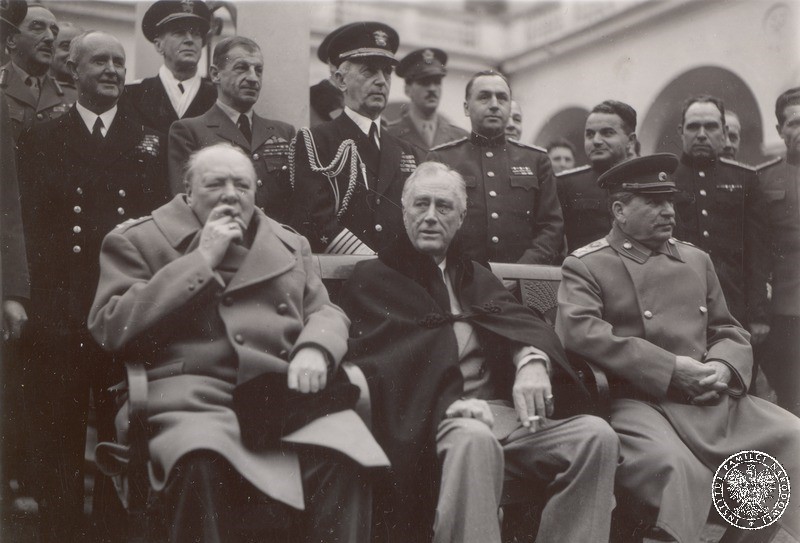
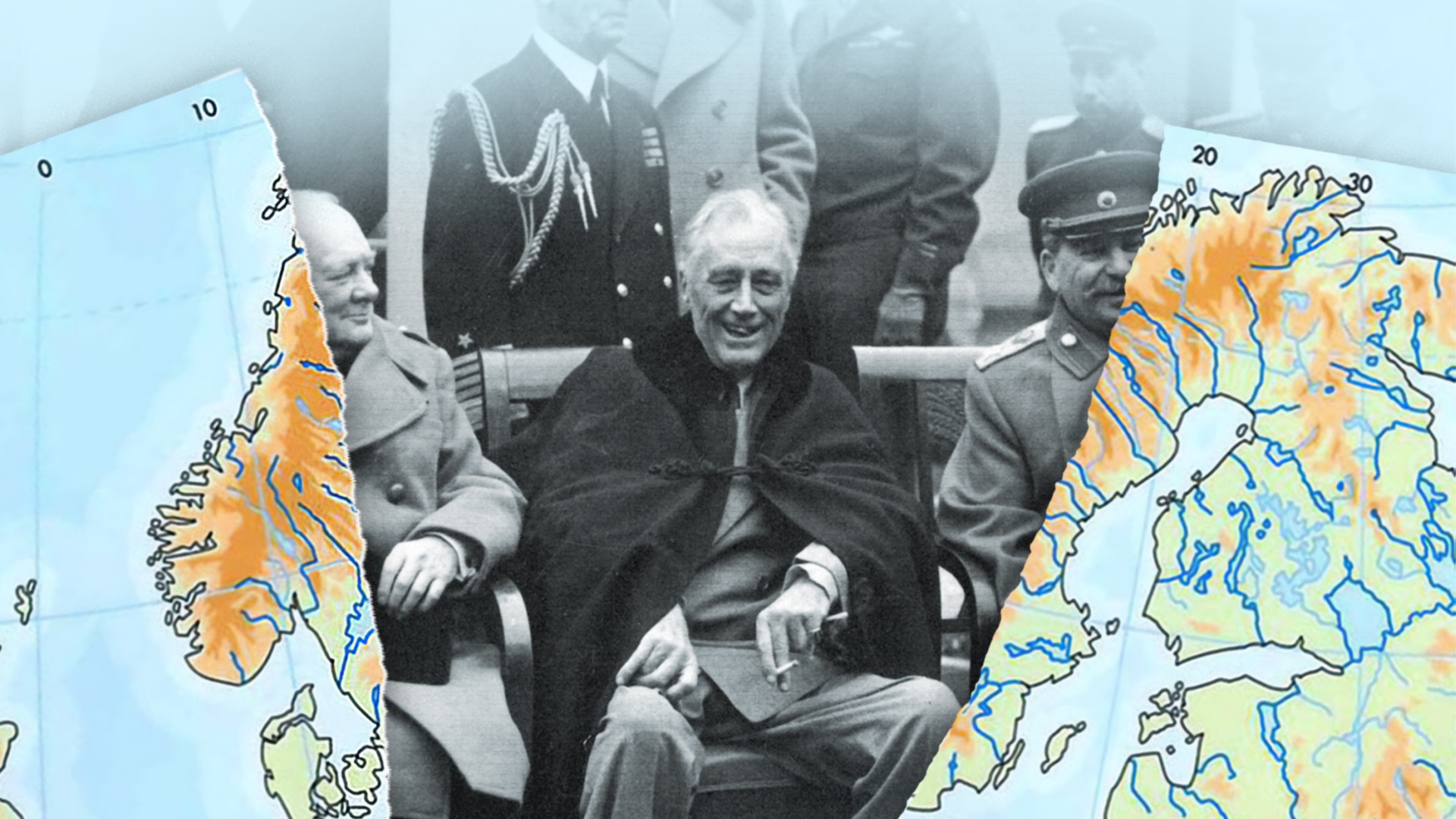
Winston Churchill, Franklin Delano Roosevelt and Joseph Stalin during the Yalta Conference, February 1945. Photo from the Archives of the Institute of National Remembrance
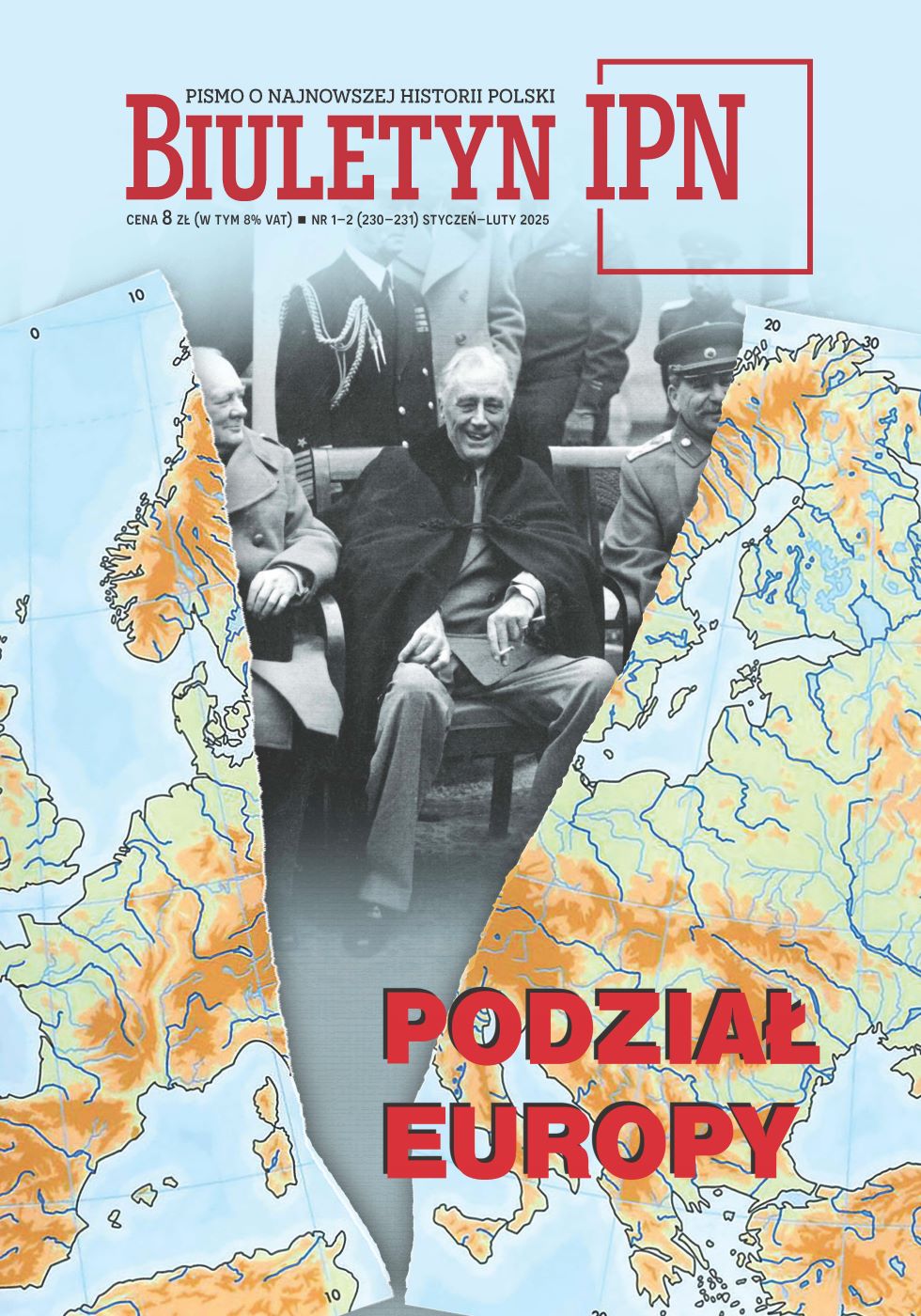
The cover of IPN Bulletin, Issue 1-2, 2025
Repressions
The moment the “liberating” Red Army entered the countries of Central Europe, repressions of an unimaginable scale ensued. In the case of Hungary, Romania, Bulgaria and Slovakia, the fact that these states cooperated with the Third Reich, including militarily, gave an additional pretext. Although coups and changing of sides took place in Romania and Bulgaria in 1944, the Soviets still arrested the actual and fabricated sympathisers of the previous regimes.
A day after the Red Army had entered Bulgaria, the Communists established their militia and security apparatus. They set up the so-called “people’s tribunals,” which issued some 11 thousand sentences by March 1945, including 2,138 death penalties. Roughly 30,000 Bulgarians became victims of the purges, while more than 5 thousand of them lost their lives. The repressions continued in the following years.
In Hungary, leaders of the Smallholders’ Party, the largest political party in Parliament after 1945, but also members of the Independence Party and the People’s Democratic Party, were regularly accused of participating in “anti-state schemes.” They would often mysteriously disappear, get arrested, tortured, lynched and secretly assassinated. Sometimes, the only chance they had to save their lives was to escape abroad. Between 1948-1953, more than 150 thousand Hungarians were imprisoned! Romania experienced similar provocations. Members of the National-Agrarian Party, for example, fell victim to these.
Arrests and executions were not the only weapons in the communist arsenal of repressions. We need to remember the mass forced deportations deep into the Soviet Union. Some 40 thousand Ukrainians were forcefully deported just from Subcarpathian Ruthenia, which belonged to Czechoslovakia before the war and was then joined to the Soviet Union. At least 526 thousand people were moved from Hungary to the east! Between 1945-1946, nearly 300 thousand Estonians, Latvians and Lithuanians were taken from their homelands. The exact number of those who perished along the way or in the gulags is still being researched by historians.
“Repatriations”
We began this deep dive into Yalta’s consequences from recalling the text by Józef Mackiewicz on the deportations of the Don Kossacks, handed by the British to the Soviets. However, it was not just the Cossacks who fell victim to this strange “allied” loyalty. There was one more point made in Yalta: the agreement to “repatriate.” The word means the return to one’s homeland.
Millions of Central and Eastern Europeans were forced to leave their homes during the war. They were displaced, deported, sent to labour camps; ended up in POW camps as soldiers and, last but not least, ran from the frontlines. Then, they received a “guarantee” of return. But many “citizens” of the Soviet Union had no desire to come back to the “communist paradise.” Among them were some 60 thousand Estonians, 65 thousand Latvians and 80 thousand Lithuanians who ran away from the Red Army. For them, the Soviet Union was no homeland.
Fulfilling the repatriation agreement therefore meant another escalation of suffering and death. More than 60 thousand Lithuanians, Latvians and Estonians, captured by the Soviets in the West, suddenly ended up in the bowels of the “gulag archipelago.”
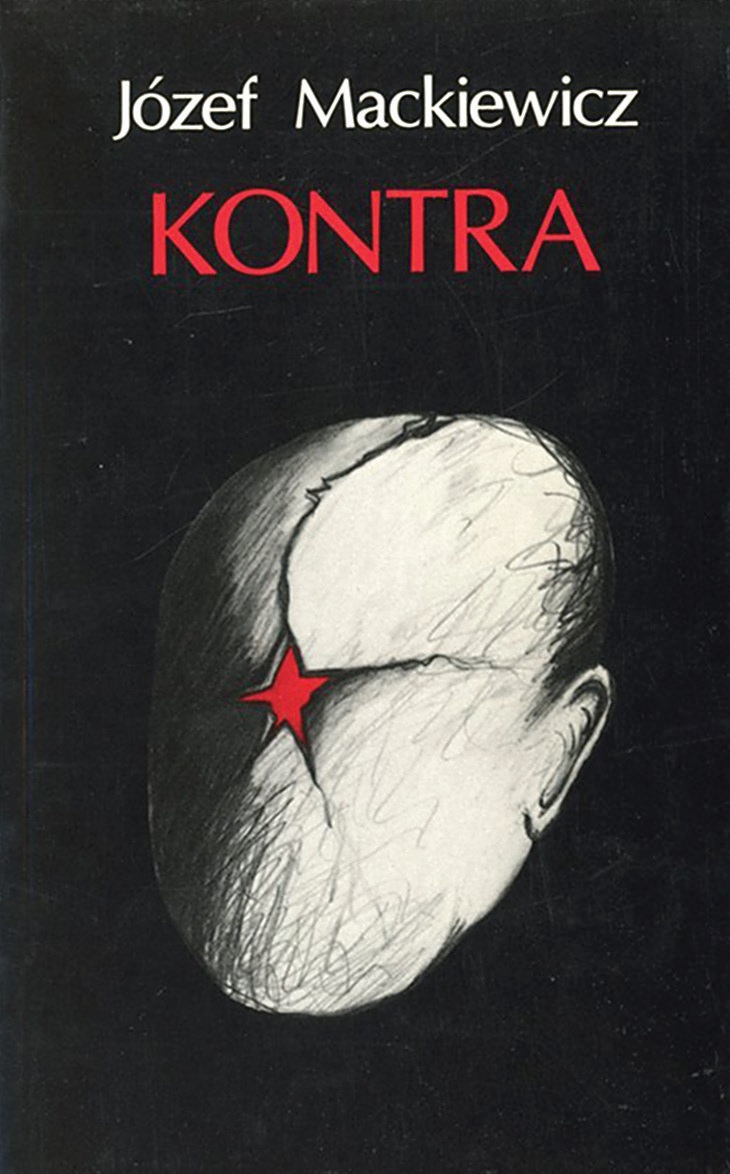
The cover of Józef Mackiewicz’s book Kontra. London edition, 1988
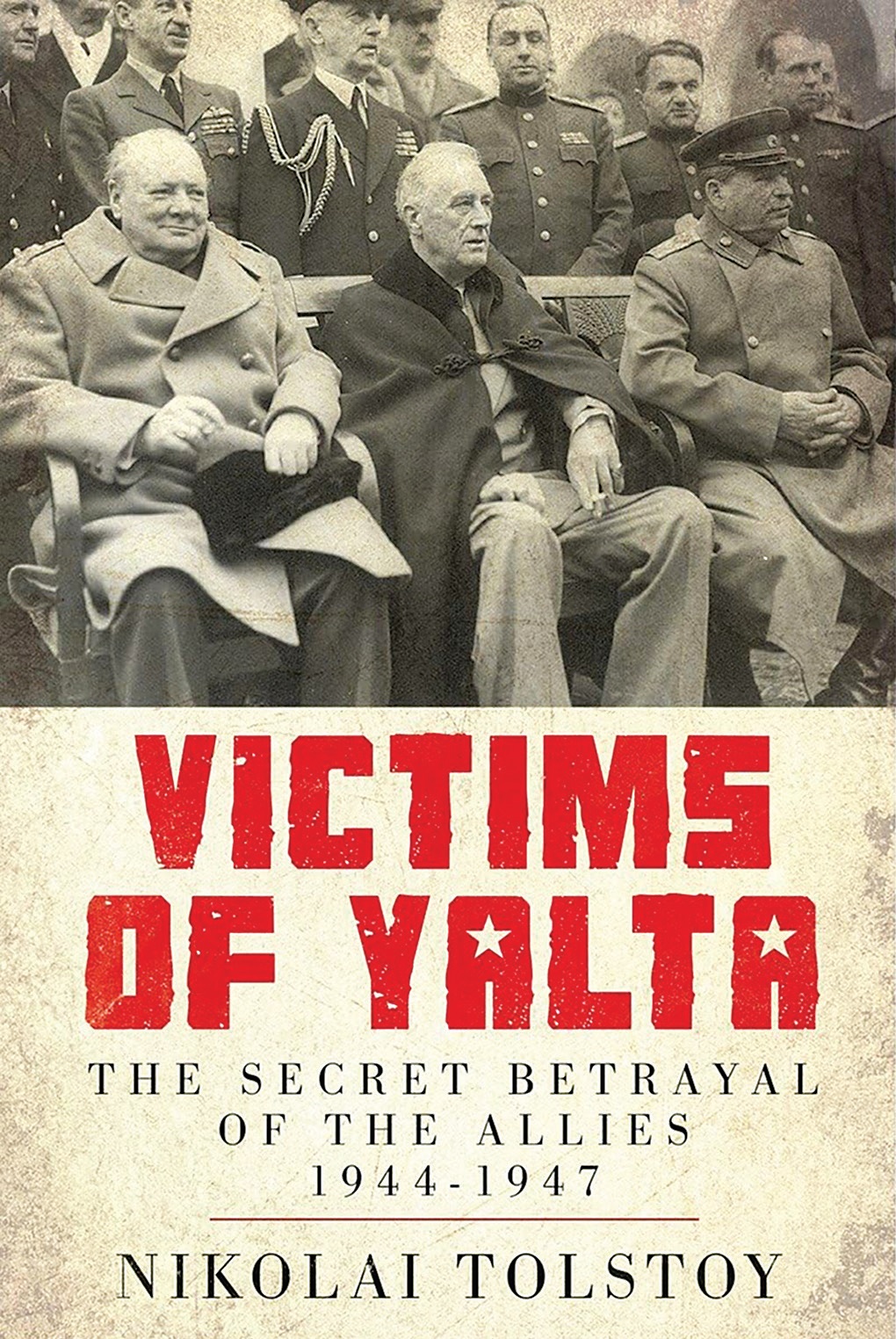
The cover of a book by a British historian and politician of Russian origin about the more than two million Russians who were victims of Yalta (2nd edition, 2013)
The Iron Curtain
One of the architects of the post-war landscape, which became known to history as “the Yalta order,” was British Prime Minister Winston Churchill. An open question remains, whether he showed enough determination in his attempts to limit the concessions made to Stalin. Was he capable of achieving more during the Yalta Conference?
What is rather clear is the fact he had no disillusions on the fate of the nations left under the Soviet umbrella. He knew the prior agreements he had made himself in Moscow in October 1944, or the ones struck by the Big Three in February 1945 in Yalta, were then consequently broken by the Soviets on almost every front. He expressed this on March 5, 1946, in his speech at the American Westminster College in Fulton. He could speak freely, since he had lost his Prime Minister’s seat in the summer of 1945, and the Soviet policy of fait acompli left zero room for doubt when it came to Stalin’s plans for the future. Stalin also dropped his act of the benignant “Uncle Joe.” It is most likely due to these reasons that Churchill, in his lecture at the American university, allowed himself to use the words which are commonly referred to as the beginning of the Cold War:
“From Szczecin in the Baltic to Trieste in the Adriatic, an iron curtain has descended across the Continent. Behind that line lie all the capitals of the ancient states of Central and Eastern Europe. Warsaw, Berlin, Prague, Vienna, Budapest, Belgrade, Bucharest and Sofia, all these famous cities and the populations around them lie in what I must call the Soviet sphere, and all are subject in one form or another, not only to Soviet influence but to a very high and, in many cases, increasing measure of control from Moscow.”
Churchill’s speech in Fulton loudly echoed across the world. Nevertheless, it was not the speech itself which started the Cold War. It was merely an accurate analysis of the situation where the West, having won the war against the Axis, lost the world peace; out of naivety or fear accepting the dual enslavement, both political and ideological, of Central and Eastern Europe. The Yalta Conference was one of the main stages of this process.
The text is from the IPN Bulletin, Issue 1-2, 2025