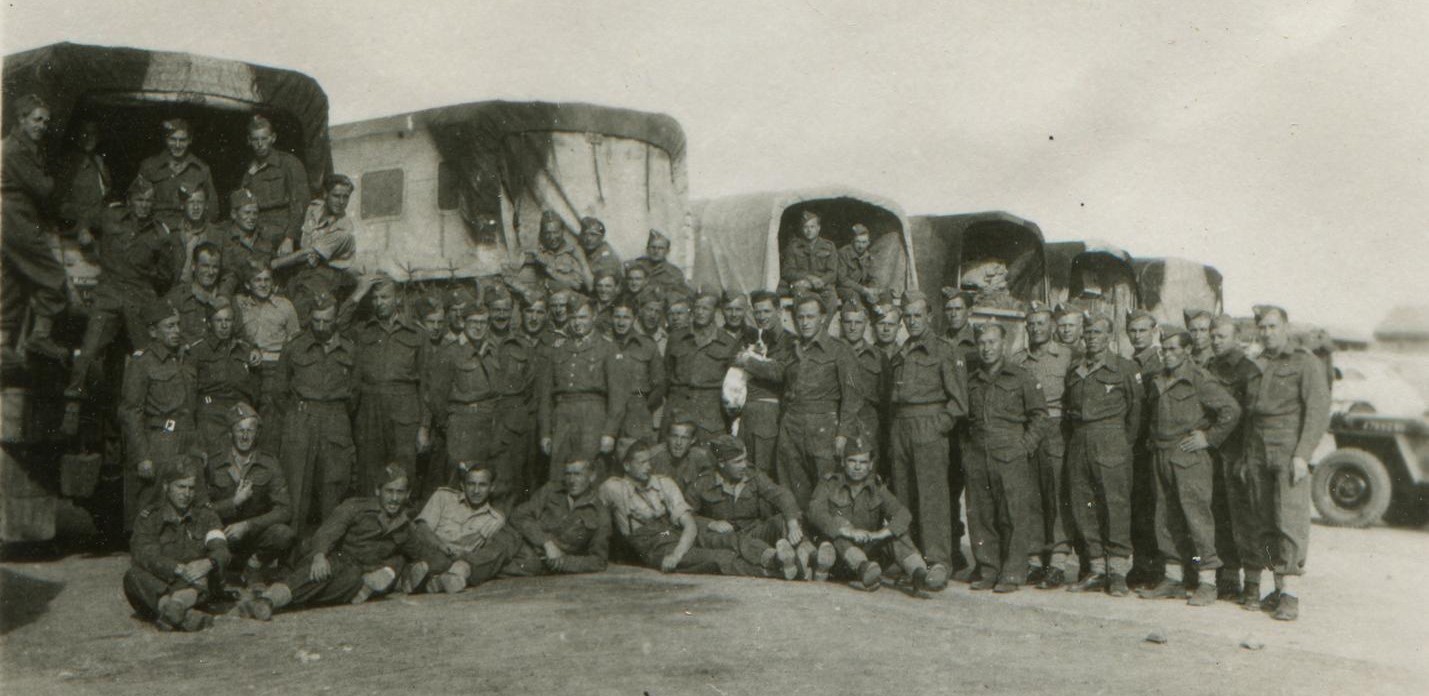

The division was formed by merging the SBSK with the 8th, 9th and 10th Infantry Divisions, which had arrived from the Soviet Union. The battle-tested “rats of Tobruk” ended up mixing with the “Anders’ soldiers,” meaning mostly prisoners from Soviet gulags and other labour camps, evacuated to the Middle East from the USSR after being released by the Soviets based on the Sikorski-Mayski agreement.
Organisation
The new division comprised three brigades and independent division units, organised according to the British structures. Most of the SBSK soldiers ended up in the 1st Brigade, while Poles rescued from the Soviet Union went to the 2nd and 3rd Brigades. According to the contracts, the division counted 578 officers and 8,419 rank-and-file soldiers; however, already on June 12 it included 690 officers and 13,356 rank-and-file.
The battle-tested “rats of Tobruk” ended up mixing with the “Anders’ soldiers,” meaning mostly prisoners from Soviet gulags and other labour camps, evacuated to the Middle East from the USSR after being released by the Soviets based on the Sikorski-Mayski agreement.
Due to the successes of the German troops in southern Russia, which posed a threat of an attack on the Middle East from the north, through the Caucasus, the Polish troops were gradually moved to Iraq in September and October of 1942. They were meant to secure the oil fields and mountain crossings from the Persian side. The 3rd DSK was stationed in the Khanaqin-Quizil Ribat region, in the Tigris river basin. In November, the division was reorganised. Following that process, the division counted 769 officers and 13,198 soldiers.
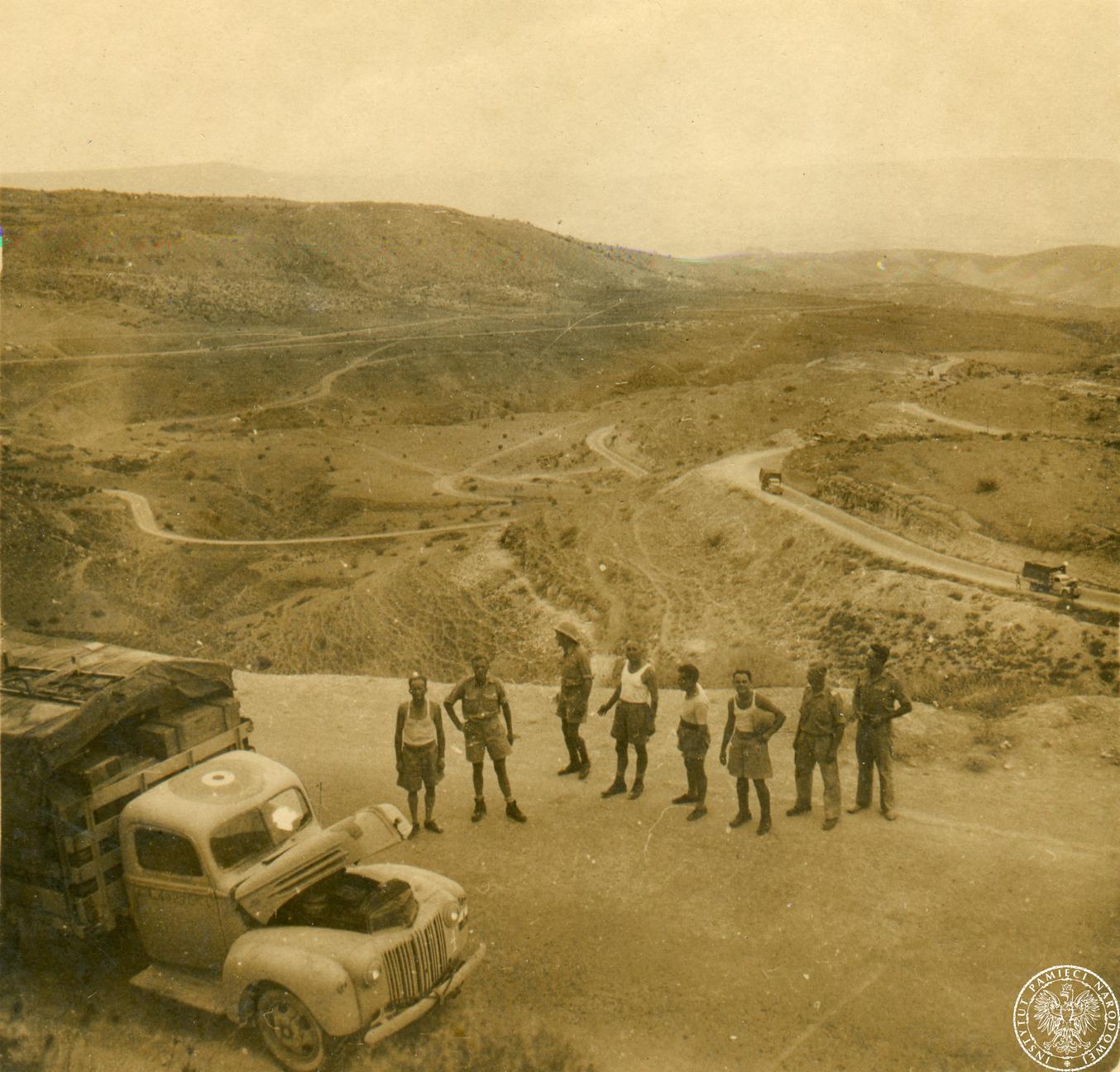
Soldiers of the 3rd Carpathian Rifle Division on their way to Iraq, October 10–17, 1942. Photograph from Karol Angerman’s album (from the archives of the Institute of National Remembrance)
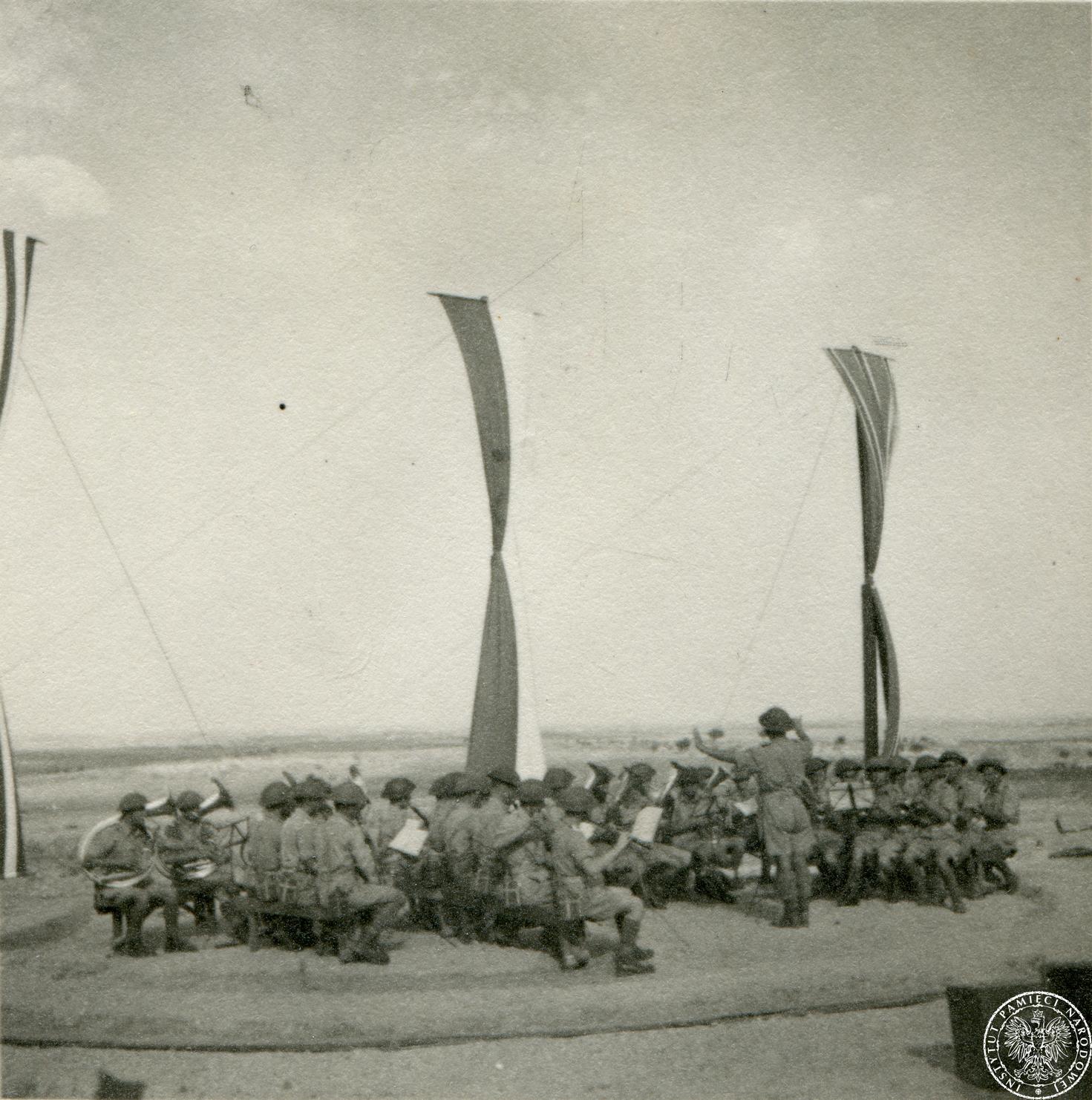
The military band of the 3rd Carpathian Rifle Division, conducted by Józef Nowak, plays at the reception marking the visit of the Commander-in-chief, General Kazimierz Sosnkowski, to the camp at El-Khassa in the British Mandate of Palestine, November 14, 1943. Photograph from Karol Angerman’s album (from the archives of the Institute of National Remembrance)
After Gen. Władysław Sikorski died in a plane crash in Gibraltar, Gen. Kazimierz Sosnkowski became the new Commander-in-chief. On July 21, 1943, he ordered the creation of the 2nd Polish Corps under the command of Gen. Władysław Anders as part of the Polish Army in the East. The 3rd DSK became part of it. Since Gen. Kopański was appointed the Commander-in-chief’s new chief of staff, Lieutenant General Bronisław Duch became the new commander of the 3rd DSK on August 6, 1943.
In a fight for Poland, in Italy
In July and August 1943, the division was transferred from Iraq to Palestine, where it became combat ready. Between 1943 and 1944, along with the entire 2nd Corps, it deployed to Italy. There, the 2nd Polish Corps joined the 8th British Army, led by Gen. Oliver Leese, operating in the Adriatic Sea area. Along with the 5th American Army led by Gen. Mark Clark, they comprised the 15th Army Group led by Gen. Harold Alexander.
In June 1944, the division took part in the fighting to break through the Gothic Line, and a month later the soldiers marched into Ancona. The division troops continued the fight through August, defeating the 278th German Infantry Division by the Metauro river. The Carpathians took part in the fighting practically until the end of the Second World War in Europe, joining the offensive in the Lombardy Valley, crossing the Senio river, crushing the 4th German Parachute Division before finally liberating Bologna.
In February 1944, the 3rd DSK relieved the 78th British Infantry Division and took their positions by the Sangro river. In the next months, they fought to break through the German defences on the Gustav Line.
The division’s soldiers showed exceptional heroism during the Battle of Monte Cassino, where after a few days of bloody combat they captured the hill defended by the Germans. On May 19, a patrol of the 12th Podolian Ulhan Regiment raised the Polish flag on the ruins of the monastery. A few days later, on May 25, the division troops took the town of Piedimonte.
In June 1944, the division took part in the fighting to break through the Gothic Line. On June 18, they liberated Pescara, and a month later the soldiers marched into Ancona. The division troops continued the fight through August, defeating the 278th German Infantry Division by the Metauro river and taking the city of Pesaro on August 31. On September 5, along with the entire 2nd Corps, the 3rd DSK was moved to the backline. It rejoined combat between December 6-17, 1944, joining the advance by the Senio river, where it stayed in defensive positions until April 1945. The division then participated in the offensive in the Lombardy Valley. On April 9, the 3rd DSK began its assault, and three days later it crossed the Senio river and crushed the 4th German Parachute Division. Continuing the pursuit of the retreating enemy, the division entered Bologna on April 21, 1945, and ended its combat trail there.
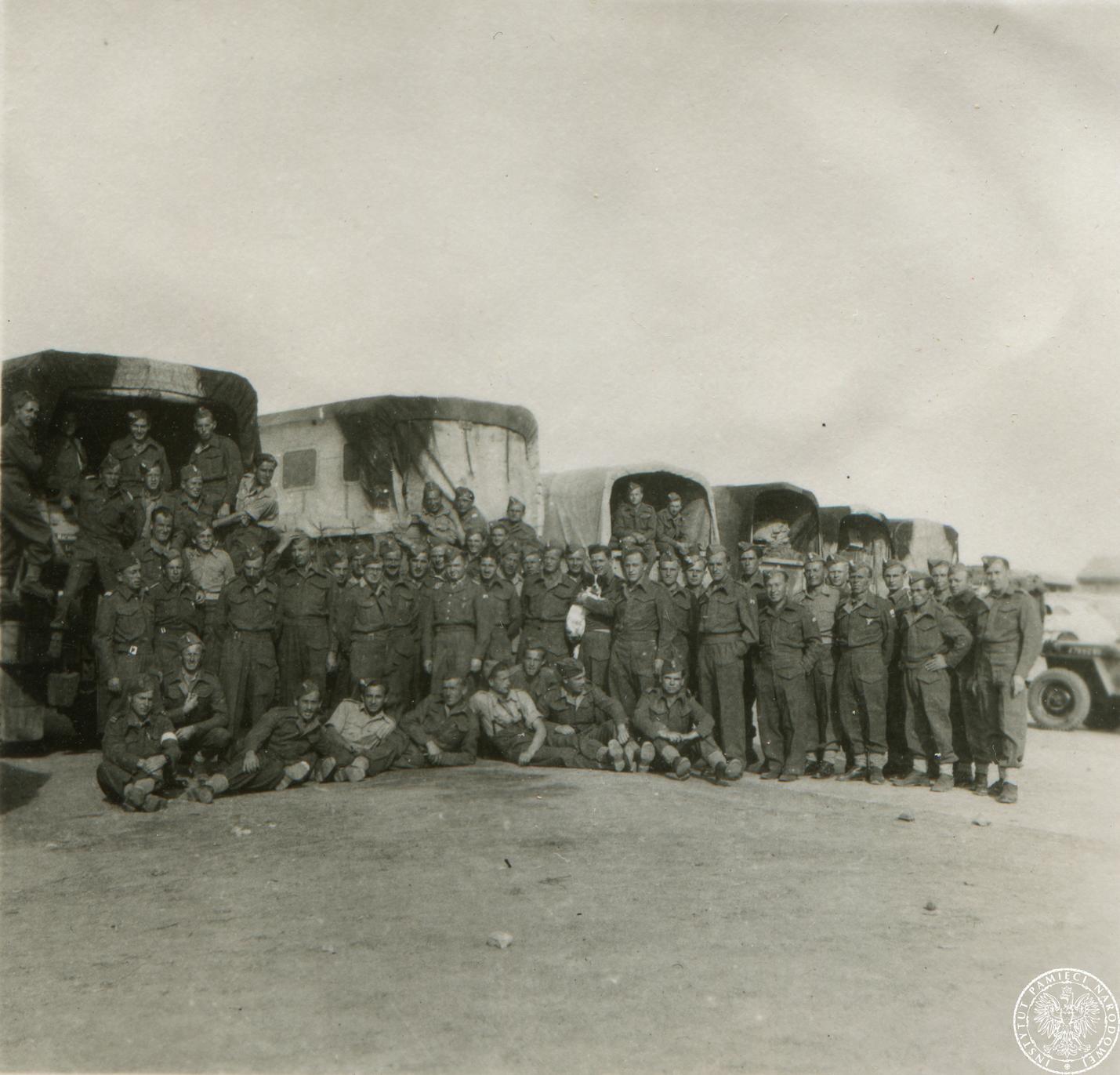
Soldiers of the 3rd Carpathian Rifle Division before their departure for Egypt from Camp Hill 69 near Gedera in the British Mandate of Palestine (now in Israel), November 26, 1943. Photograph from Karol Angerman’s album (from the archives of the Institute of National Remembrance)
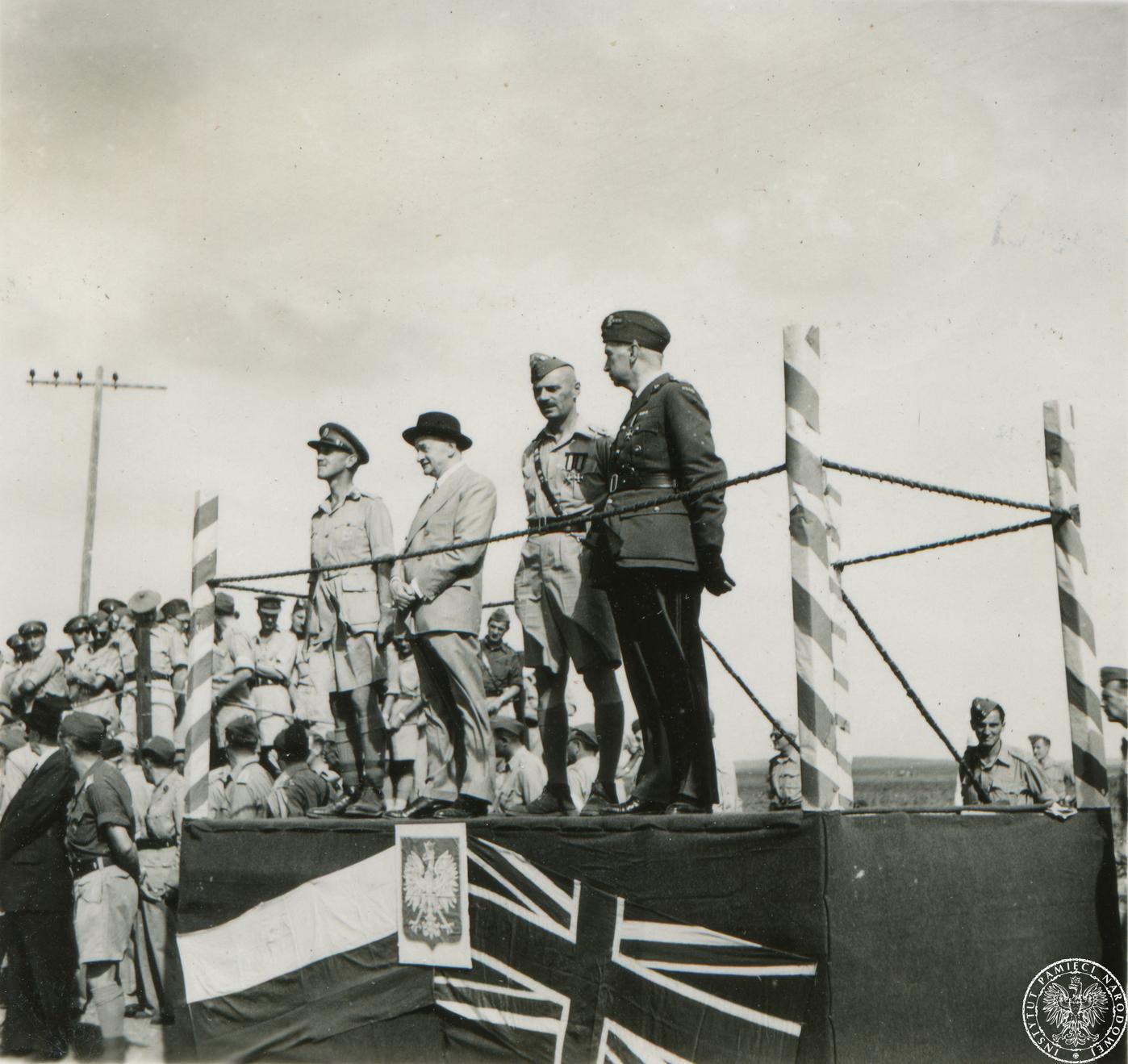
A parade of the 3rd Carpathian Rifle Division in El-Khassa in the British Mandate of Palestine (now in Israel), November 14, 1943. The Commander-in-chief, General Kazimierz Sosnkowski (first from the left on the podium) and Commander of the Polish Army in the East, Major General Władysław Anders (second from the left on the podium), as well as Minister of State for the Middle East Henryk Strasburger, review the division’s parade on the El-Khassa–Isdud road. Photograph from Karol Angerman’s album
After the war, the 3rd Carpathian Rifle Division remained with the rest of the 2nd Polish Corps in Italy, fulfilling occupation tasks. In September 1946, it was transferred to the United Kingdom and disbanded.
* * *
Among the archival materials of the Institute of National Remembrance concerning the 3rd Carpathian Rifle Division are digital copies of four photo albums containing photographs of Captain Karol Angerman, who served with the SBSK and the 3rd DSK as an officer in the repair workshop. The photographs document this soldier’s experiences up to February 1944, when his unit was stationed in Bojano. In 2019, the Institute published a bilingual album: Piaszczyste drogi karpatczyków. Fotografie kpt. Karola Angermana z lat 1940‒1944 / Along the Sandy Trails with the Carpathian Riflemen. Photographs by Capt. Karol Angerman, 1940–1944.