The post opened with a statement negating fundamental facts:
“Poland was the first country where Jews were forced to wear a distinctive badge in order to isolate them from the surrounding population.”
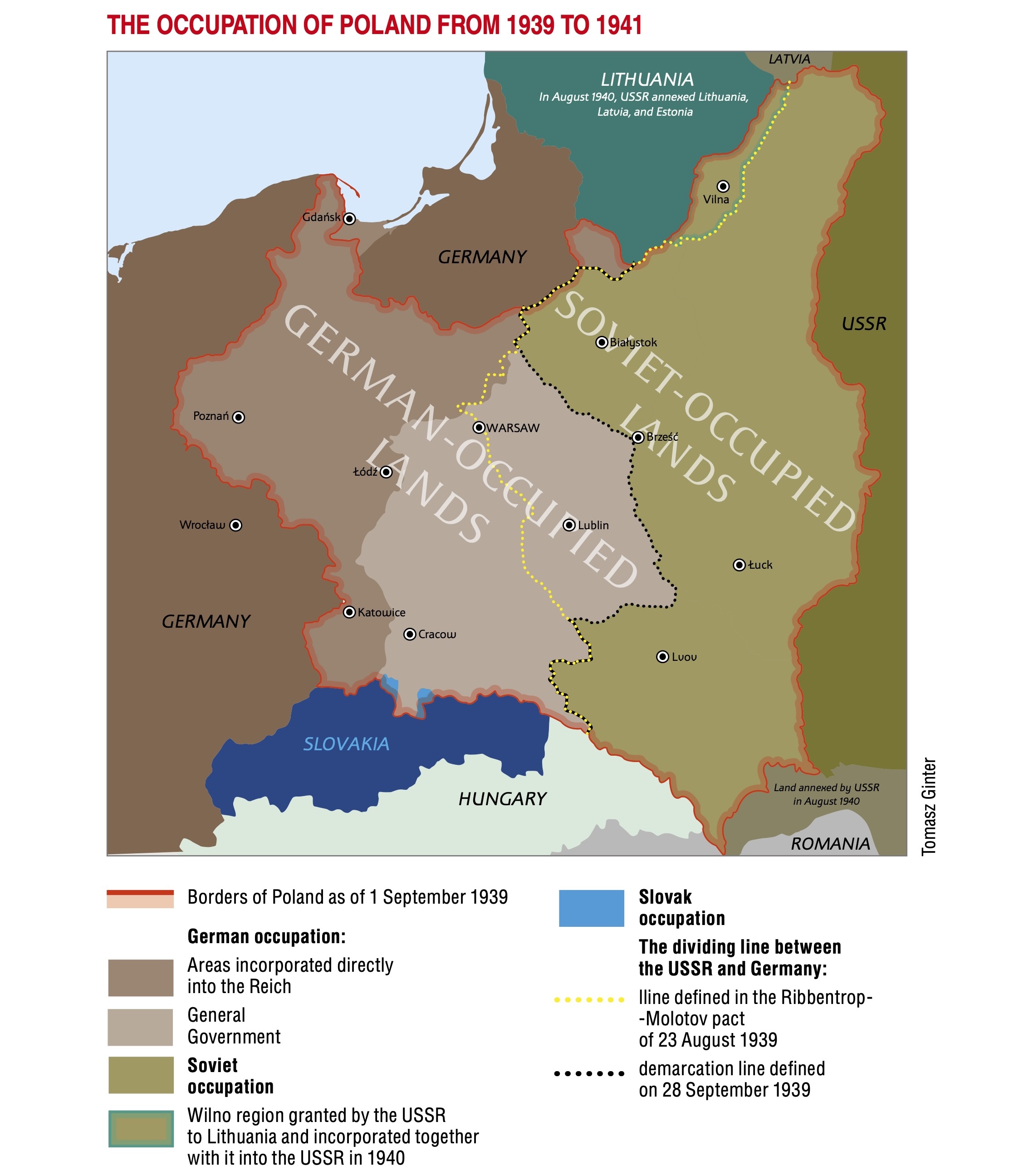
Such assertion triggered reactions of the senior Polish state officials. Also in response, Auschwitz-Birkenau Memorial and Museum issued a detailed explanation of the actions carried out by the Germans, of what their decree – referred to by Yad Vashem – entailed, and who Hans Frank was.
As a result, Dani Dayan, the Chairman of Yad Vashem, published an article entitled “Defending the Truth is Our Goal” in Poland’s Rzeczpospolita (8 December 2025). He wrote:
“Hans Frank was an infamous German Nazi official, who served as the head of the [German-run] General Government, in German-occupied Poland […], which was an entity created by Germans as part of their occupying regime.”
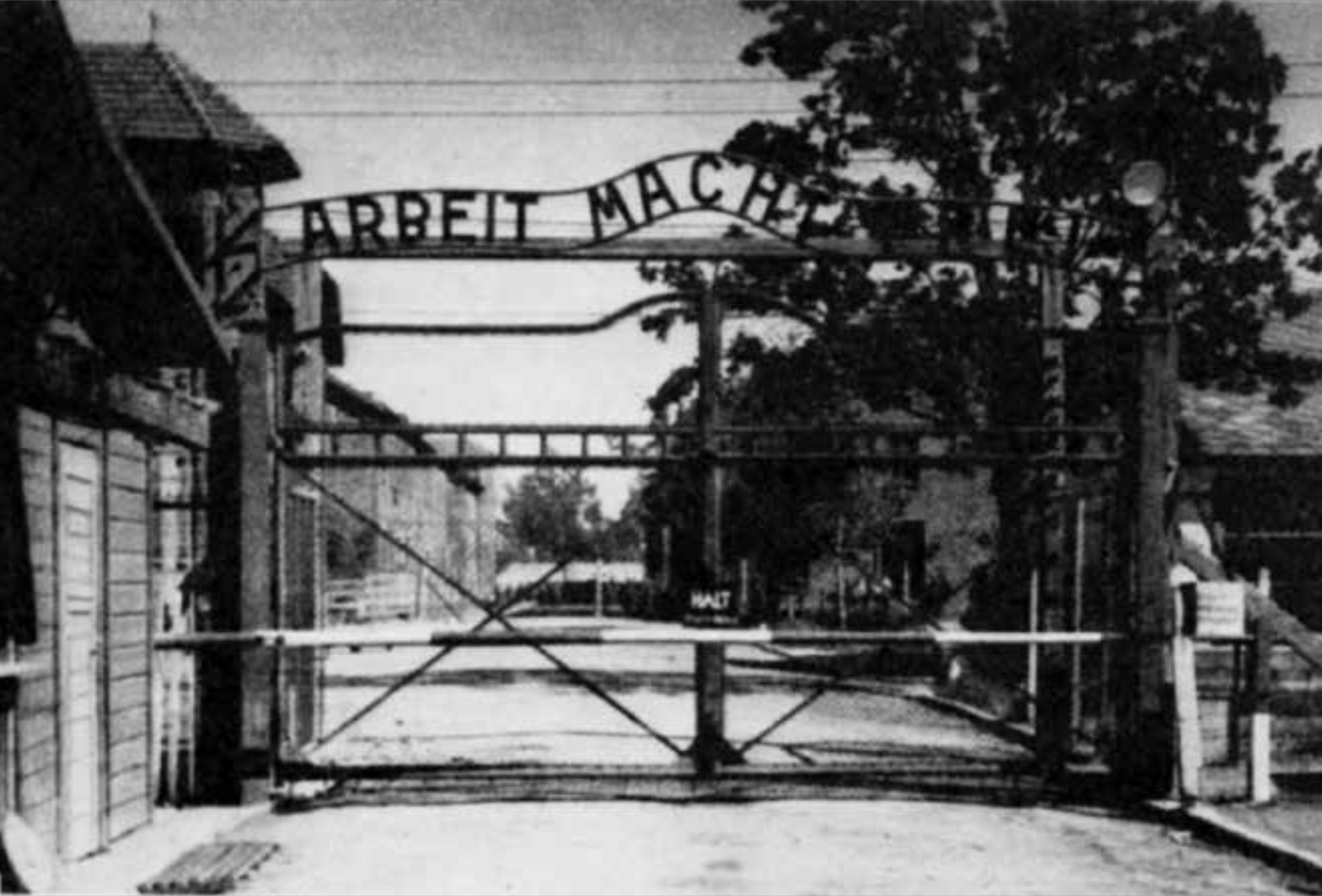
The main gate of the German death camp KL Auschwitz (photo from the Archives of the Institute of National Remembrance)
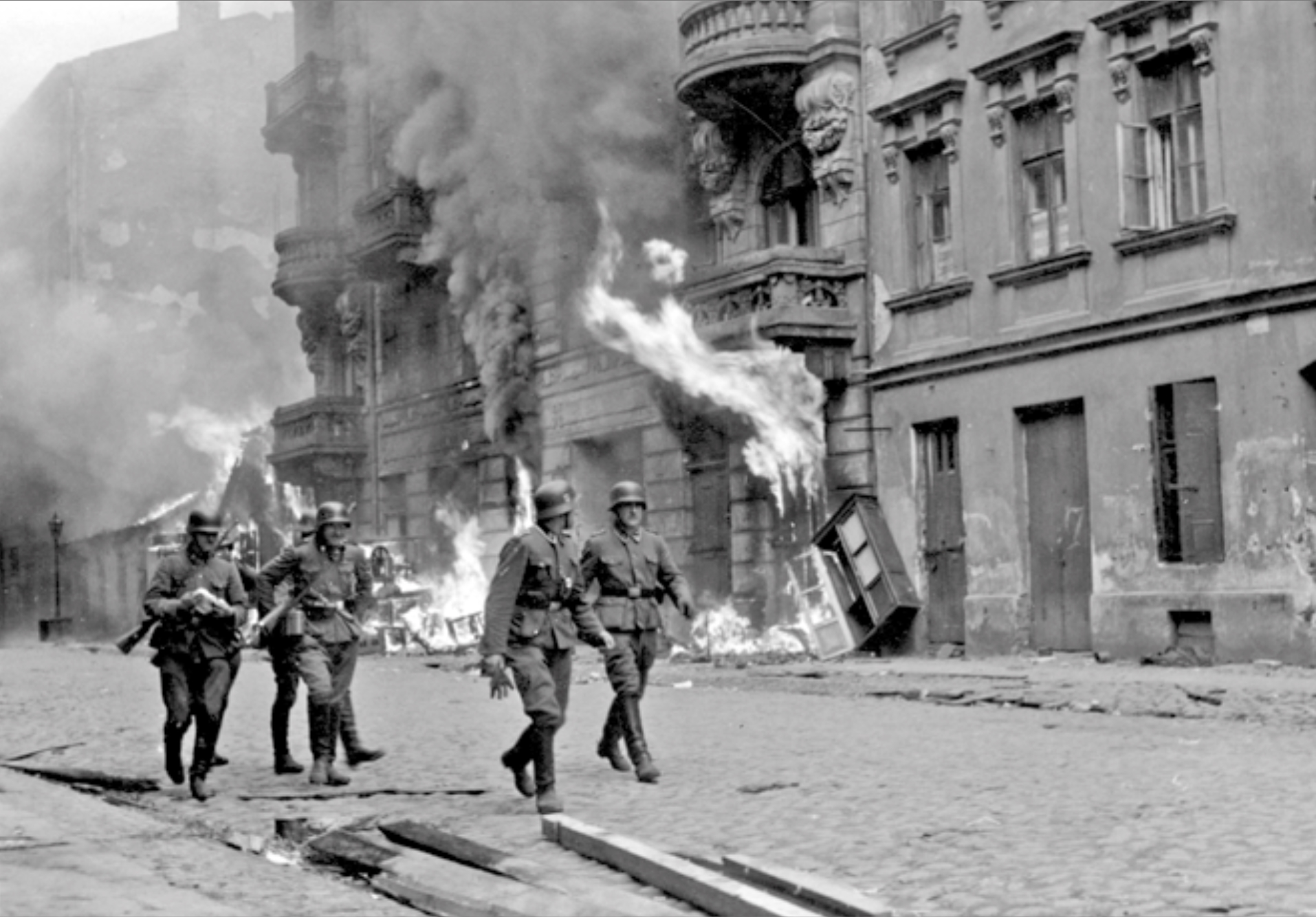
German soldiers in 1943 during liquidation of the German-delimited Jewish quarter in Warsaw (photo from the Archives of the Institute of National Remembrance)
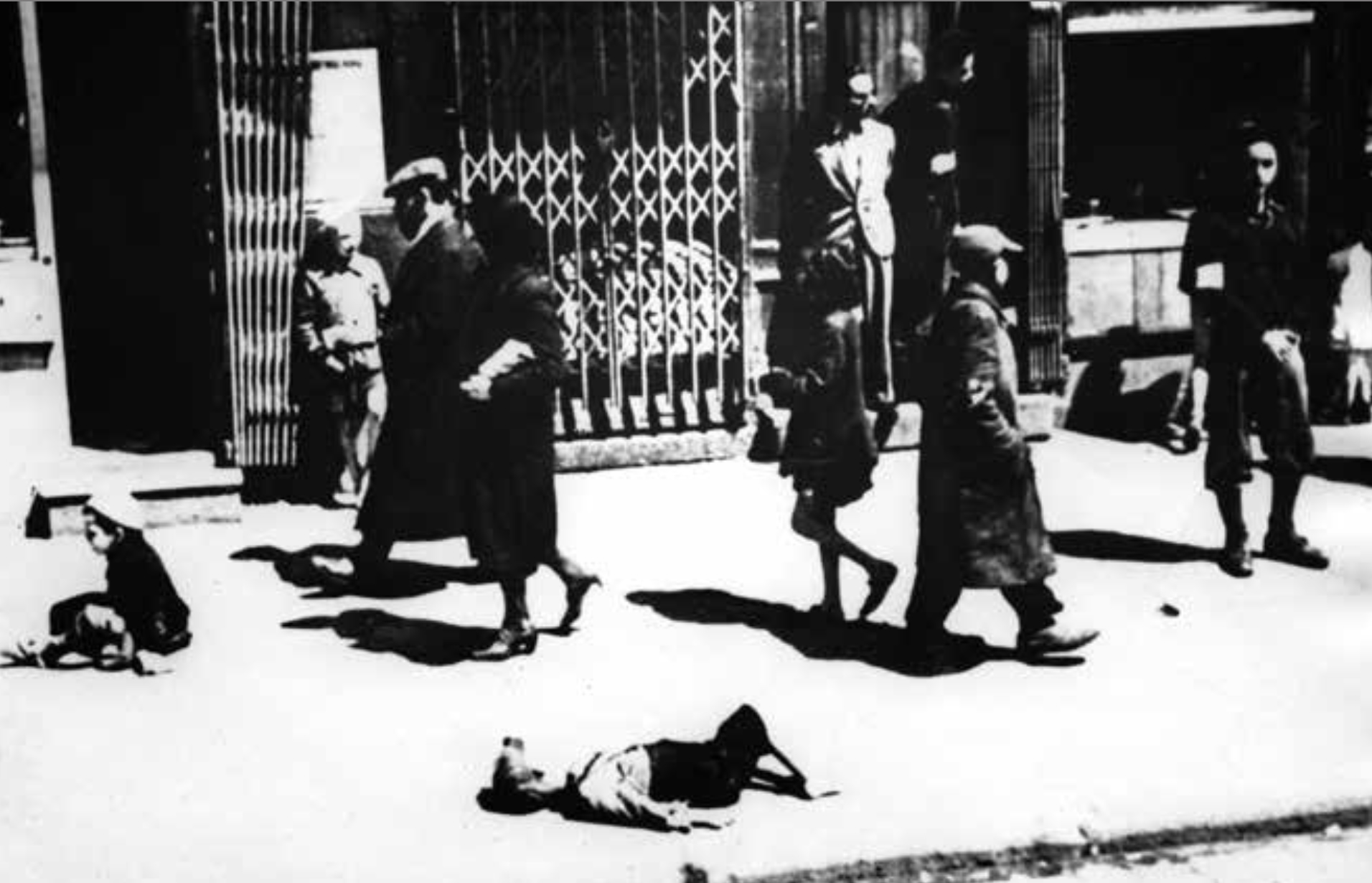
A street in the German-established Jewish ghetto in Warsaw (photo from the Jewish Historical Institute)
Words of Mass Destruction
And yet an issue remains. In his article, Dayan clarified that the original Yad Vashem post implied German responsibility, stating that
“these facts are known to anyone with basic knowledge of the period.”
The problem is that posts on X reach millions of people unfamiliar with the historical context. X’s impact rests on short high-impact slogans and keywords. Yad Vashem has ample tools at its disposal to convey messages aligning with historical truth.
On social media, the opening line is what captures the users’ attention. And thus, every word and the overall structure of a message matter.
I do not know what sort of mental leap could possibly justify writing about the brutal actions of German occupiers’ administration – actions foreshadowing a genocide – employing the word “Poland.” Dani Dayan argues that there is no point to constant repetition of phrases such as “by German authorities” or “in German-occupied Poland.” That is true, as long as readers are clearly informed at the outset on who or what is being discussed. Yet, in the debate surrounding the above mentioned post by Yad Vashem, there is no question of any such repetition. The post claimed that Poland – that is, the Polish state – was the first country to introduce measures targeting Jews in November 1939. This statement determines the public reception of the entire piece. Instead, Yad Vashem could have written “Germany” – just one word, even without adding an adjective “Nazi,” since there was no other Germany at the time. The name of the General Government is used anyway in what follows, thus providing geographical framework for this anti-Jewish decree. There is a reason why Roger Moorhouse, a British historian and author specializing in the history of the Third Reich, wrote explicitly:
“Pretty shameful of Yad Vashem. They know very well that it wasn’t ‘Poland,’ but the German occupation regime that introduced the measure – but they write ‘Poland’ anyway. A cheap shot.”
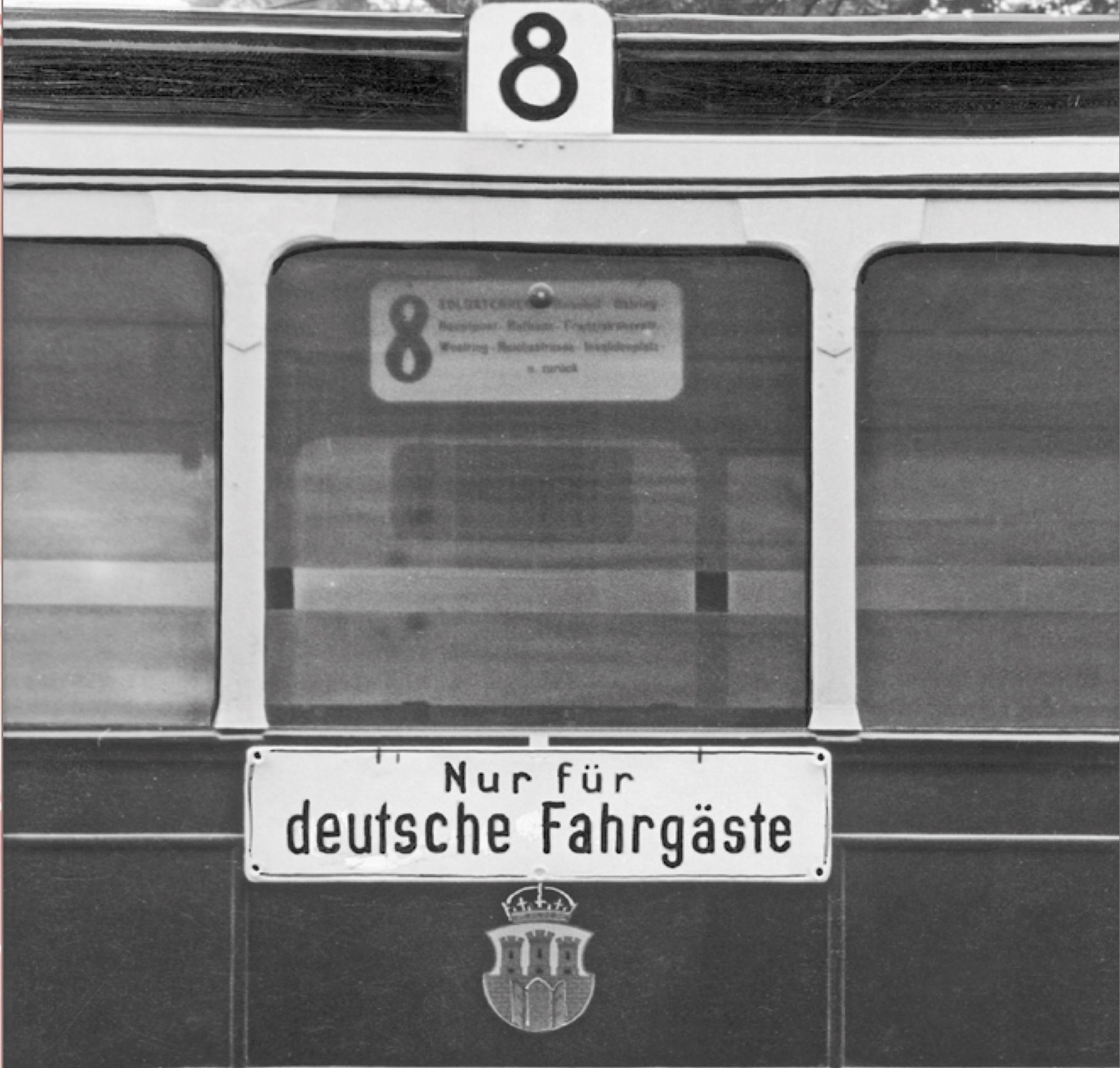
A tram with the sign "for German passengers only" in the occupied Kraków in 1941 (NAC)
Room for Falsehoods
One might have expected that as ever more eyewitnesses of the atrocities of the Second World War pass away, emotions sired by wartime experiences and their consequences would settle. Today we observe the opposite: there appears to be increasingly more room for falsifying even the most basic of facts, which remains a political tool employed by various states – not only to manipulate politics of memory, but also to legitimize ongoing political objectives. Once, eyewitnesses could challenge any falsehoods circulating in the public sphere. Now nearly none of them remain to set the facts straight. Any lies, regardless of how crude or sophisticated they may be, can project ever greater impact.
Dani Dayan is mistaken when he writes that Hans Frank’s German
“identity, nationality, and role are obvious to every reader.”
They are not. Today, millions of readers worldwide have no idea who he was, or what the German-formed General Government he headed was. While being moved by accounts of brutal crimes and genocide, many of them readily take any skillfully crafted falsehood for the truth. For instance, several years ago, a British tabloid Daily Mirror described Hans Frank as a “Polish mass murderer” who, alongside Joachim von Ribbentrop,
“was executed for the role he played in initiating the Second World War.”
How are readers supposed to know that this is a lie – and one that is repugnant on multiple levels – if, clearly, the fact that Hans Frank was a German responsible for countless murders of Jews and Poles, is not well known to all in this day and age?
Dani Dayan is also certainly aware that among historians and researchers of other disciplines, who have lately taken to describing German occupation of Poland by employing source material only selectively – which goes against all good academic practice – there are those who are now introducing the absurd term “Polish-German administration” to describe the German-run General Government. Such scholars would fail any academic examination. And yet, despite jarring gaps in their knowledge, today such individuals present themselves as “Holocaust experts,” and are being applauded according to ongoing political demands.
False, anti-Polish, ‘anti-memory’ narratives are reiterated daily, internationally. Contrary to the facts, Poland is being presented alongside Germany in some accounts of the Second World War; false terms such as “Polish death camps” are in circulation. At times it is part of a deliberate action. Other times – the result of ignorance among those who remain unaware that Poland was indeed a country that fought against Germany from the first to the last moment of the war, underground and in exile, alongside the Allies.It was the Germans who murdered people on Polish streets, who created the ghettos, who committed to exterminating the Jews, and carried it out. That there were members of the subjugated population – on both sides of ghettos’ walls – willing to profit from the misfortunes of others, traitors of both Polish and Jewish nations, does not change the fact that it was the Germans who determined conditions for life and death of Poles and Jews alike. It was also the Germans who created and exploited certain organizations subordinate to their authority, such as the ‘Blue Police’ (Polnische Polizei), composed predominantly of Poles, and the Jüdischer Ordnungsdienst, composed of Jews, arbitrarily assigning them various parts to play, including in the Holocaust. Finally, it was the Germans who, on the occupied territories, carved out a world in which natural human instincts to support those in need or any attempts to offer support were defined as “crimes,” punishable by death.
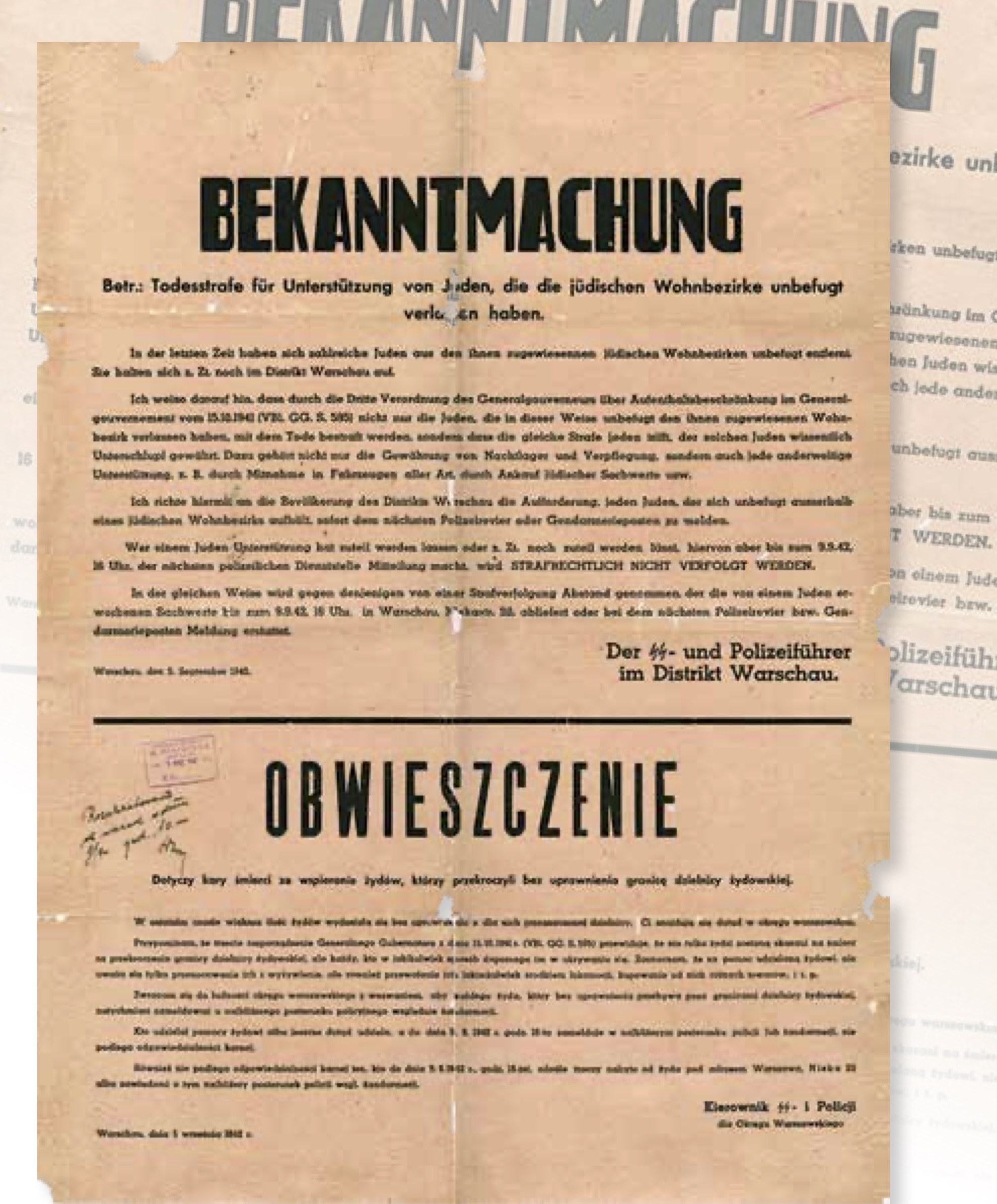
One of thousands of announcements distributed by Germans in Polish lands, pronouncing a death penalty for assisting the Jewish population in any way
Humility and Responsibility
Poland, which suffered horrific losses at the hands of its German occupiers, has a duty to demand respect for the truth, precision in wording and in framing historical contexts, as well as a duty to persist in defending the facts against ignorance and distortion.
It is by all means a good thing that the senior Polish government officials react to such posts by institutions of this stature. If, as Dayan declares, Yad Vashem’s goal is an
“unceasing defense of the truth,”
then its contributions should be true to the reality, so that
“the darkest chapter in human history is never distorted by anyone, for any reason.”
What has to be rejected is Dayan’s claim that “such a reaction” of the Polish authorities harms Polish-Jewish relations. What actually harms them, harming also the memory of the victims of the Holocaust, is any distortion of the truth, and any message that fails to distinguish between the German aggressor and the state conquered and occupied by it.
Reporting on genocide and crimes committed by totalitarian regimes, calling a spade a spade when it comes to referencing perpetrators and states that mobilized their entire potential to murder millions of people, requires taking responsibility for each and every word. Like Dani Dayan himself emphasized,
“[the Holocaust] is a chapter of history which requires earnestness, humility, and accuracy [when grappling with it]”
– nothing more, nothing less.