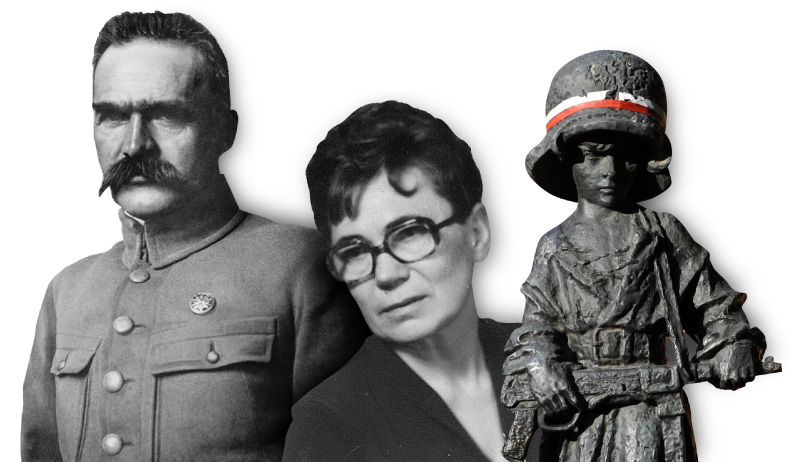

The prison on Młyńska Street in Poznań was a criminal and investigative prison during the war. It held inmates, but it was also the place of execution of those sentenced to death by German courts. It’s there where the extermination of Poles took place since mid 1940.
The prisoners were killed by hanging, firing squad and the guillotine. Between 1940-1945, at least 1,639 were murdered in the prison on Młyńska. Around 1,400 of them were killed with the guillotine.
Content of the letter by Jan Kuliński:
My beloved parents, so far I’m healthy and well. I only miss you and the entire family so, so much! I miss little Leonek the most, I can still see him in front of my eyes… (…) Dear parents, write back to me and tell me if you’re alright and healthy and how you managed this winter. I’m sure you thought about me in the cold and hunger, but I worried about you even more when I saw the cold settle on the windows. I cried many times in the corner, but what can we do, we just have to suffer.
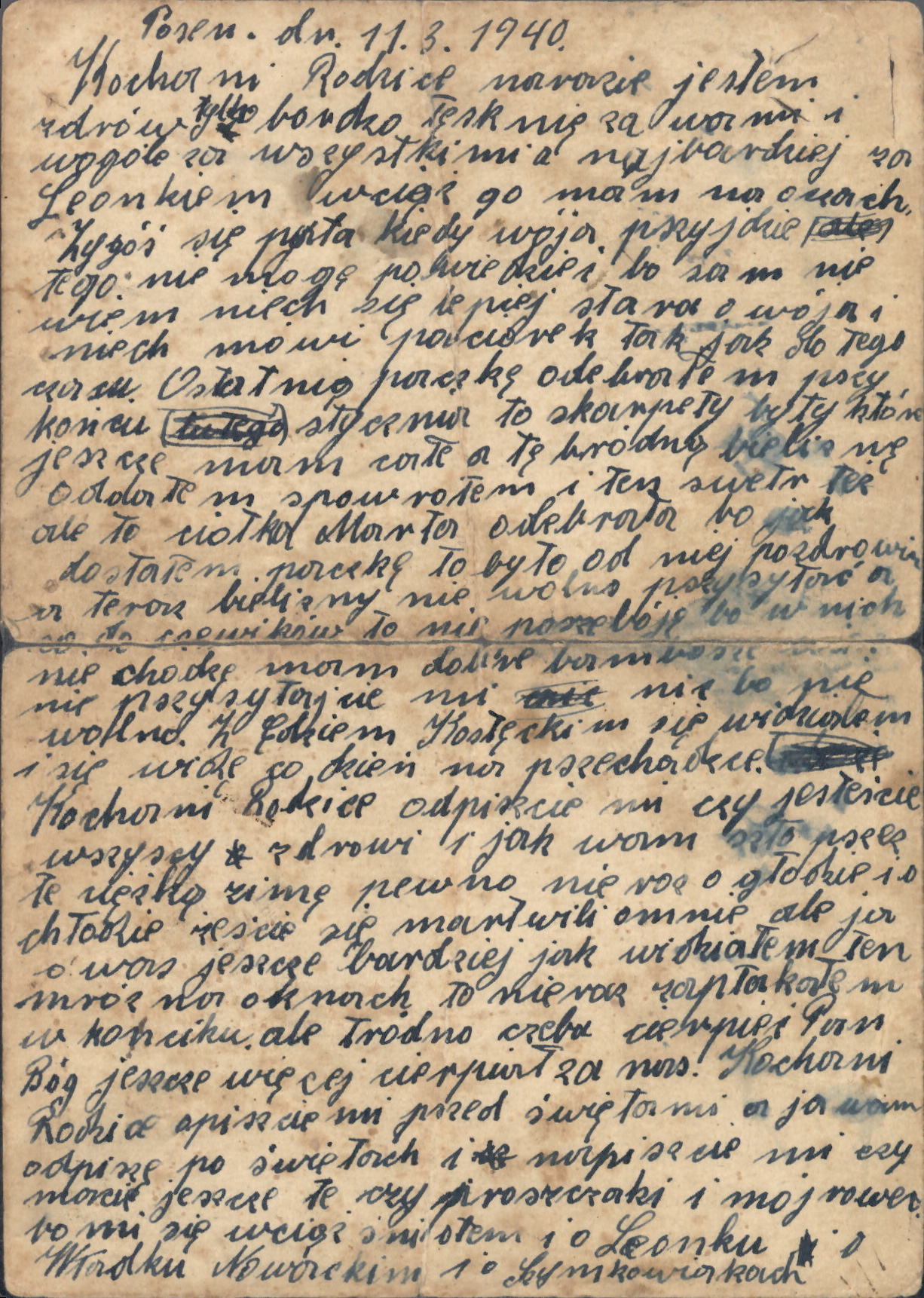
Jan Kuliński’s letter to his parents, donated to the Archive of the Institute of National Remembrance in Poznań as part of the Archive Full of Remembrance project
Factory of crime
In the torture halls on Młyńska, the guillotine was a murder weapon used to execute Poles. It was operated by an executioner and his two assistants. These executions took place in early morning, 2-3 times a week, usually on Tuesdays and Fridays. The sentenced person was put into a death row cell a day before the execution. There, they spent their final hours of life. The prisoner was watched by guards so they wouldn’t commit suicide.
Between 1940-1945, at least 1,639 were murdered in the prison on Młyńska. Around 1,400 of them were killed with the guillotine.
After the decapitation, the killed prisoners’ bodies were transferred to the Department of Anatomy and Forensic Medicine of the Collegium Anatomicum. They were then burned in crematories. At least 867 victims’ bodies were torched there. Some bodies were sent to the anatomical facilities in the Third Reich as “scientific aids” for the students of medicine. The Vienna Anthropology Museum also received more than a dozen skeletons of murdered Poles as “research materials”.
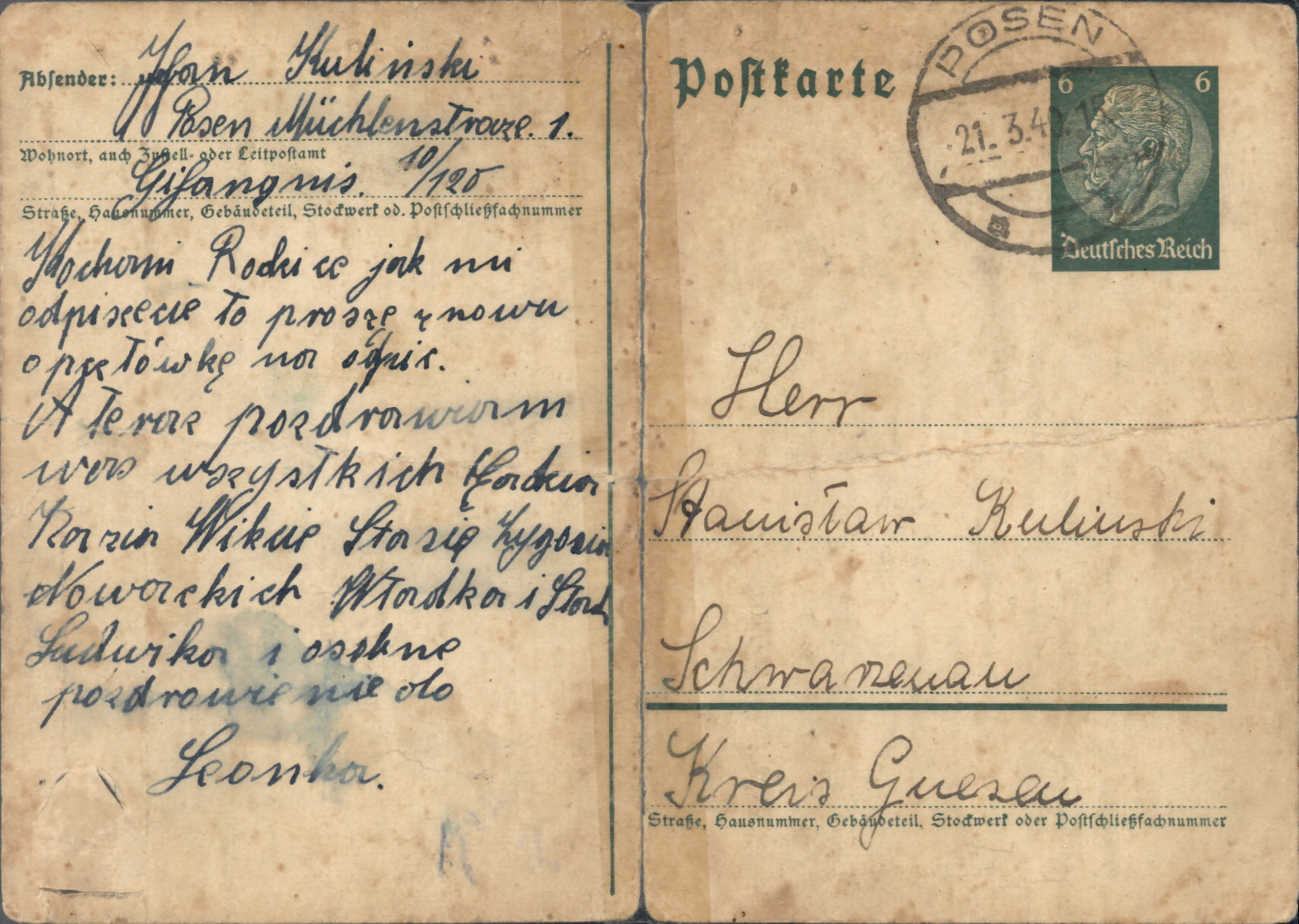
Jan Kuliński’s card to his parents, donated to the Archive of the Institute of National Remembrance in Poznań as part of the Archive Full of Remembrance project
Executioners and victims
The prison on Młyńska Street employed around 100 people in 1944. The payment list for German executioners from that year has been preserved. It shows that the prison employed five executioners and five assistants.
Some bodies were sent to the anatomical facilities in the Third Reich as “scientific aids” for the students of medicine.
The executioners delivered death penalties on Poles not only in Poznań but also in Łódź, Inowrocław, Włocławek and Kalisz. In 1944, they killed 138 people, including 94 in Poznań, on Młyńska Street.
The archives of the Poznań Branch of the Institute of National Remembrance contain a letter from prisoner Jan Kuliński, sent to his family on March 21, 1940, from the prison on Młyńska Street. The photographs come from materials provided by the Polish Society of War Veterans and Former Political Prisoners, the Gostyń Branch.
The documents were donated to the Poznań Branch of the Institute of National Remembrance as part of the Archive Full of Remembrance project.