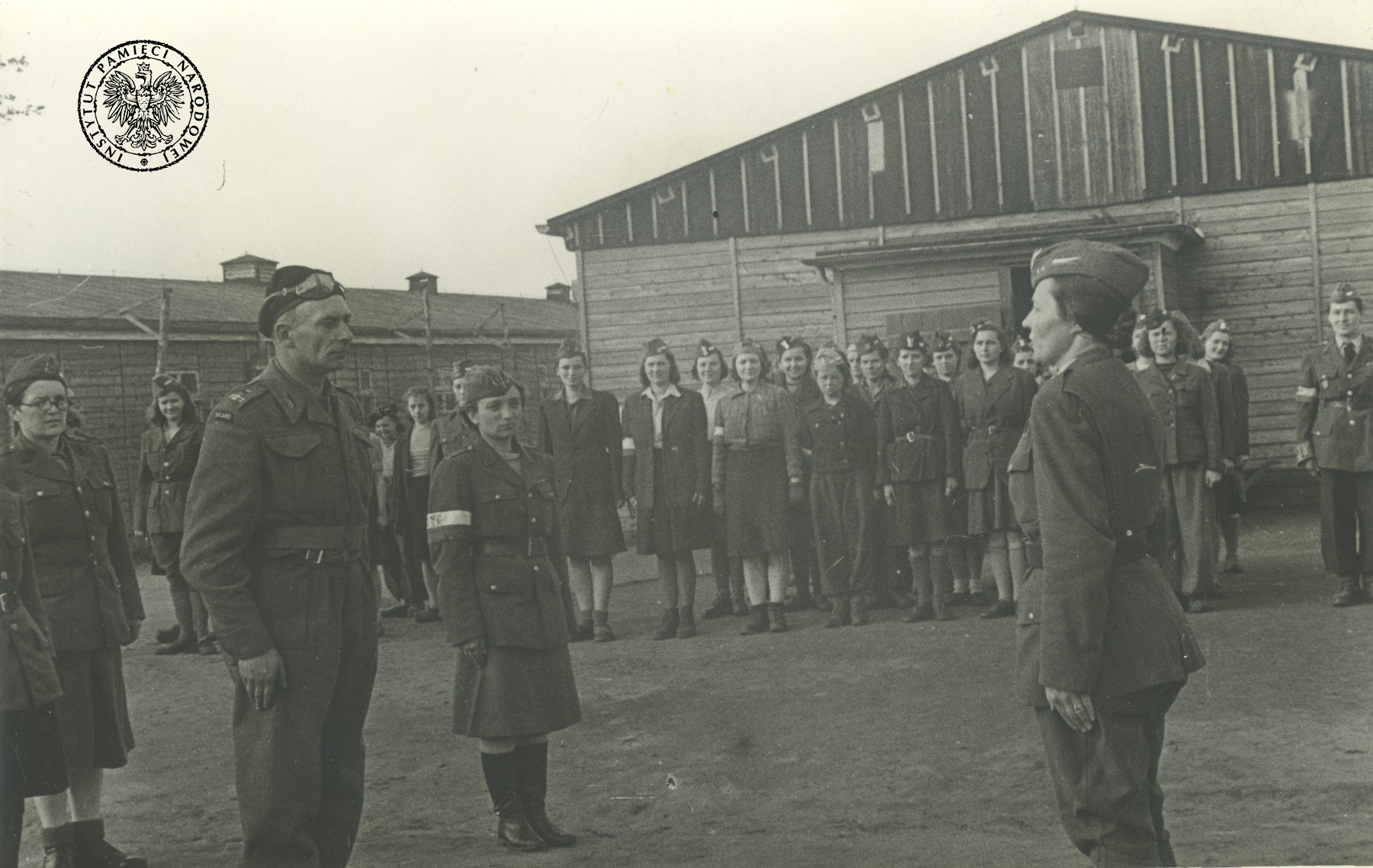
The camp in Oberlangen, north-western Germany, was founded in 1933 as one of the isolation camps for the Germans deemed enemies of the Nazi state, including the communists. In the beginning of the war, it was transformed into a POW camp, and it operated as an Oflag until September 1944.
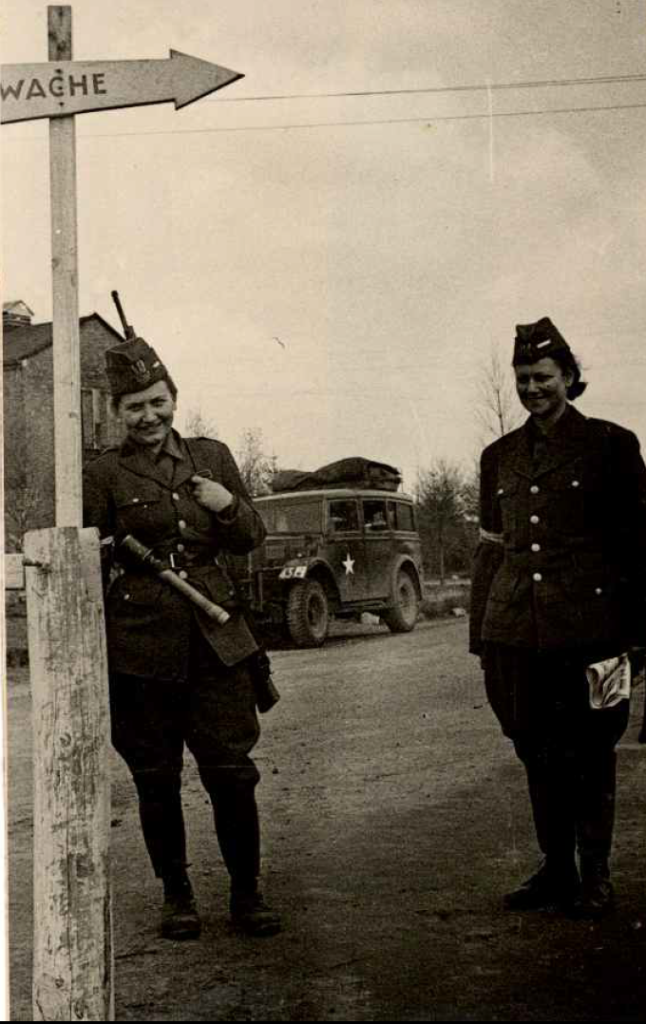
Two anonymous women in the liberated POW camp for female Home Army soldiers from the Warsaw Uprising, Stalag VI-C Oberlangen. Photo from the Archives of the Institute of National Remembrance
Camp of hunger and misery
From June 1940 to April 1941, Polish officers captured in the September invasion of Poland stayed in the camp. Then they were transferred to a different location, and Soviet prisoners were put in Oberlangen in the summer of the same year. For the next year, from September 1943 to September 1944, the camp held Italian officers captured after the country surrendered to the Allies. In November 1944, the camp, functioning as a stalag from that time on, became the holding place for Polish women who fought in the Warsaw Uprising.
The conditions in the camp were extremely harsh at the time. The women suffered especially from hunger and the cold of winter. What’s worse, the International Red Cross had no idea that prisoners were held there, so no packages reached the camp. Nevertheless, the prisoners managed to organise secret education inside Oberlangen, as well as underground cultural and patriotic events.
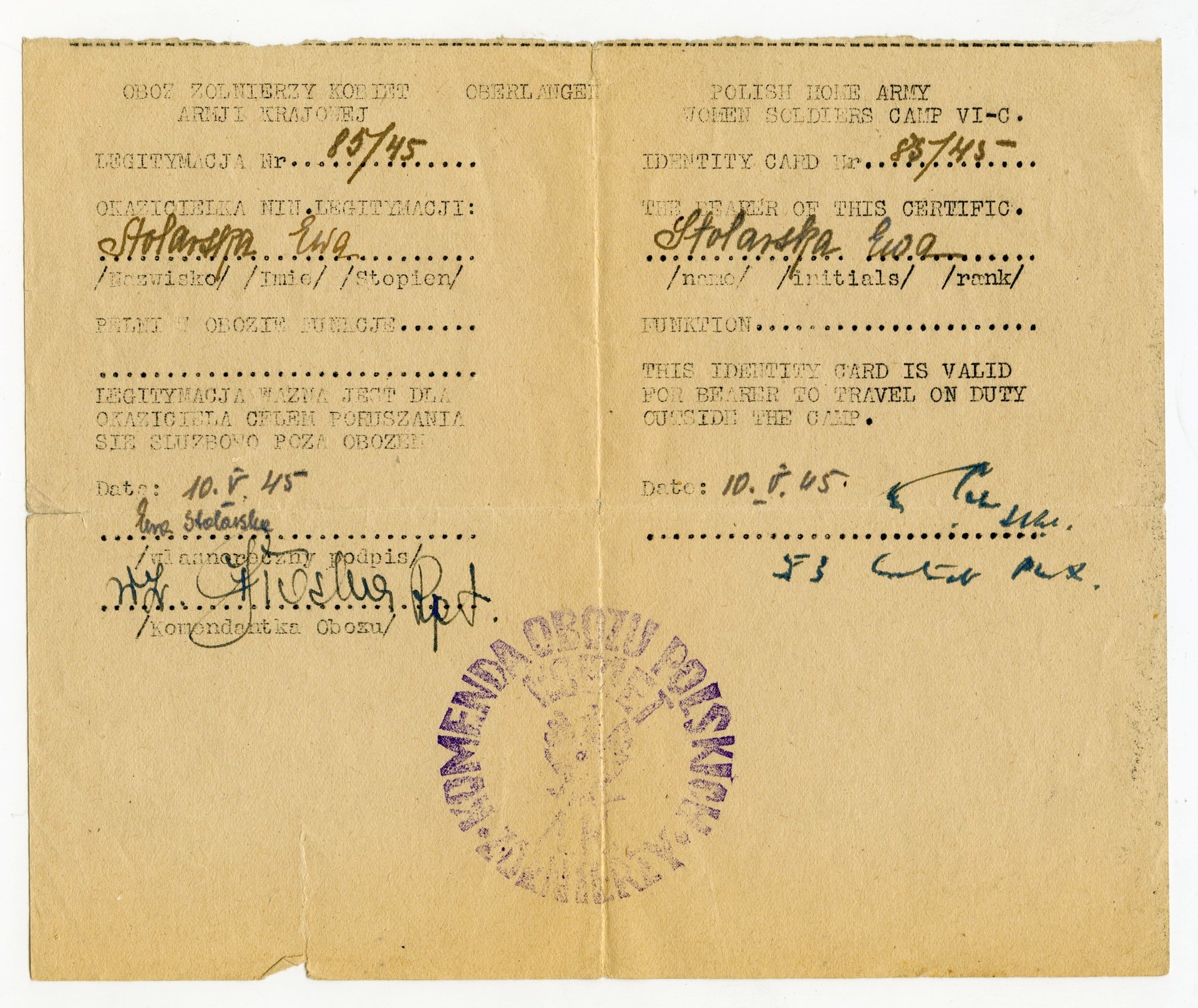
Ewa Stolarskas ID card authorising her to move on official business outside the camp, May 10, 1945. Photo from the Archives of the Institute of National Remembrance
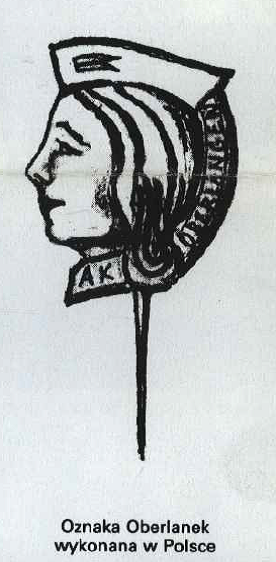
The badge of Polish female POWs from Oberlangen made in Poland, Album Stalag VI C 1944-1945. From the collections of the Institute of National Remembrance
Among their own
On April 12, 1945, some 1,700 imprisoned women were set free, and it was done by Poles nonetheless: the soldiers of the 1st Armoured Division of Gen. Stanisław Maczek.
This unexpected situation was especially moving for the Polish battle-hardened soldiers. The action’s commander, Lieutenant Colonel Stanisław Koszutski, wrote the following:
“What in the devil? What kind of creature is this? Some small figure runs towards us… It’s wearing a long, almost ground-length soldier’s coat. This person has a Polish soldier’s cap on their head, with the Polish eagle and the mark of the 7th Ulhan Regiment… It is a young, pretty girl!
“English? Francais? Americano? Canada? Sind Sie?” She shouts in our direction.
“Poles! Poles, miss! The First Armoured Division, love!” Witkowski shouts back at her.
“Poles! My God, it’s Poles! We are from the Home Army! From the uprising, from Warsaw. Polish gentlemen! It’s a miracle!” Shouts the young lady and runs with us.
We run into the big camp square between the barracks. From the barracks, like from beehives, come out crowds of only women. All of them in uniforms or rags which used to be uniforms. They surround our tanks and block our way. The crowd of several hundred women is so fantastical that it seems like a masquerade for a movie set. We are completely shocked by this sight. We expected the strangest things in our imagination when leaving for this expedition, but not this…”
And that’s how this moment was remembered by Ewa Stolarska, a prisoner from the Stalag VI C Oberlangen camp:
“[…] we hear burst shots from submachine guns getting closer and closer, as well as the revving of multiple engines. Most of the girls run towards the barbed wire, certain that it must be the English approaching. I’m fully composed and rather resigned, I don’t have faith that we can be freed. The shooting gets more and intense, the bullets start whizzing past our ears, we are expecting a fight. The girls come running with joy that tanks, armoured vehicles and motorcycles are riding down the road. An indescribable chaos erupts, panic and urgency. We pack our things and put on our clothes in a rush. Our caps, armbands, belts and shoes are all over the place, but suddenly there is already a roll-call announced for the battalion. The moment I step outside, all dressed, with my unit, an Englishman is already running down the main camp alley in magnificent military gear: military overalls, helmet and a submachine gun in his hands, shouting “Where are the Germans?!”
It was an incredible and wonderful sight. Immediately after him, armoured vehicles […] and tanks rolled out. The boys hugged the closest girls. Our friends brought out a giant white and red standard and waved it their way to greet them. The standard, sown in secret, made it to this moment, so the emotions of Polish men and women meeting on foreign soil could run wild.”