April 6 is the International Day of Sport for Development and Peace. The UN General Assembly did not choose this day by accident. On this day in 1896, the first modern Olympics took place in Athens. The idea behind this international event is not only the promotion of sports and a healthy lifestyle, but first and foremost fair play, peace and respect for all people.
These values were also important to those who took it upon themselves to educate Polish children who lost their childhood due to the Second World War and the forced deportations deep into the Soviet Union.
Footballer from Pogoń Lwów in Balachadi
Under the agreement concluded in 1941, the so-called Sikorski-Mayski Agreement, an "amnesty" was announced and the Polish Army was established in the USSR. After subsequent political decisions, the Army left the “inhuman land”. Some 40 thousand civilians left with them, about half of them youth and children. Places such as Iran, Africa, New Zealand, Mexico and India became temporary refuge for the wandering civilian population.
Poles stayed in India between 1942-1948, and they didn’t idly wait for the end of the war but fully committed to working for the good of Polish refugees, including the kids. One of their successes was the organisation of Polish education in the camps, as well as development of cultural activities and scouting. Each of these could not have happened without the people who helped young Poles regain the strength, health and childhood that they had lost before.
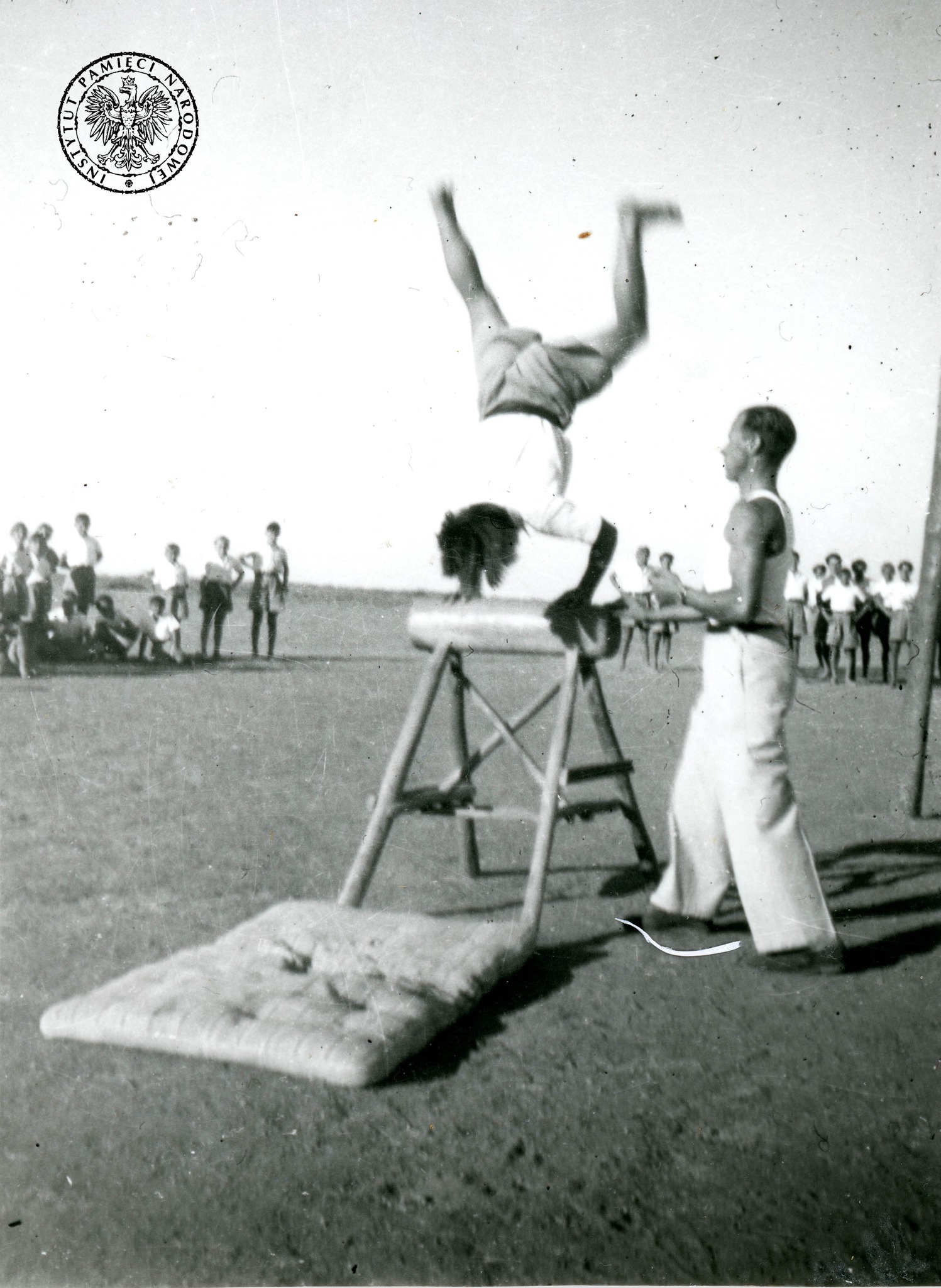
Those responsible for the youth’s physical education and exercise had the same level of motivation. In the Polish Children’s Camp in Balachadi, sponsored by maharaja Digvijaysinhji Ranjitsinhji Jadeja, the person in charge of this task was pre-war footballer from Pogoń Lwów, Antoni Maniak.
As Wiesław Stypuła recalled:
“He impressed with his physical fitness, strength and sense of humour. […] He started working with great eagerness, and he was very demanding on the playing fields. […] His youth sports teams […] successfully competed against the local military teams.”
A good example of his coaching skills was the result of a football match between the Polish Children’s Camp team and the Indian Okha Navy team: 2:1 for the Poles.
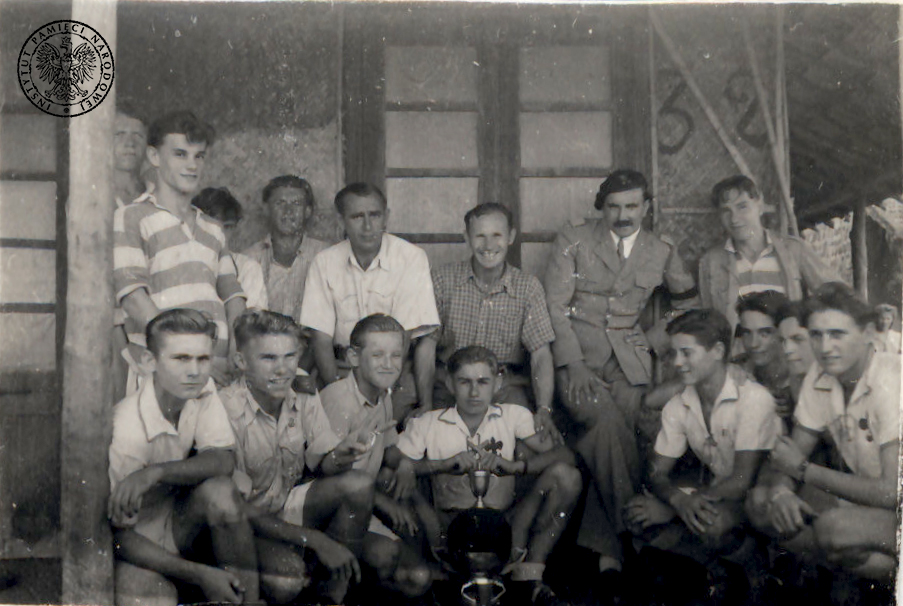
The football team after winning the tournament. Standing from left: unknown, unknown, unknown, Alojzy Błach, Józef Kucharski, Antoni Maniak, scoutmaster Zdzisław Peszkowski, unknown; kneeling from left: Karol Siara, Stanisław Ucinek, Stanisław Kalwaitys, Zbigniew Nowicki, Stanisław Wasiuk, unknown, unknown, Ryszard Godlewski. Polish Camp in Valivade, 1944-1947. Photo from the archives of the Institute of National Remembrance
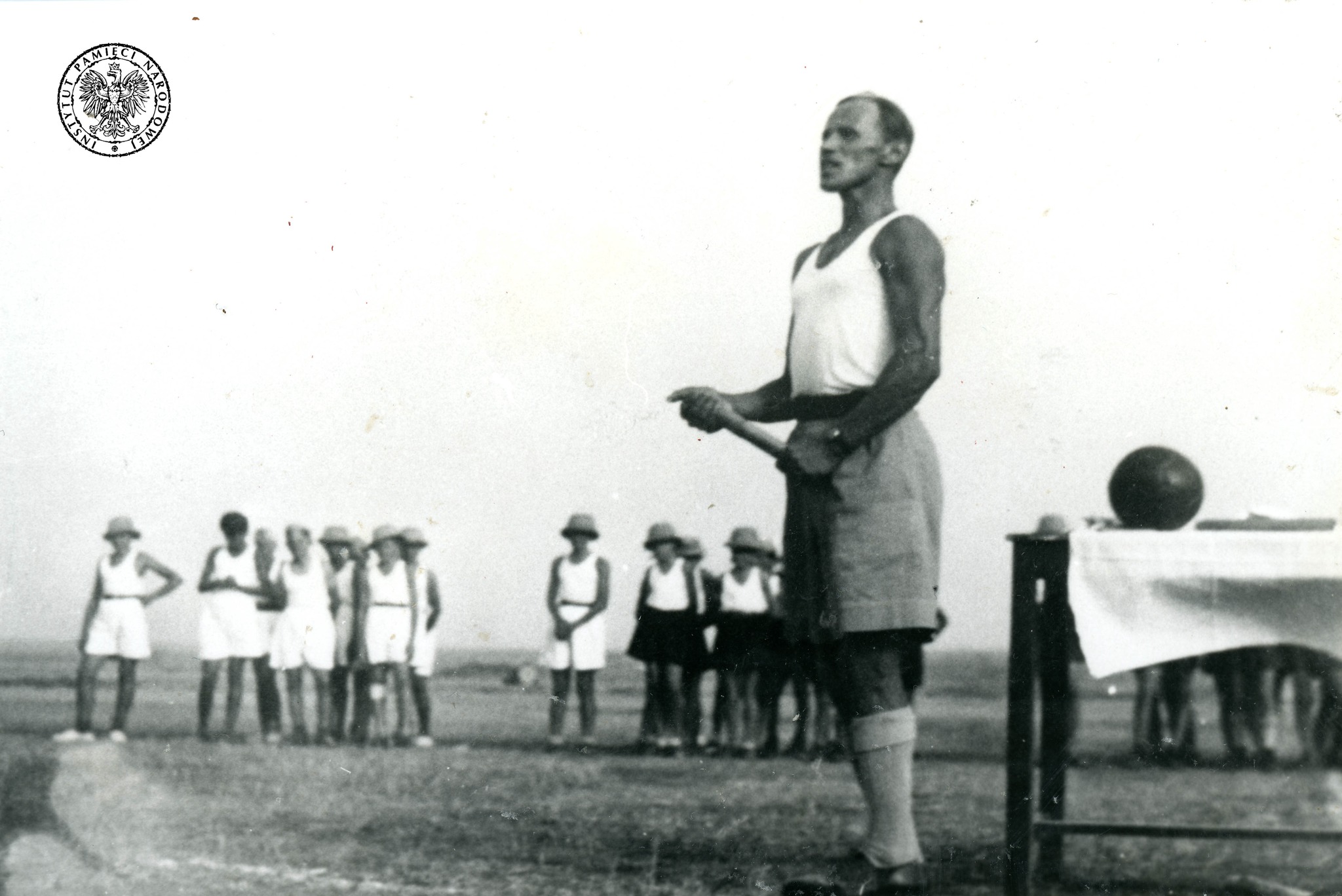
Antoni Maniak, the camp’s coach and former Pogoń Lwów footballer, during the School Olympics. Polish Children's Camp in Balachadi, 1945. Photo from the archives of the Institute of National Remembrance
It’s worth noting that the football pitches in the refugee camp were built by the children themselves, who drew lines and carried rocks under the supervision of the Lwów footballer. Almost every day began with a 15-minute-long warm-up. Apart from physical exercise, the program of education included training of various disciplines, i.e. basketball, volleyball and athletics.
Nevertheless, it was football which was the most popular discipline among the refugee kids, even though the first football they had was made from socks tied together and shaped into a ball.
Sports day in Valivade
Sport also played a crucial role in the biggest refugee camp in India, the Polish Refugee Camp in Valivade, near Kolhapur. In the summer of 1943, Poles created the Committee of Physical Education there, led by Tadeusz Szul. On November 7, 1943, a volleyball game took place there during the inauguration of the sport season. It was actually volleyball which became the most popular discipline among the Polish refugees in the Valivade camp. In the next months, they also built basketball courts and athletics tracks, as well as started the construction of a long jump track, fields for disc, hammer, grenade and javelin throws and a firing range.
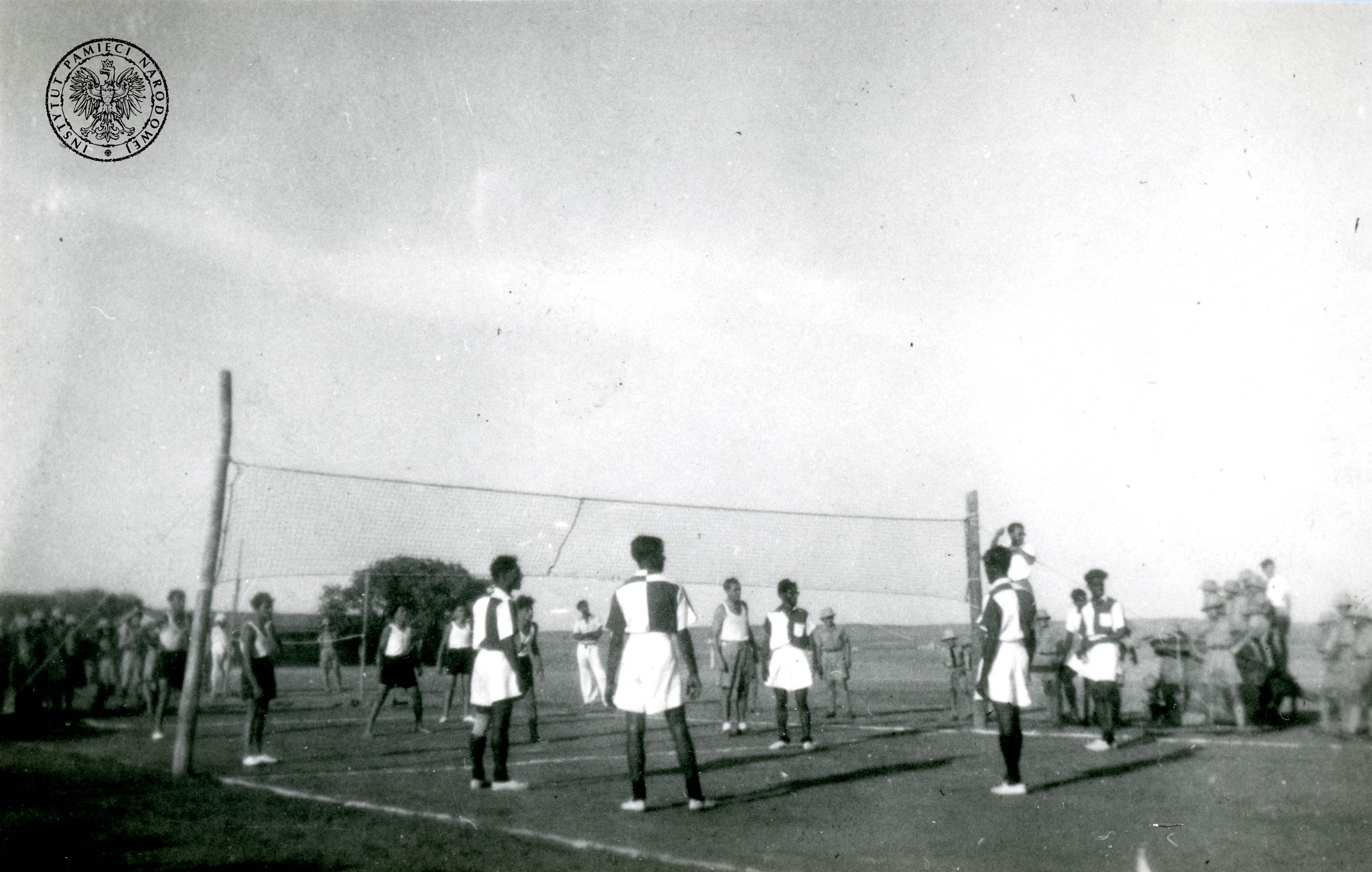
International volleyball match: Poland (Polish Children's Camp in Balachadi) vs. India (Okha Navy). Polish Children's Camp in Balachadi, 1942-1946. Photo from the archives of the Institute of National Remembrance
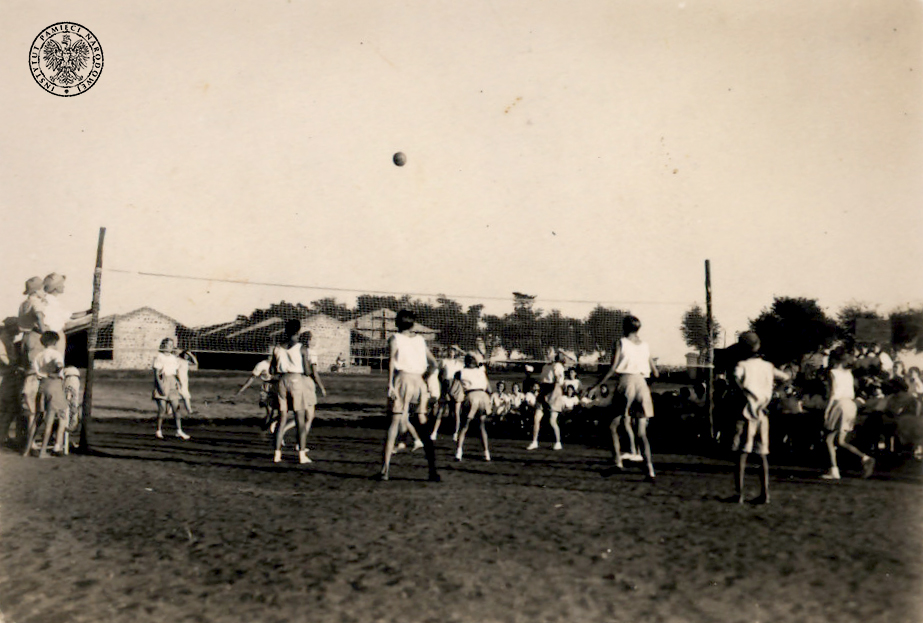
A volleyball match organised at the Polish Refugee Camp in Valivade, 1943-1948. Photo from the archives of the Institute of National Remembrance
A significant event in Valivade was the Days or Weeks of Sports Competitions, in which, in addition to Poles, Indians participated as well. One such event took place in early June 1947. Participants competed in disciplines such as tennis, soccer, volleyball, table tennis, and athletics. Scouts won the most competitions. They took first place in football, volleyball, tug of war and 4 x 100 metres relay. Antoni Maniak took first place in the adults tennis competition and Stefan Ślusarczyk finished second. Scouts Zbigniew Nowicki and Ryszard Godlewski also won the 100 metres and 400 metres races, while Adam Piestrak from the Gen. Władysław Sikorski Educational Facility prevailed in the 1,500 metres race.
Zbigniew Nowicki deserves special mention here. After the Polish Camp in Valivade was liquidated, he went to Kenya and engaged in car racing. As Nicki Noviki, he participated in all Safari Rallies earning him the nickname Grandad Safari.
Always and everywhere, apart from football
This small slice of sports on the refugee trail would not be complete without mentioning the fans, and they filled the stands during these events. One of them was scoutmaster Zdzisław Peszkowski, who always cheered on his young athletes with enthusiasm.
One of the many ways the children expressed their gratitude was through wishes printed in the Valivade magazine The Youth (issue no. 25 from January 29, 1947):
“We dedicate this success as a name day gift to our CHIEF, as proof that we always try to follow his example here in Valivade (always and everywhere, apart from football).”
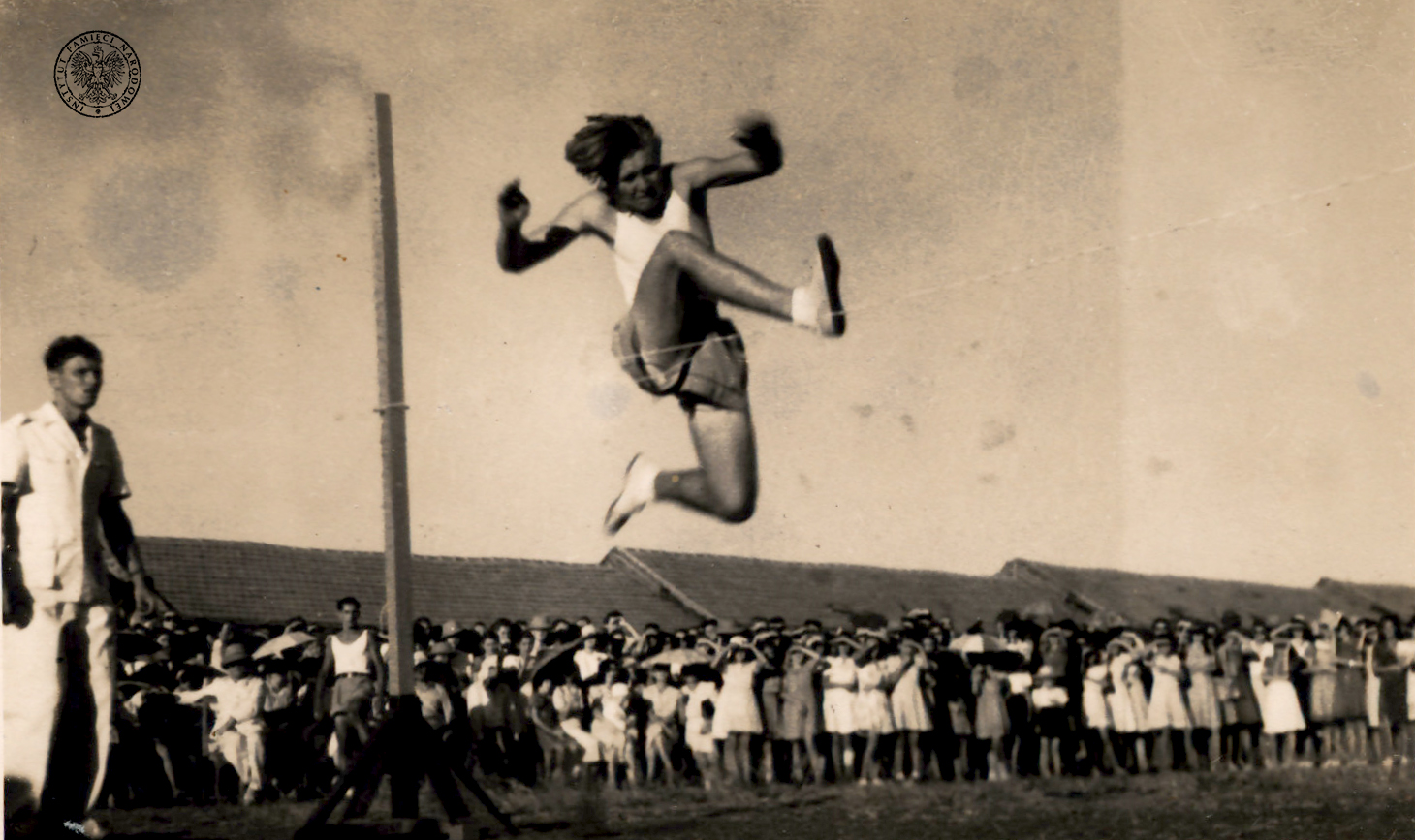
Jerzy Kowalski during the high jump. Polish Refugee Camp in Valivade, 1946. Photo from the archives of the Institute of National Remembrance
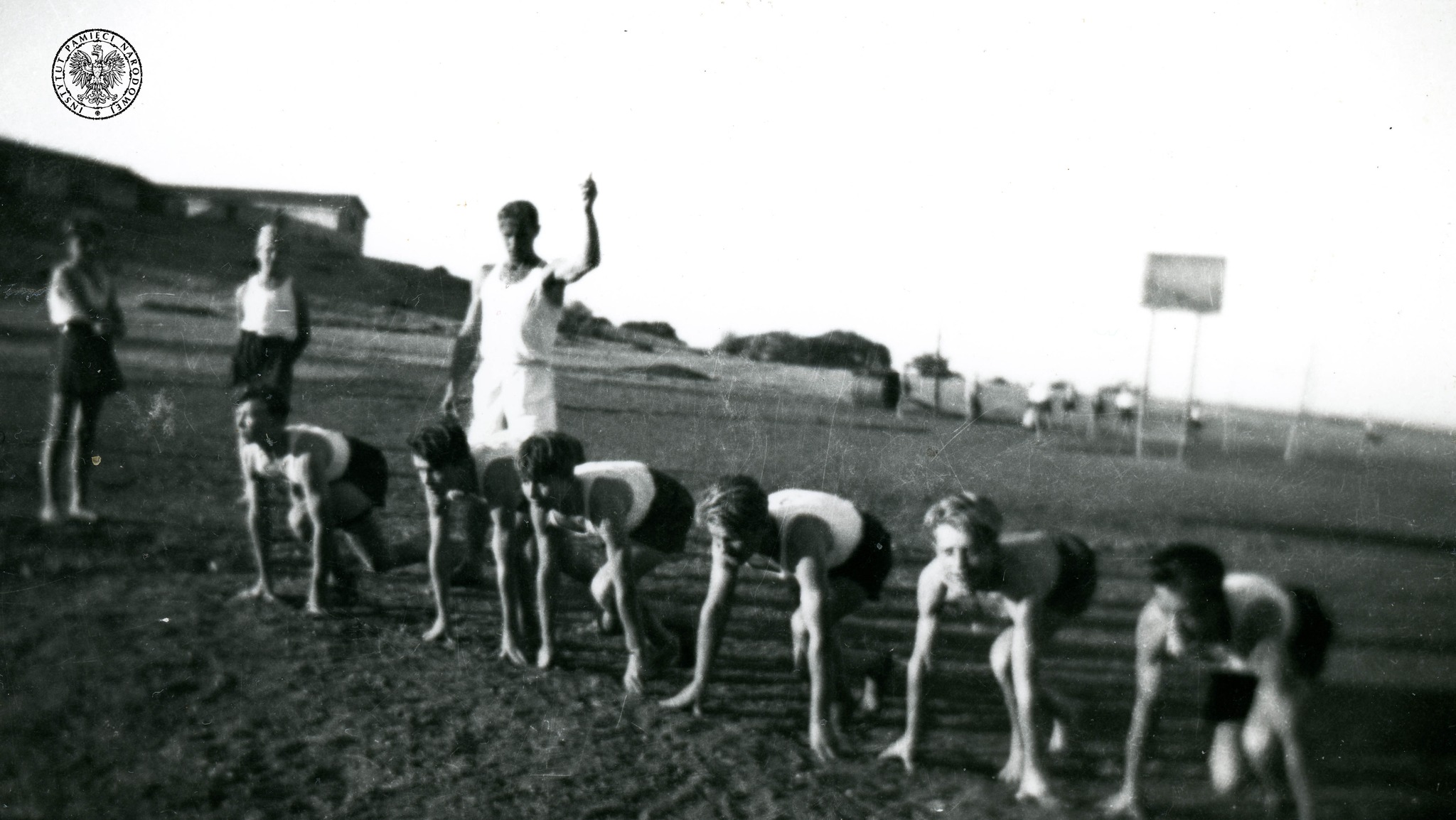
Athletes preparing for the 100-metre race, from right: Wiesław Stypuła, Stefan Bukowski, Marian Różański. Antoni Maniak gives the starting signal. Polish Children's Camp in Balachadi, 1945. Photo from the archives of the Institute of National Remembrance
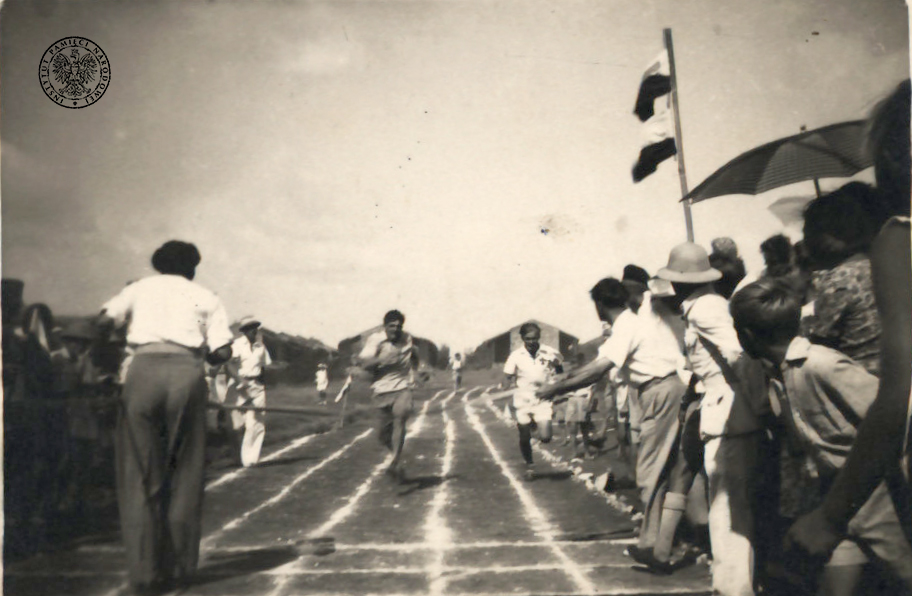
Athletics competitions at the Polish Refugee Camp in Valivade, 1944-1947. Photo from the archives of the Institute of National Remembrance