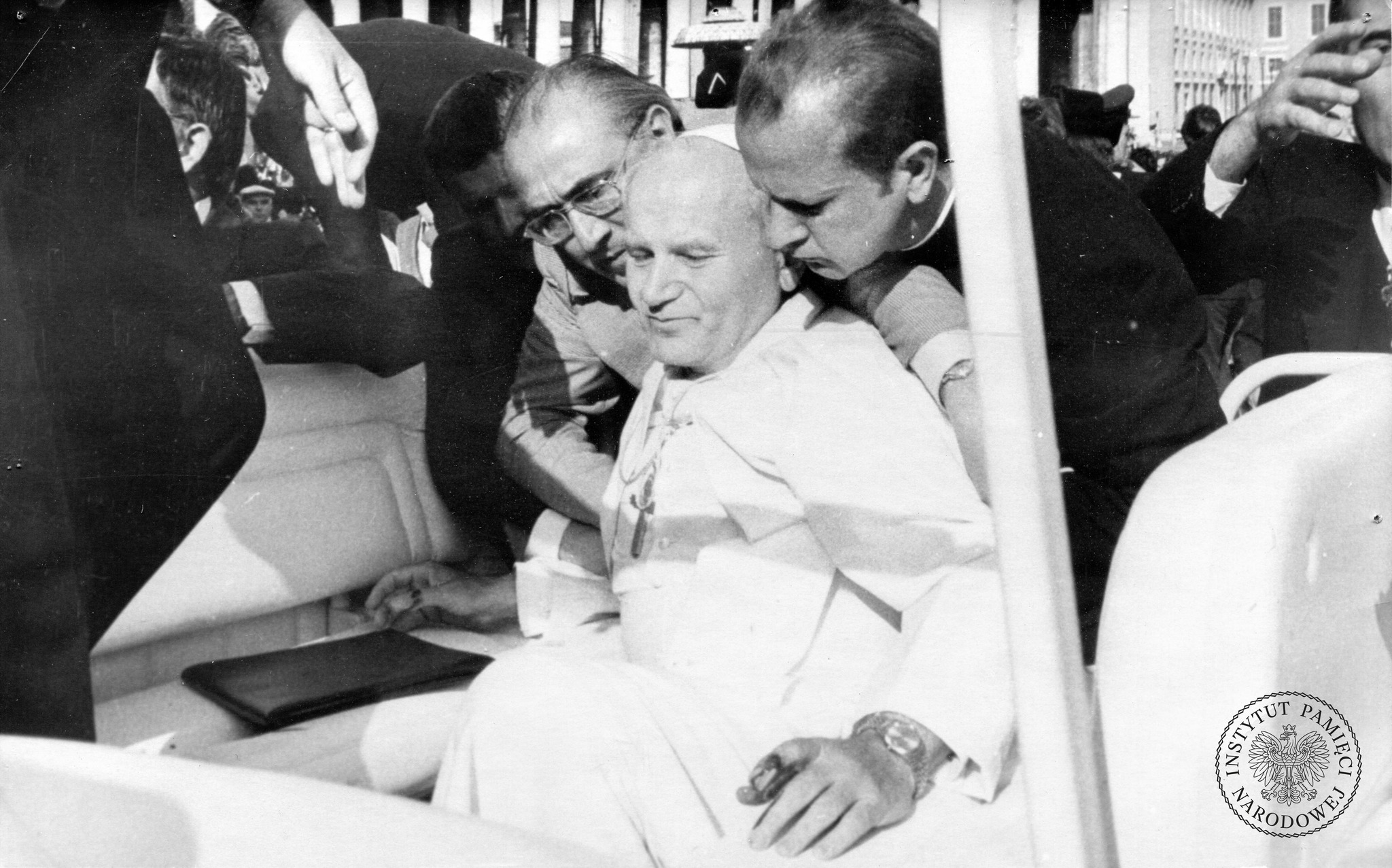
This event is remembered as one of the most important lessons of mercy that John Paul II gave the world in word but also in deed during his extraordinary pontificate (1978–2005). Cardinal Stanisław Dziwisz, the Supreme Pontiff’s long-time secretary, also noted in his memoirs that the wounded pope prayed to the Holy Mary in the dramatic moments after the failed assassination.
Karol Wojtyła, later Pope John Paul II, was born on May 18, 1920. Nine years after his death, on April 27, 2014, he was declared a saint. A halo of extraordinary spirituality, and according to many, unquestionable holiness, surrounded him already during his lifetime. The holy masses he held gathered crowds of thousands of believers who wanted to meet the Pope in person or at least see and listen to him through the media.
People gathered at Warsaw Castle Square after the assassination attempt on Pope John Paul II. View towards the Vistula and the W-Z Route. Warsaw, May 1981. Photo by Jan Hausbrandt (photo from the Institute of National Remebrance Archives)
The faithful’s reaction
When on May 13, 1981, an assassin tried to take the life of John Paul II, the world held its breath. The circumstances of the crime were truly shocking: a well-known public figure from the front pages of newspapers, the head of the Catholic Church spreading the message of peace and mercy, was attacked among the gathered crowds in his own capital, the Vatican, during the open meeting with the faithful on St. Peter’s Square. The shock went hand in hand with outrage and compassion for the victim. Apart from the pope, two more bystanders got wounded.
For the next several weeks, when John Paul II fought for his life, crowds gathered not directly next to him, but to pray for his survival and return to health. There are plenty of pictures in the archives of the Institute of National Remembrance showing these mass gatherings in Poland, the pope’s home country. The faithful, moved by the terrible news of the assassination attempt, wanted to express their support for the Pontiff and to protest against evil and violence.
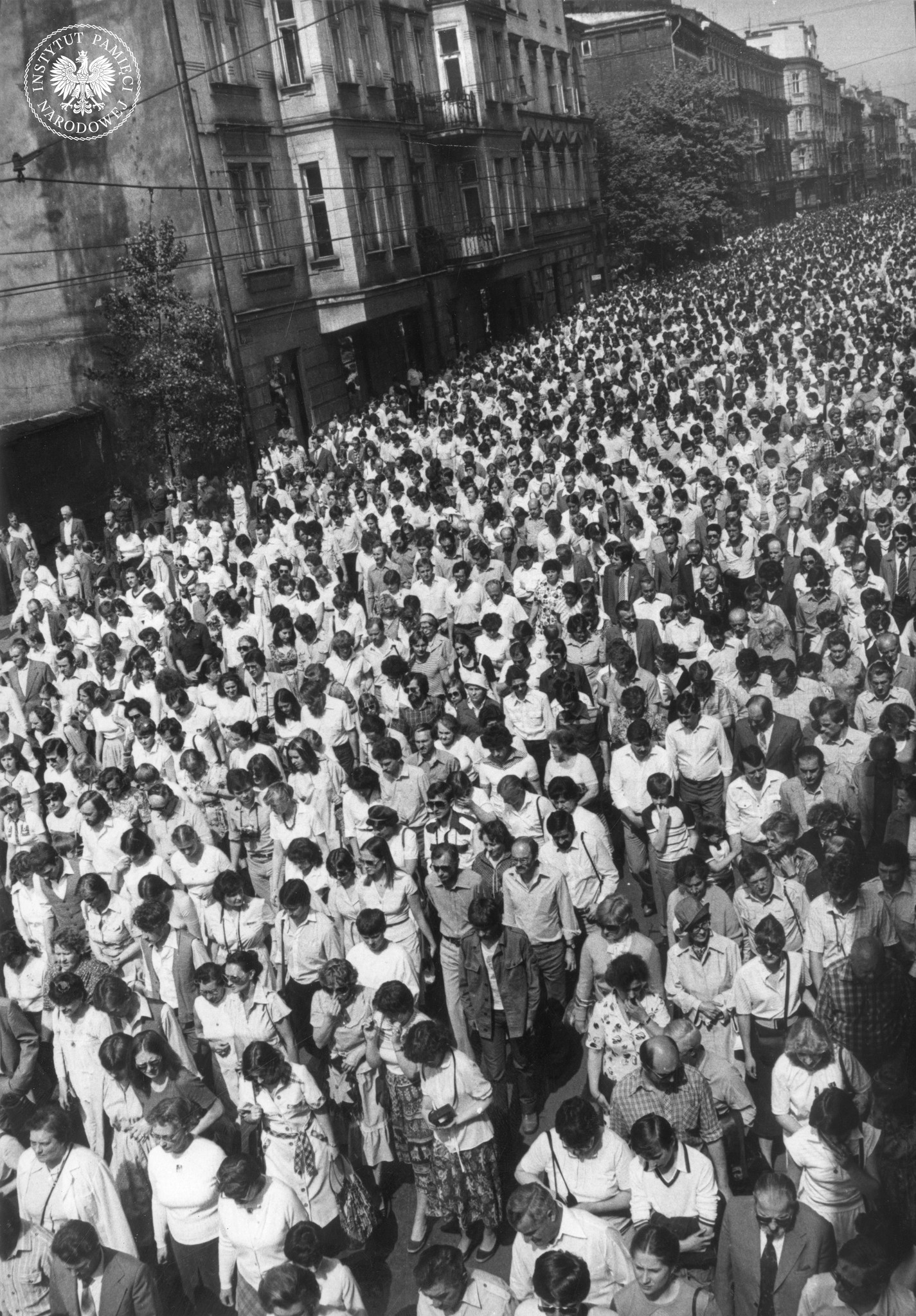
The White March organized after the assassination attempt on John Paul II. Cracow, Karmelicka Street, May 17, 1981. Photo by Jacek Wcisło (photo from the Institute of National Remebrance Archives)
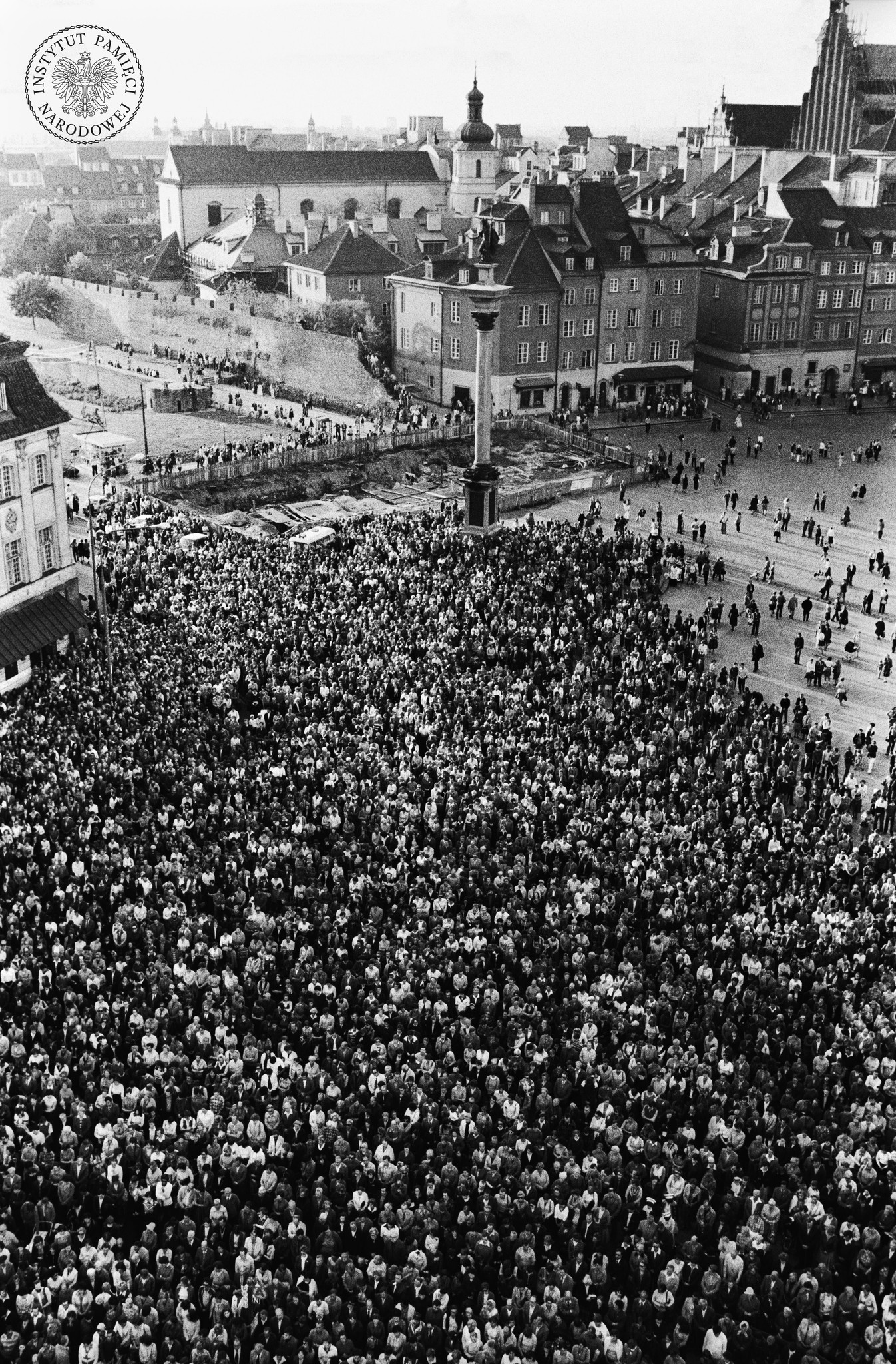
People gathered at Castle Square after the assassination attempt on John Paul II. In the background, the column of king Sigismund III Vasa can be seen. Warsaw, May 1981. Photo by Jan Hausbrandt (photo from the Institute of National Remebrance Archives)
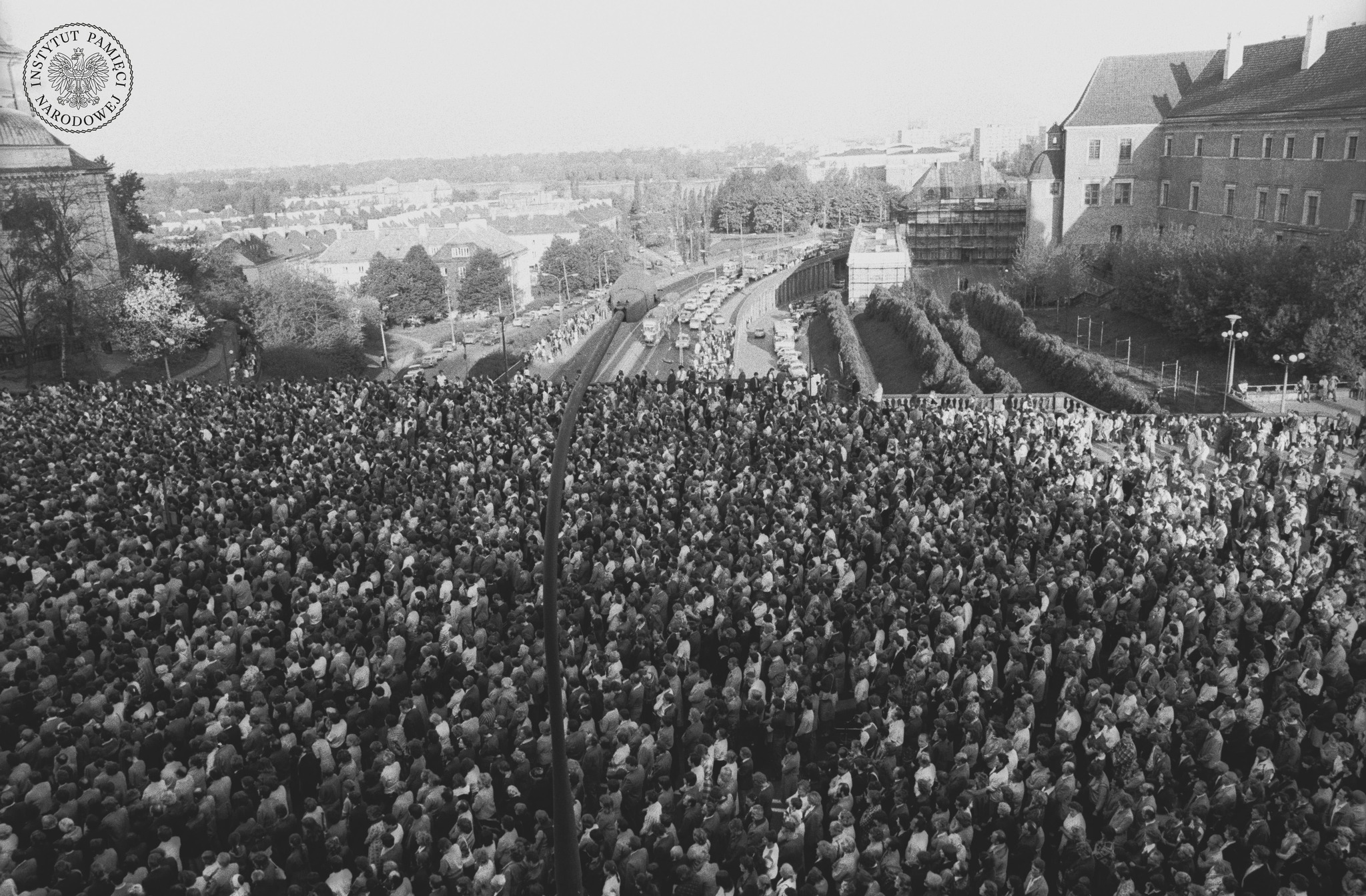
People gathered at Warsaw Castle Square after the assassination attempt on Pope John Paul II. View towards the Vistula and the W-Z Route. Warsaw, May 1981. Photo by Jan Hausbrandt (photo from the Institute of National Remebrance Archives)
Among the prayer gatherings organised in many Polish cities, the most famous one was the White March in Cracow on May 17, 1981. It took place on the same day when the finale of Juwenalia, an annual student party, was to take place. It was canceled immediately after the dramatic news from the Vatican.
Around half a million people took part in the Cracow march. White clothes, white scarves and flags, as well as white uniforms of the communist road police were to symbolise peace and good: the opposite of evil and darkness.
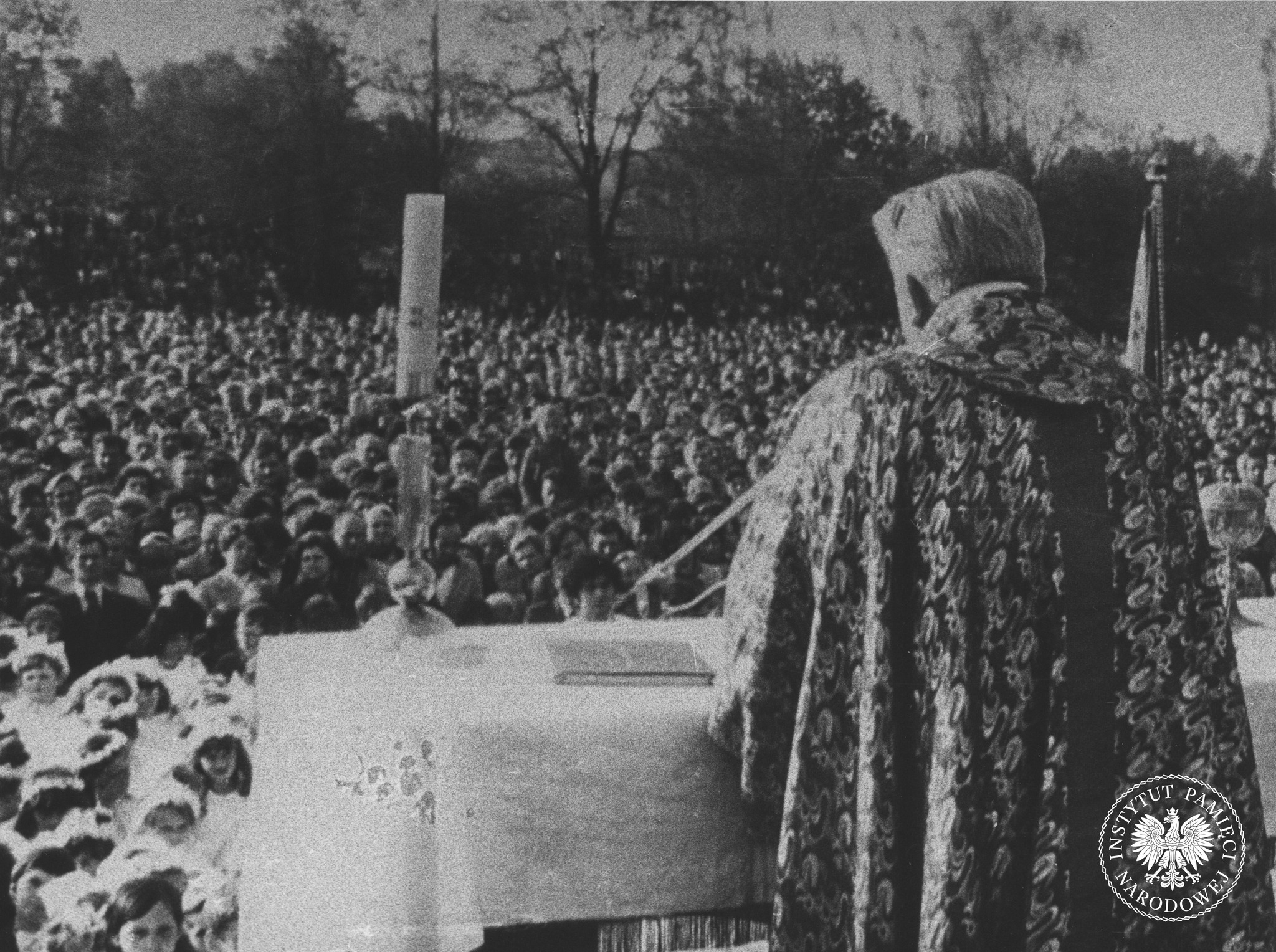
Holy Mass for the health and recovery of John Paul II after the assassination attempt on his life, celebrated at the KS Ruch Skarżysko stadium by Fr. Tadeusz Stańkowski, parish priest of St. Joseph the Betrothed in Skarżysko-Kamienna. Skarżysko-Kamienna, 1981 (photo from the Institute of National Remebrance Archives)
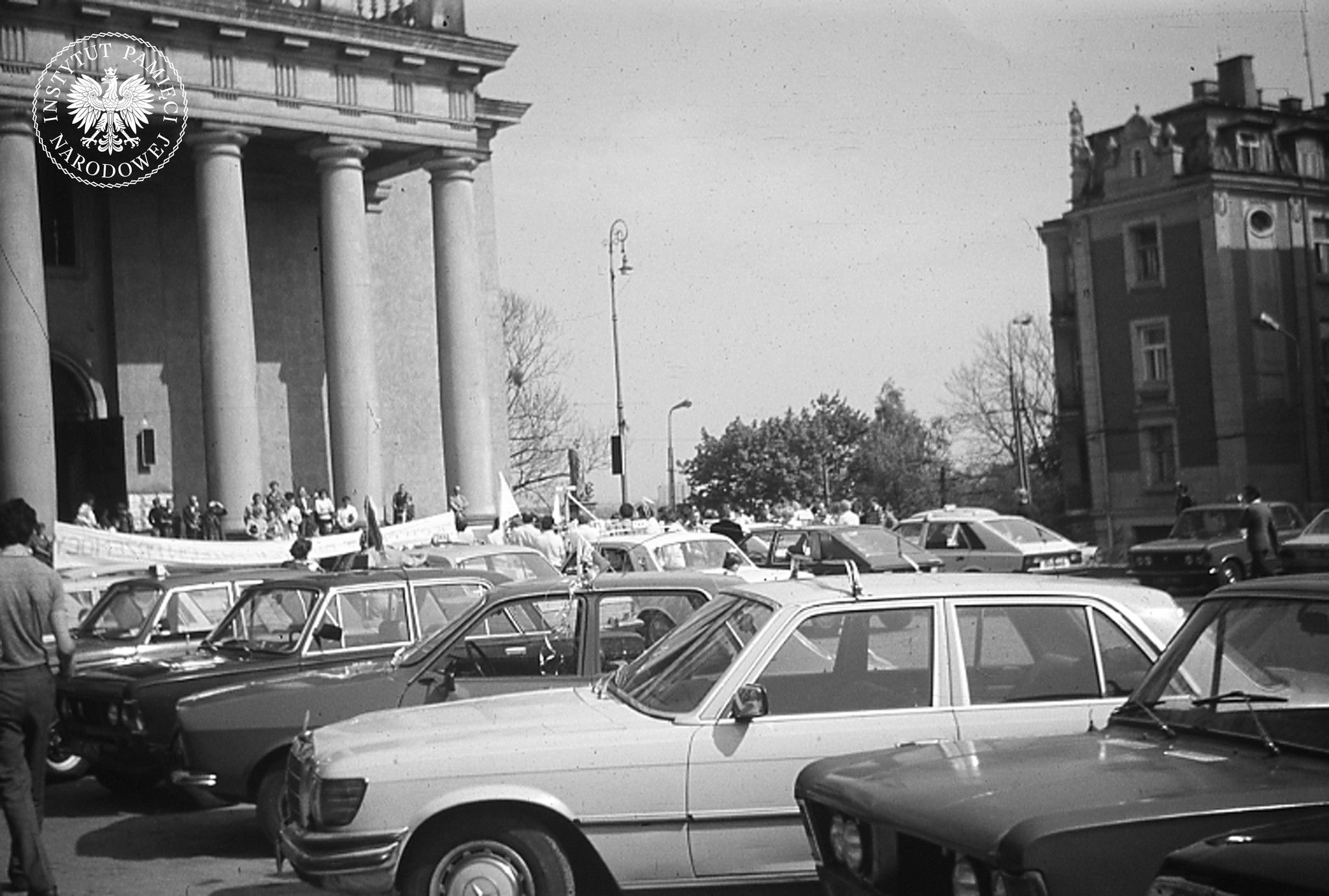
A ceremonial ride of Lublin taxi drivers through the streets of the city for the health and recovery of John Paul II after the assassination attempt on his life. The photo shows a dozen or so taxis in front of the Lublin Archcathedral of St. John the Baptist and St. John the Evangelist, on the right one of the tenement houses on Królewska Street. Lublin, Cathedral Square, May 1981 (photo from the Institute of National Remebrance Archives)
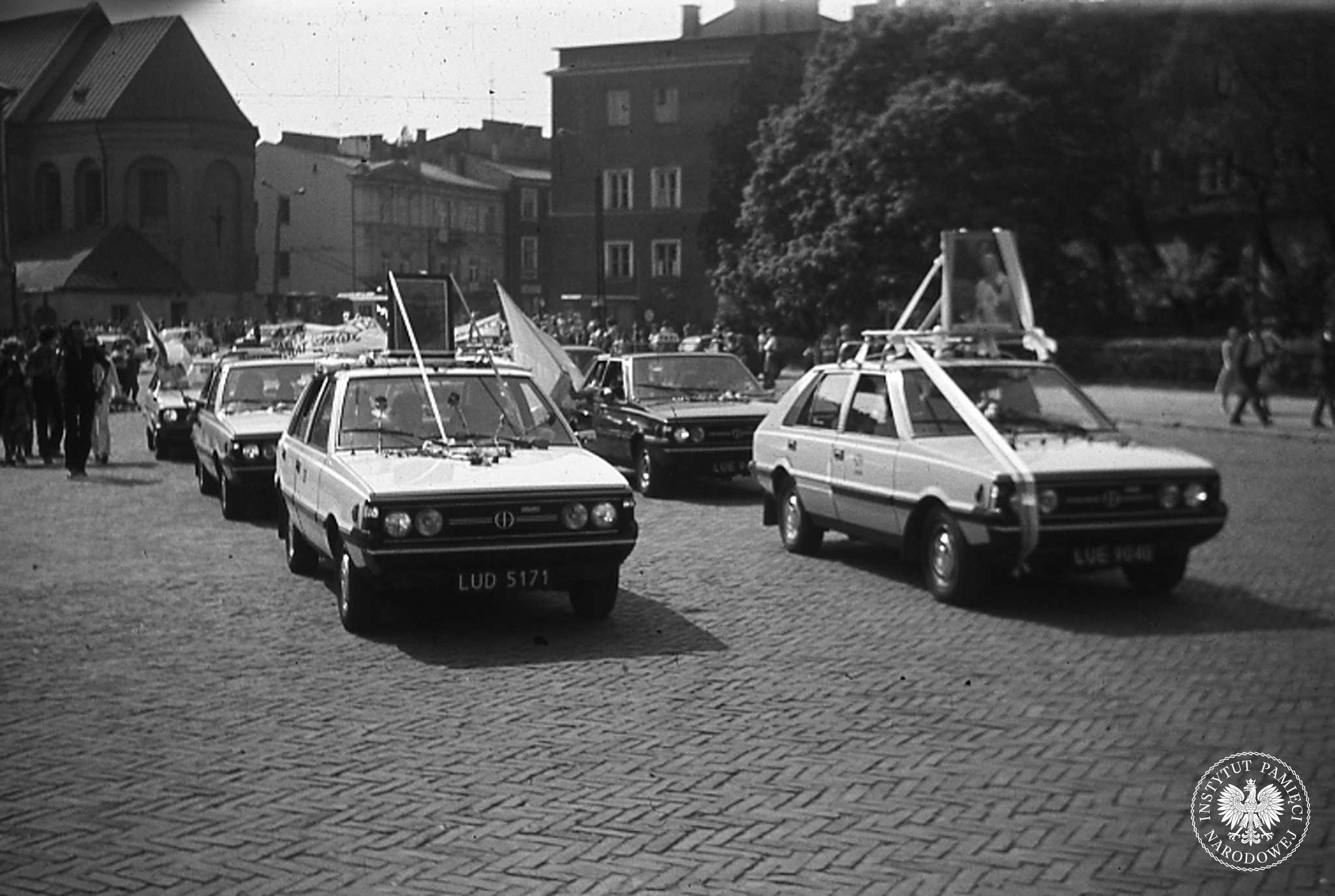
A ceremonial ride of Lublin taxi drivers through the streets of the city for the health and recovery of John Paul II after the assassination attempt on his life. The roofs of the two cars in the lead are decorated with paintings of the Black Madonna of Częstochowa and a portrait of the Pope. In the background, you can see tenement houses at Królewska Street and a fragment of the Church of St. Peter the Apostle. Lublin, Cathedral Square, May 1981. Photo by Szczepan Zaręba (photo from the Institut
Clash with communism
The shots aimed at the pope, fortunately not lethal, were taken by Mehmet Ali Ağca, a Turkish man with ties to the Bulgarian special services. Bulgarian and East German secret services participated in covering up the tracks leading to his employers and confusing the tracks in the investigation of the Italian justice system. Probable hypotheses; however, although still unconfirmed due to the aforementioned disinformation campaign, suggest that the impetus for the actions leading to the death of John Paul II came from the Soviets.
After all, the communists considered the Church to be the main enemy in the fight for the “rule over souls”, and the activities of Karol Wojtyła, a charismatic priest, and then bishop and cardinal, were a thorn in the side of the Polish authorities at that time, even before his election to the See of Peter. He became known as a lecturer and academic pastor who enjoyed great respect among the youth.
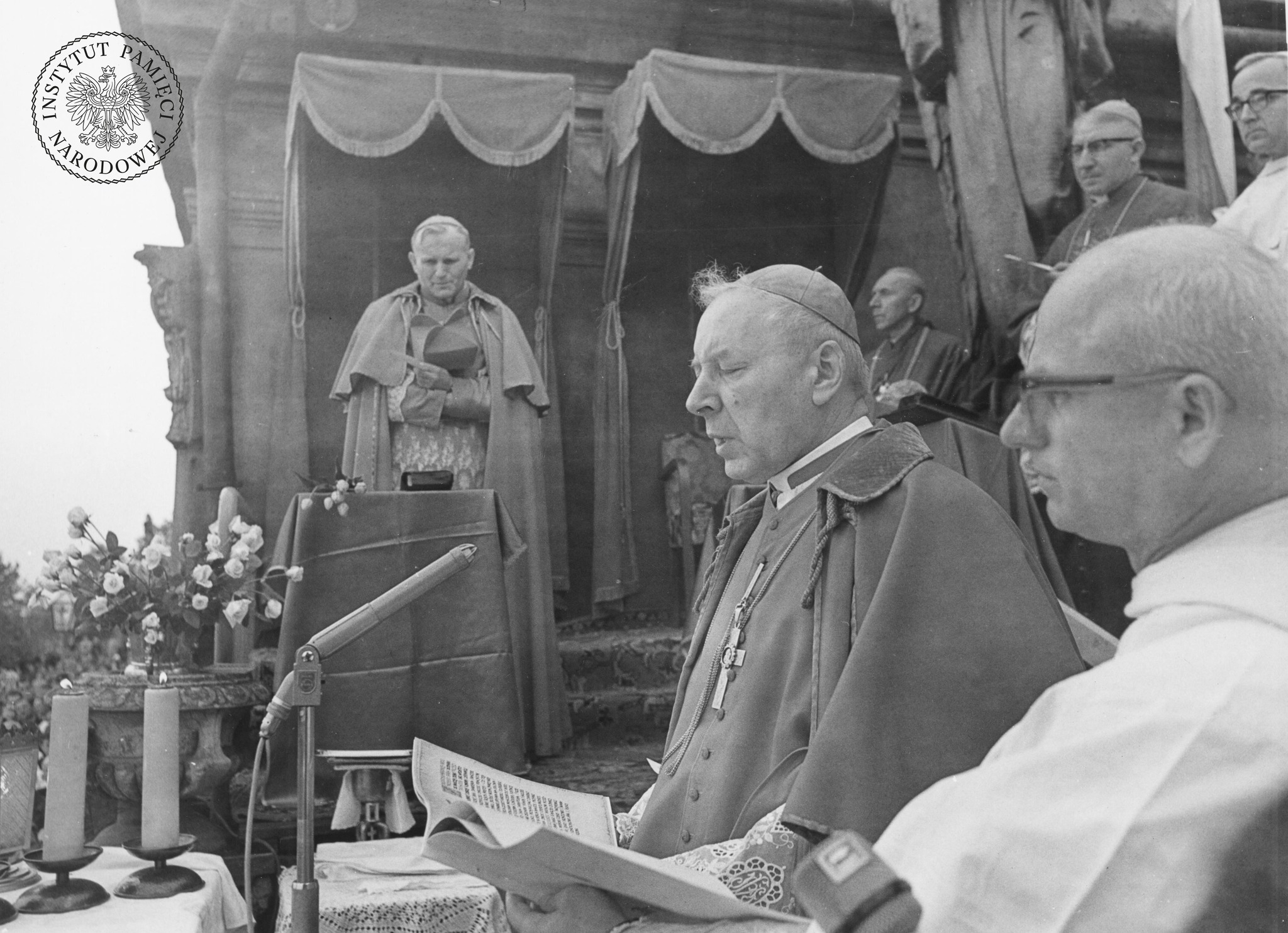
Holy Mass on the first anniversary of the second millennium celebrations. In the photo, in the foreground, Primate Stefan Wyszyński, next to him a Pauline father (holding a missal), in the background, on a platform, Archbishop Karol Wojtyła. Jasna Góra in Częstochowa, May 3, 1967 (photo from the Institute of National Remebrance Archives)
He was also highly valued by the church authorities, among others, he actively participated in the Second Vatican Council. Together with his superior and friend Cardinal Stefan Wyszyński - the Primate of the Millennium - he organized the celebrations of the Millennium of the Baptism of Poland in 1966.
The matters of youth and family, as well as the role of the secular people in the Church, were always important to him. A scholar and poet who played in amateur theatre in his youth, he appreciated the role of science and art in both social and spiritual life.
Although he spoke seven languages fluently and as pope was constantly in an international environment, he proudly referred to his Polish roots and, although far from his homeland, maintained frequent and cordial contacts with it. It is widely believed that the first papal pilgrimage to Poland in 1979 was one of the important impulses for the emergence of the great “Solidarity” movement and the peaceful liberation of the country from communist rule.
* * *
In the survival of John Paul II after the assassination attempt on May 13, 1981, and in his further activity, one can see the message he always lived by: “Do not be overcome by evil, but overcome evil with good,” taken from the St. Paul’s letter to the Romans. Suffice it to say that after nine apostolic journeys (including to Latin America, Africa, and Asia) that he had made before the assassination attempt, after his recovery, the pilgrim pope resumed his journeys around the world and made over ninety more.