
Helena Paderewska took over the management, while her husband Ignacy Jan Paderewski, a great pianist, supported the organisation with concerts and other cultural events during which they held important collections.
First aid
Helena Paderewska initially worked in the American structures of the International Red Cross. However, since Poland was still not independent at the time, it didn’t allow for a creation of a separate Polish branch.
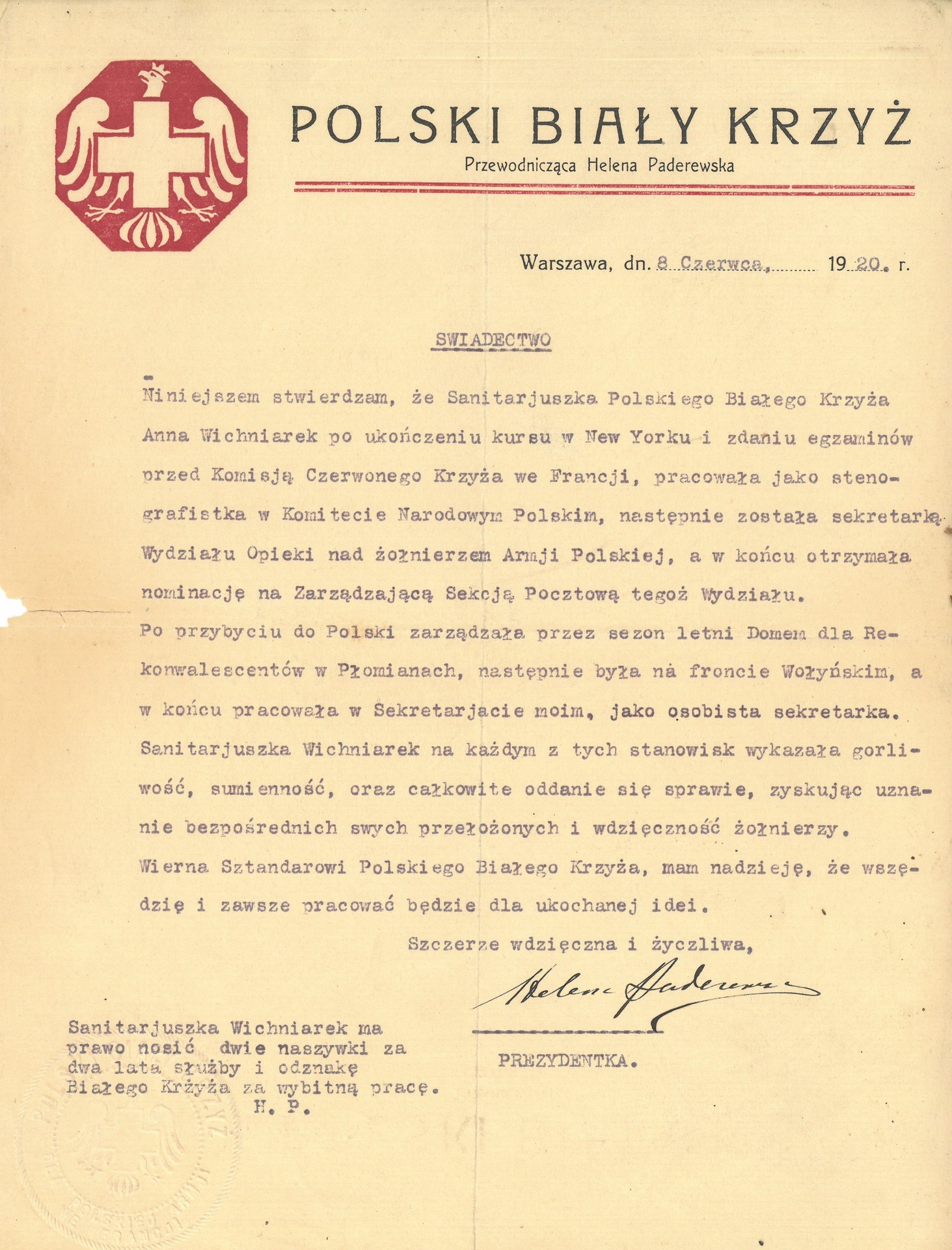
Letter from Helena Paderewska from June 8, 1920 regarding the Polish White Cross nurse Anna Wichniarek. The document comes from the collections of the Polish Falcons of America donated to the Institute of National Remembrance Archives in 2019.
In the beginning, the Polish White Cross conducted medical, cultural, educational and patriotic activities among soldiers of the Polish Army in France, as well as prisoners of Polish origin from the occupying armies. They sent nurses trained in the United States to France to give medical care to Polish troops. Moreover, they organised material help from the United States and Canada for Polish soldiers. This included clothing, food, medicine and bandages. They also set up field hospitals, rehabilitation centres, soldiers’ homes, sewing rooms and warehouses for all of the above.
In February 1919, the Polish White Cross moved to Poland which was closely connected with Ignacy Jan Paderewski taking the offices of Prime Minister and Minister of Foreign Affairs. The organisation played a crucial role during the 1919-1920 Polish-Soviet war, when it expanded its broad charity work. One of its major achievements was organising an ambulance train for wounded soldiers and a freight train for getting supplies like food, clothing and cigarettes to the back of the front line.
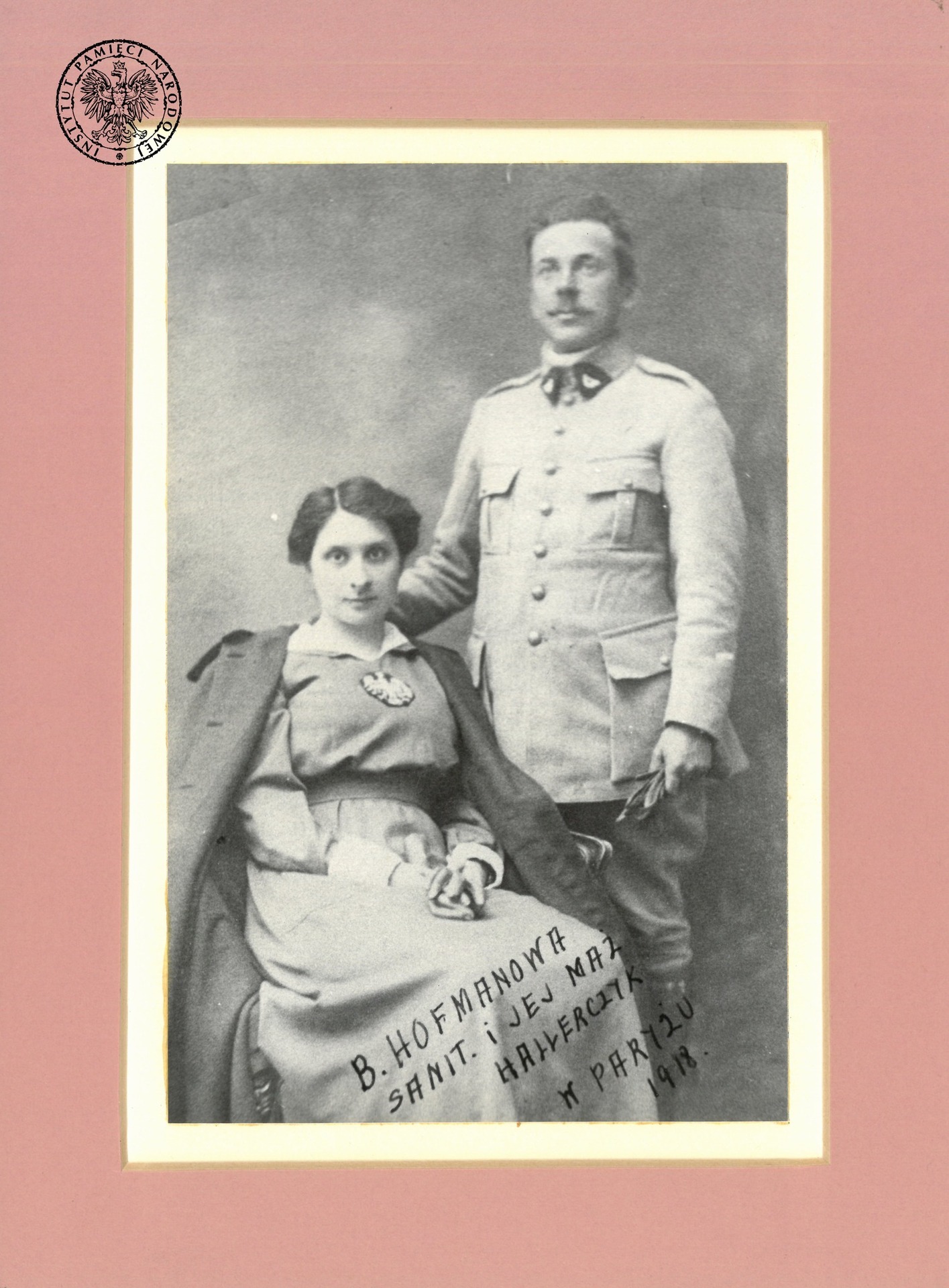
Photo of a Polish White Cross nurse, B. Hoffmanowa, with her husband, a Hallerczyk, in Paris in 1918, from the collection of the Polish Falcons in America donated to the Institute of National Remembrance Archives in 2019.
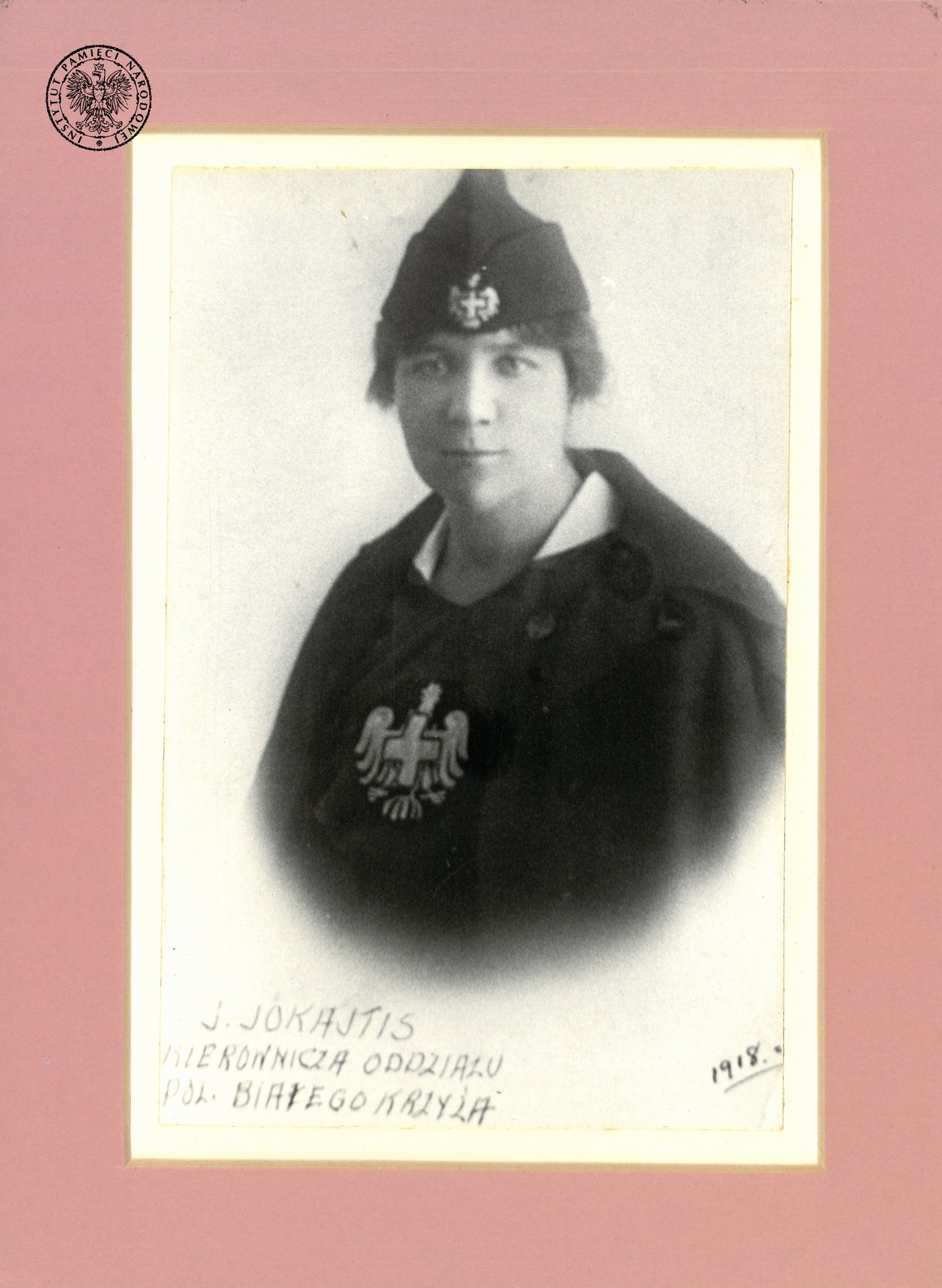
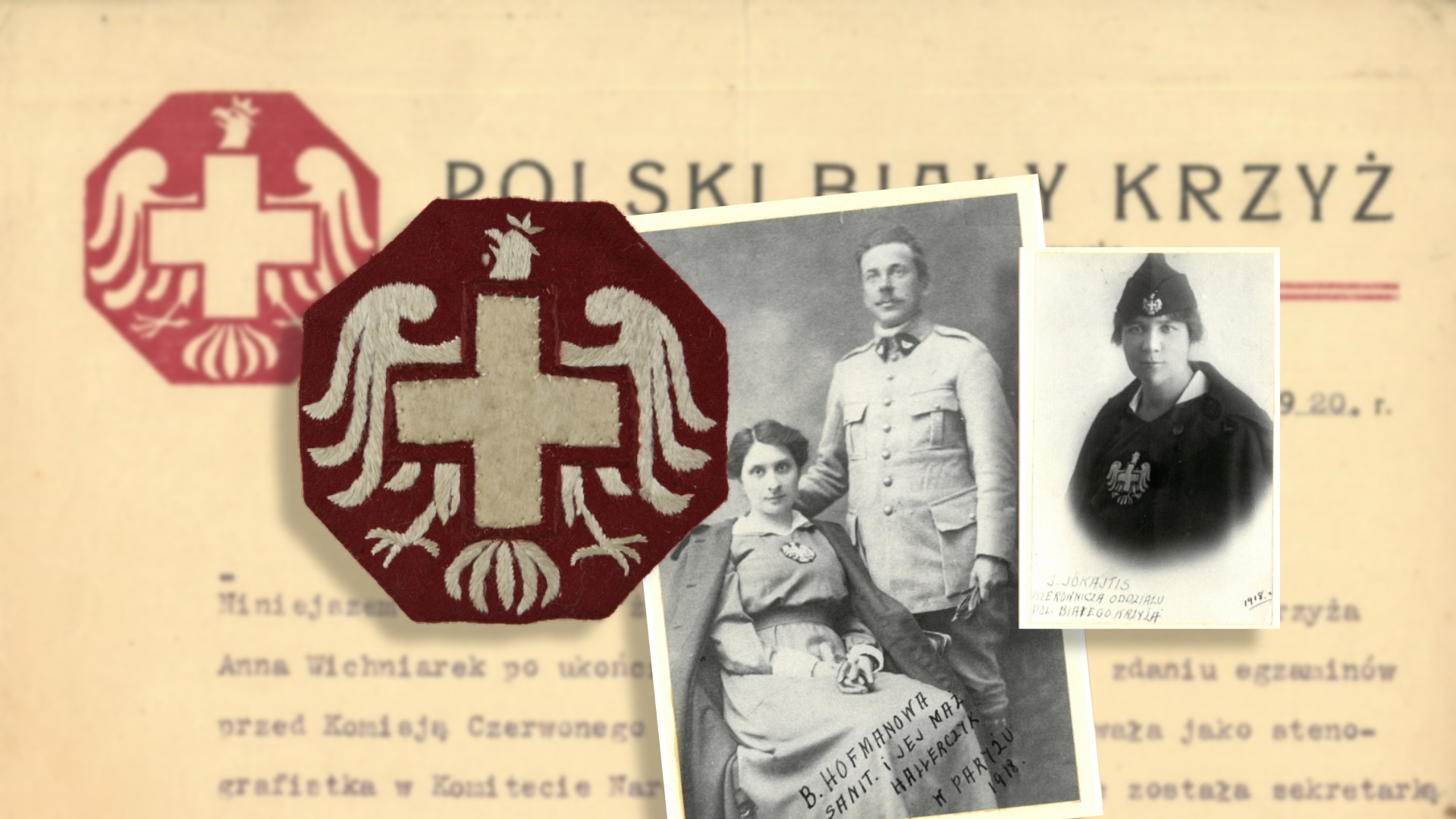
Photo of a nurse of the Polish White Cross J. Jokajtis in 1918, from the collection of the Polish Falcons in America donated to the Institute of National Remembrance Archives in 2019.
In Warsaw, at the Dzielna Street, the charity set up a perfectly equipped field hospital with 100 beds, while in several smaller towns they built homes for convalescents, an orphanage for war orphans and a nursing home for the elderly. In 1920, thanks to the funds collected in the United States, they founded the Agriculture School for Girl Victims of War in Julin, in the Rzeszów province.
Further activities
In the interwar period, the Polish White Cross became a federation gathering more than 200 various charities which functioned independently of the Polish Red Cross. It conducted its activities in the military community in cooperation with the Ministry of Military Affairs. It ran taverns, sewing rooms, laundries, nurseries, kindergartens and schools, as well as shelters for war orphans. It also set up community centres and libraries at military units for cultural work for soldiers. The organisation founded the Polish Soldiers’ Home in Warsaw. By the end of the 1930s, the Polish White Cross had more than 27 thousand members.
The charity’s emblem was a white eagle wearing a crown on a red background, which also included a white, even cross with red edges.
After the Second World War, there were attempts at reactivating the organisation, but the communist authorities banned it in November 1946.
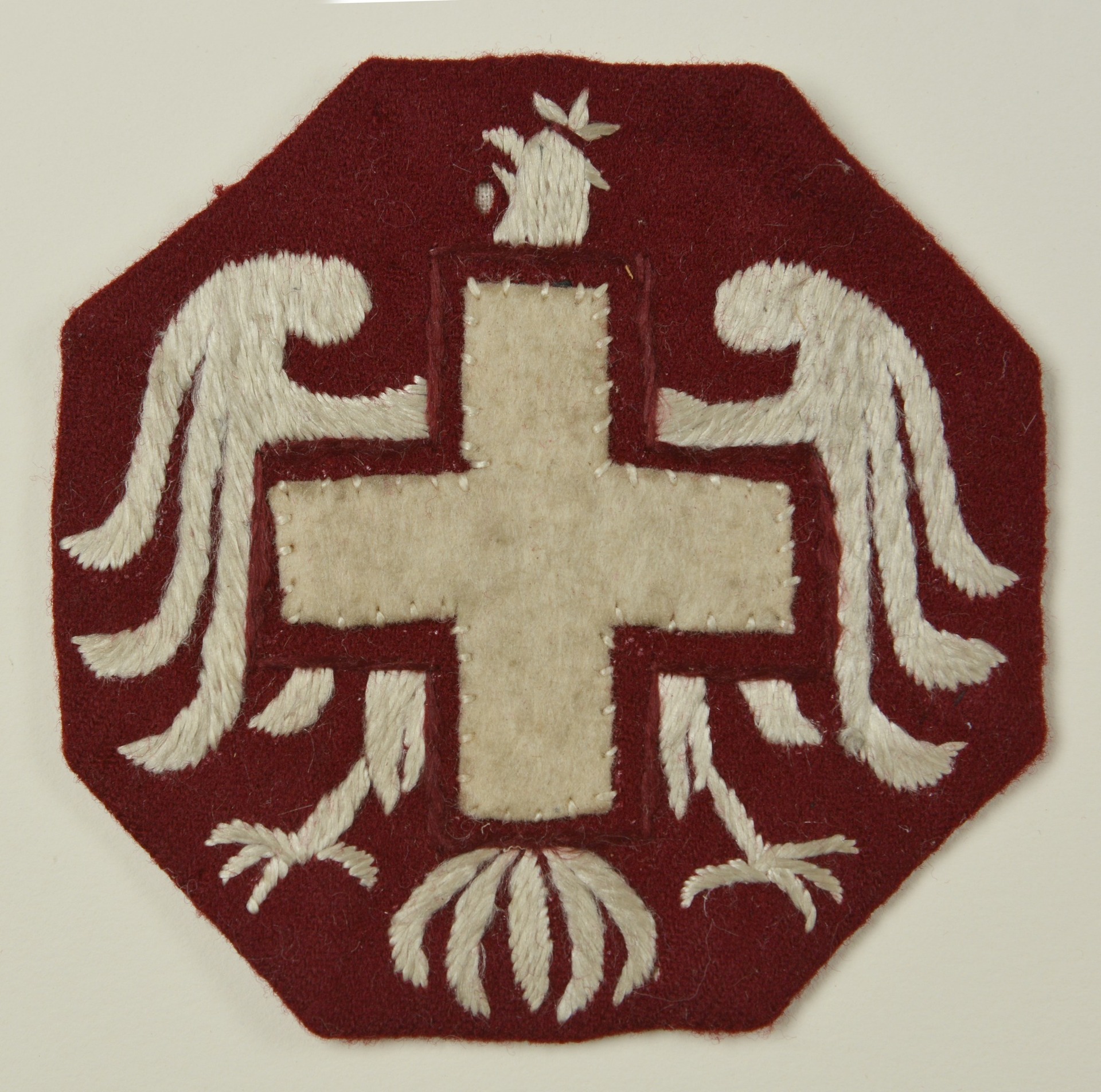
The Polish White Cross patch, from the collection of the Polish Falcons in America donated to the Institute of National Remembrance Archives in 2019.
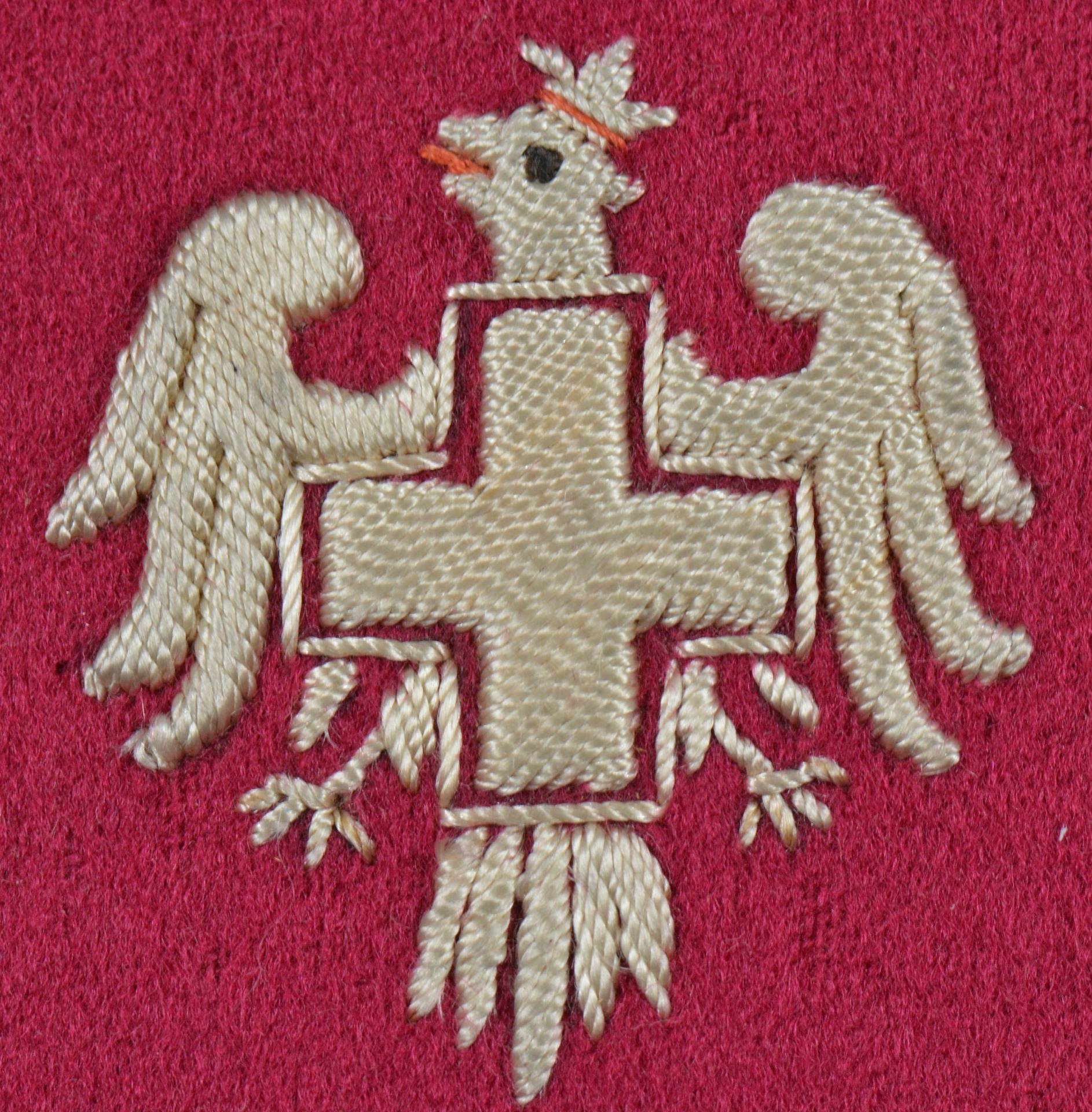
The Polish White Cross patch, from the collection of the Polish Falcons in America donated to the Institute of National Remembrance Archives in 2019.
* * *
In Autumn 2019, the Polish Falcons of America donated materials to the Archives of the Institute of National Remembrance which included pictures, patches and files connected with the Polish White Cross. In its initial period of activity, the organisation welcomed many members of the Polish Falcons movement in the U.S. and Canada.