
While we do know a lot about Warsaw’s policy towards Africa and Asia, we still don’t know much about the way the leadership of the Communist Workers’ Party helped spread communism in Latin America, especially when it came to military aid.
Pragmatism towards the Third World
The level of engagement from the Polish People’s Republic at the Global South was quite different than the one of Czechoslovakia or East Germany. Communist authorities in Warsaw welcomed much less exchange students from the Third World, and also rarely engaged in promoting the Marxist-Leninist propaganda at the newly established African states. They also rather cautiously approached economic cooperation with these nations, prioritising financial gains in such relations rather than ideological ones.
Apart from that, the Polish communist intelligence services, both civilian and military, did not really penetrate the Third World seeking to enlist local leaders from national-liberation movements in contrast to their Czechoslovakian or East German counterparts. Moreover, the Polish United Workers’ Party leadership provided substantially less military support for communist and revolutionary movements from the Third World than Prague or East Berlin. There were, however, several exceptions to the restraint in sending military assistance to communist revolutions of the Third World.
Cuba and Nicaragua
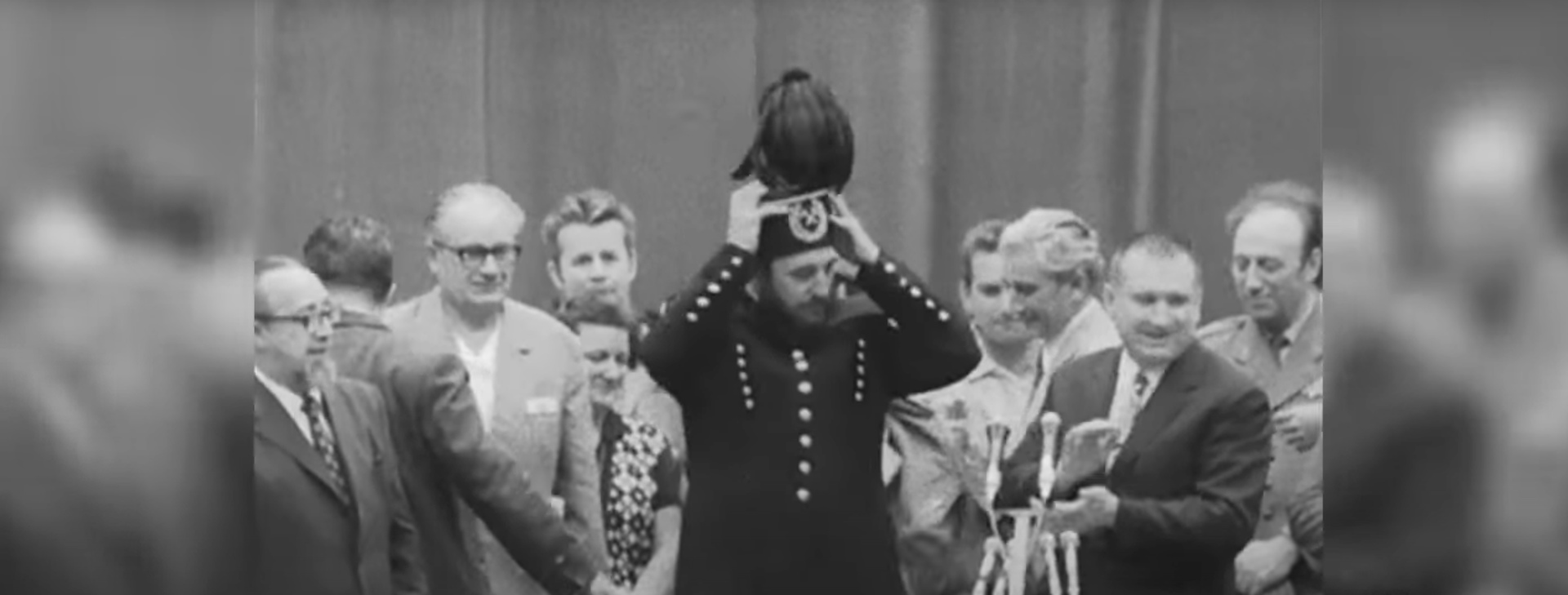
Among the countries of Latin America, the Polish People’s Republic provided military aid to Cuba and Nicaragua. When it comes to the former, it’s important to mention that the bilateral relations between the two countries were rather cold during the rules of Władysław Gomułka [First Secretary of the Communist Party between 1956-1970]. It was due to the fact that Gomułka wasn’t impressed by his first meeting with the Cuban leader Fidel Castro in New York, in September 1960. This affected the nature of bilateral relations between the two nations, meaning they weren’t as close as it was in the case of East Germany and Czechoslovakia.
In 1979, the Sandinista National Liberation Front took power in Nicaragua and began implementing the socialist system. Thanks to that they could count on the financial help from the Soviet bloc countries. The support from Moscow and its allies also proved crucial in expanding the military potential of the Nicaraguan armed forces.
Gomułka wasn’t impressed by his first meeting with the Cuban leader Fidel Castro in New York, in September 1960. This affected the nature of bilateral relations between the two nations, meaning they weren’t as close as it was in the case of East Germany and Czechoslovakia.
The upper management of the Polish Communist Party also played a large role in this regard. Between 1980-1985, Warsaw delivered i.e. five Mi-2 armed helicopters, two An-2T planes, 20 M18 Dromadery aircraft, 124 PM-63 submachine guns with ammunition and 10 thousand uniforms. The transport was usually done by sea to the port in Havana. In 1987, Warsaw sent over another delivery of non-refundable assistance. It included PPSz submachine guns (1,220); TT pistols (45); RPG-2 grenade launchers (1,127) with the grenades (30,000) and ammunition (503,000).
It’s worth pointing out that such help was incredibly useful for the Managua authorities, who at the time faced off with the contras troops, who were secretly aided by the CIA. Despite the relatively substantial military assistance from the Soviet bloc countries, such form of revolutionary support did not help the Sandinistas retain power. The prolonged armed conflict made them agree to a ceasefire with the contras in 1989. They then agreed to hold democratic parliamentary and presidential elections. They took place in 1990 and ended with the double victory of the opposition.
El Salvador and Honduras
The authorities of the Polish People’s Republic rarely provided direct military assistance to communist parties of the Third World, but one exception to the case was Latin America. In June 1984, the delegation of the Farabundo Martí National Liberation Front arrived in communist Poland and held secret talks at the General Command of the Polish Army. The main visit of the Salvadoran partisans was to get modern weapons, which they needed in order to fight the conservative military junta backed militarily by the United States. Gen. Jaruzelski and his colleagues met the desires of the Salvadoran guests and gifted them with arms and equipment. The aid package included AKM and AKMS carbines (50) with ammunition (44,880); PM-63 submachine guns (50) with ammunition (28,160); F-1 and RG-42 grenades (2,000); one tonne of plastic explosives with fuzes and detonators and communication devices.
Between 1980-1985, Warsaw delivered i.e. five Mi-2 armed helicopters, two An-2T planes, 20 M18 Dromadery aircraft, 124 PM-63 submachine guns with ammunition and 10 thousand uniforms.
The same year, the leadership of the Polish Communist Party also provided some assistance to the Honduras Communist Party. While the internal conflict in Honduras wasn’t nearly as bloody as the ones in El Salvador and Nicaragua, it still saw heavy fighting between the government and communist forces. Hence, Warsaw provided the Honduran communists a symbolic delivery of AKMS carbines (50); PM-63 submachine guns (10); P-64 pistols (20) and ammunition (9000).
The support for Honduran communists was first conducted with the help of Cuba, since the weapons shipment was delivered on a freighter to Havana. The Cuban authorities then secretly transported it to Honduras. It’s worth adding that the military assistance to Honduran communists didn’t change their fate in the long run, as their party was disbanded in 1990.