
One of the soldiers of the 1st Independent Parachute Brigade under Gen. Stanisław Sosabowski which took part in Operation Market-Garden was journalist Marek Święcicki, who reached the Netherlands on board a glider.
Editor of student magazines
Marek Święcicki was born on July 1, 1915, in Odesa. His father, Michał was a teacher from Lithuania; he had spent many years in Tsarist and Soviet prisons. He was released in 1923 in a prisoner exchange, and the family came back to Poland.

Commander of the 1st Independent Parachute Brigade, Brigade General Stanisław Sosabowski, during the fighting in the Netherlands. Photo from the IPN’s archives
Marek Święcicki studied at the Maria Konopnicka Public High School in Ostróg, by the river Horyń, in Volhynia. He graduated in law at the University of Warsaw. During his studies, he wrote articles for the Dekada Academic Weekly. He was an editor, then the deputy editor-in-chief and finally the editor-in-chief of the magazine. He sometimes worked as its special correspondent to the Balkans and since 1938 as a radio correspondent from France. Between 1936-1939, he was a freelancer for the Polish Radio. Since 1936, he also worked with a semi-state information agency Iskra.
Soldier, war correspondent, journalist
He was in France when the Second World War broke out. During that time, he worked there as an apprentice at the Polish Telegraph Agency. In the first days of September 1939, he came back to Poland through Romania, he wanted to help defend the country. He left Warsaw on September 13 and got arrested after the Soviet Union invaded from the east. He escaped from a prisoner transport deep into the USSR. He stayed in Lviv, where he made contact with the then forming underground resistance. He then went to Hungary and published his memoirs from occupied Lviv in the Budapest Polish News (“Under the shadow of a red star. Lviv under the Soviet occupation”). On Christmas Eve, 1939, he reached Paris.
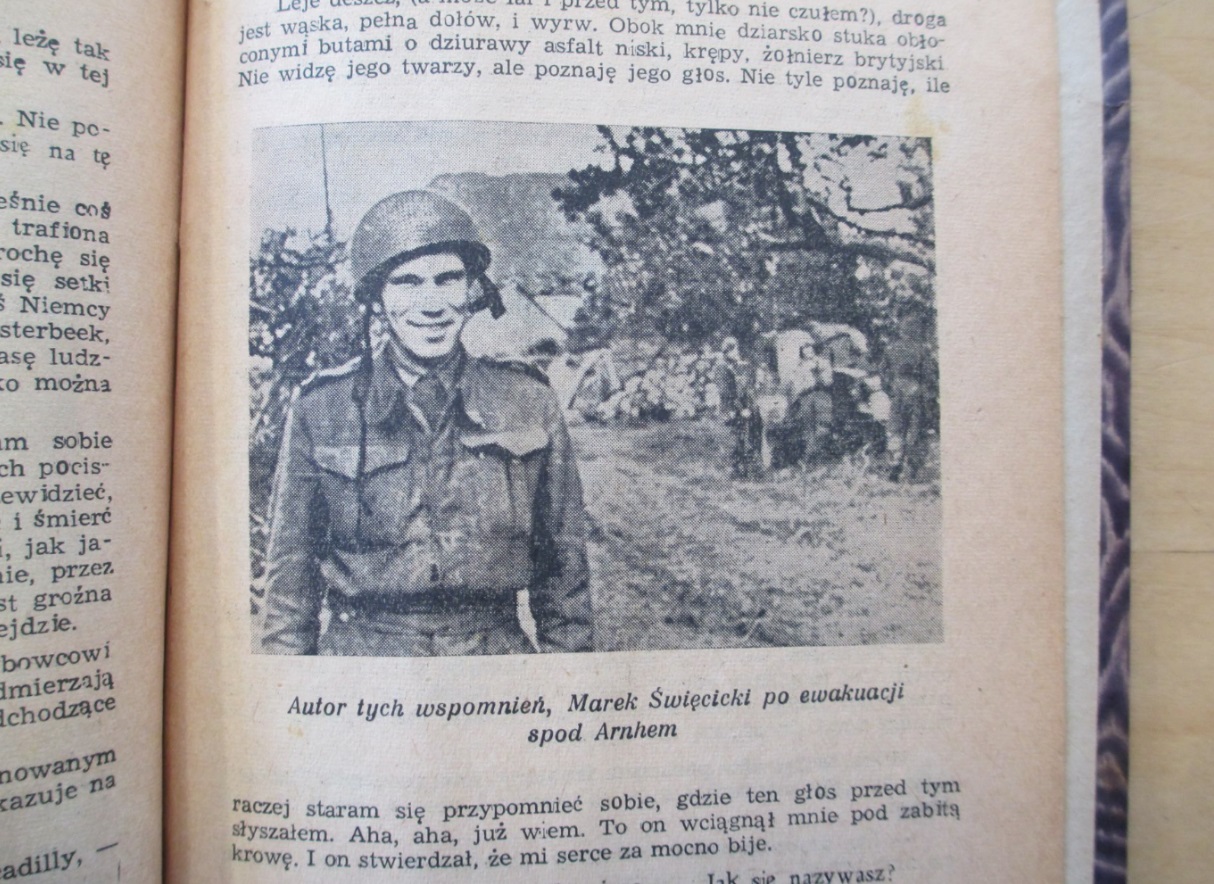
Marek Święcicki after evacuation from Arnhem. Photo from the book “With the Red Devils at Arnhem”. Rome, 1945.
He was a soldier of the Polish Army in France. He served in the 4th Warsaw Rifle Regiment (2nd Riflemen Division). He fought in the 1940 Western Campaign, and then evacuated to England. He served in the Polish Armed Forces in Scotland. He was a soldier of the 2nd Battalion, 1st Riflemen Brigade, or the so-called Checkered Lions. He graduated from the cadet school in Dundee and joined the editorial team of the 2nd Battalion News. In 1942, his battalion was transferred to the 1st Independent Parachute Brigade. He was then transferred to the Ministry of Information and Documentation of the London-based government-in-exile.
In 1943, he joined the editorial team of the Polish Daily in Glasgow, which was joined with the Soldier’s Daily a year later. At the same time, he prepared radio reports and worked for the Polish Radio in London as well as the Polish section of the BBC. He was part of the Polish Daily and Soldier’s Daily until 1952; between 1945-1947 he was their secretary and then the editor-in-chief. For many years, he wrote reviews of the latest books, memoirs, poetry, fairy tales and youth literature. He also wrote reviews of theatre premieres and kept music and film chronicles. Since 1952, he worked for the Polish Broadcast of Radio Free Europe in Munich, as the deputy director. In 1957, following a conflict with director Jan Nowak-Jeziorański, he moved to the United States. He initially worked in the office of Radio Free Europe in New York and then as the editor of the Polish Section of the Voice of America in Washington, until his retirement. During the martial law in Poland, he managed the daily news programme: “Echoes of the news of the day of the Voice of America.”
He passed away on August 11, 1994, in Washington. He was buried at the cemetery of the Teresa of the Child Jesus and Roman Martyrs church in Warsaw’s Włochy district.
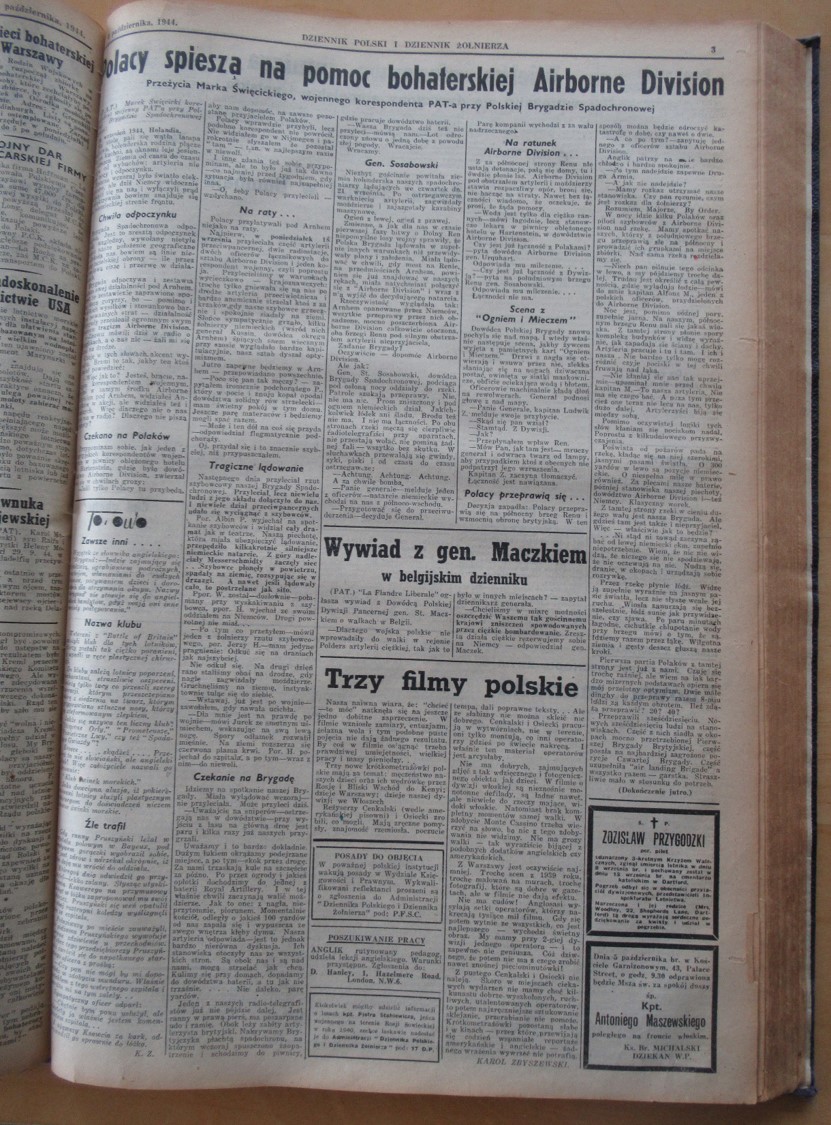
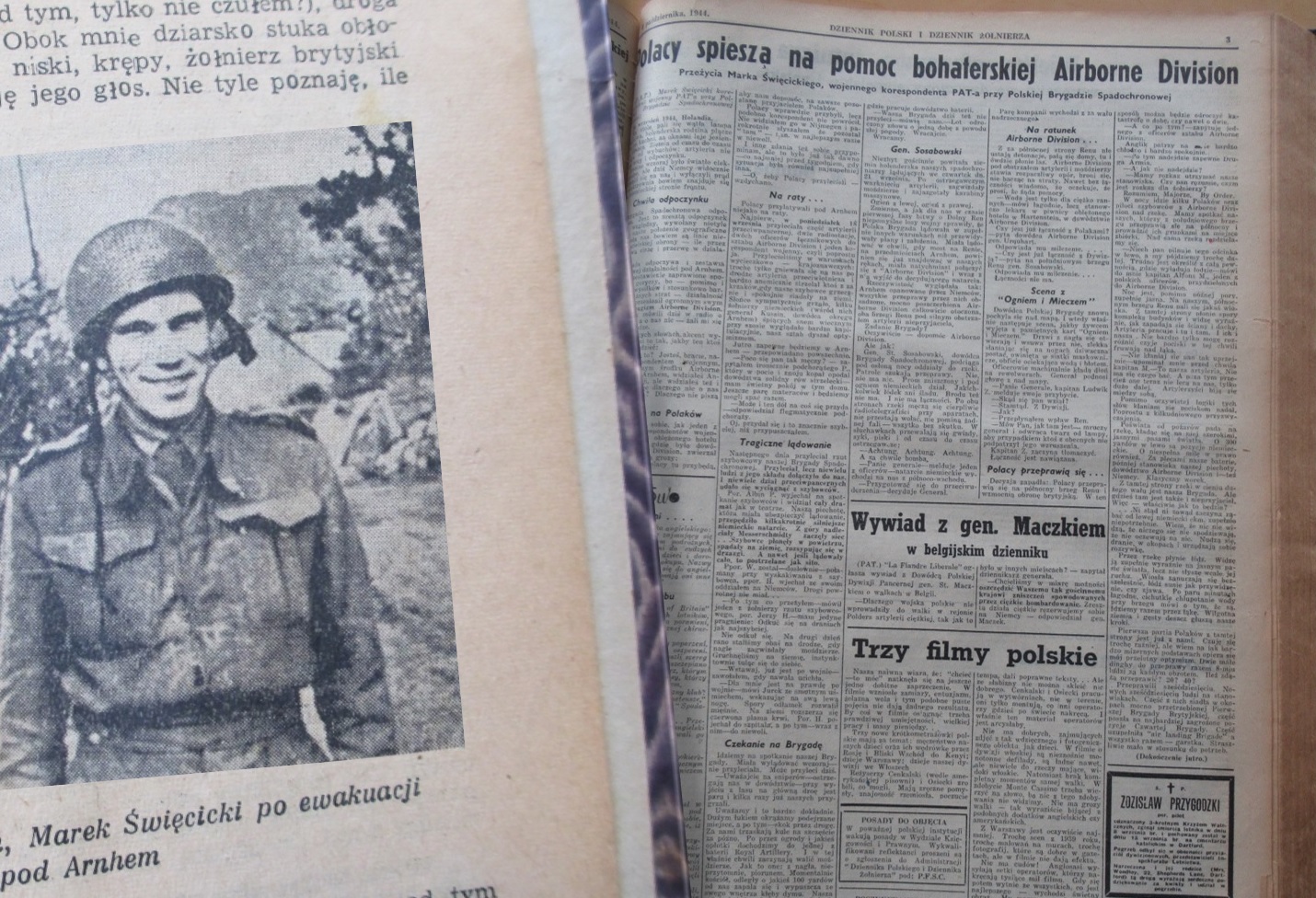
Marek Święcicki’s article in the Polish Diary and Soldiers Diary on the fighting at Arnhem, issue no. 234, October 3, 1944.
With the Red Devils at Arnhem
Marek Święcicki met with the 1st Independent Parachute Brigade before it flew to the Netherlands. He was one of the two war correspondents in the unit, along with Sergeant Cadet Eugeniusz Romiszewski. Contrary to him, he hadn’t had any parachuting training, so he got to the battlefield on the “Horsa” glider.
Since September 18, 1944, he accompanied Polish soldiers from the 1st Independent Parachute Brigade, including the anti-tank division. The rest of the brigade was on the other side of the Rhein river, from where the Allies tried to help the British divisions multiple times. Apart from being a meticulous observer of the events unfolding before him, he also delivered radio reports where he informed on the course of the fighting.
On September 25, he stayed with the British and Polish soldiers evacuated to the southern bank of the river. After he came back to England, he began releasing a novel in episodes on the pages of the Polish Daily and the Soldier’s Daily. The novel was titled With the Red Devils at Arnhem. In 1945, his reports were published as a whole book, published by the Culture and Press Division of the Polish 2nd Corps in Rome; they were also printed in English and Dutch versions.
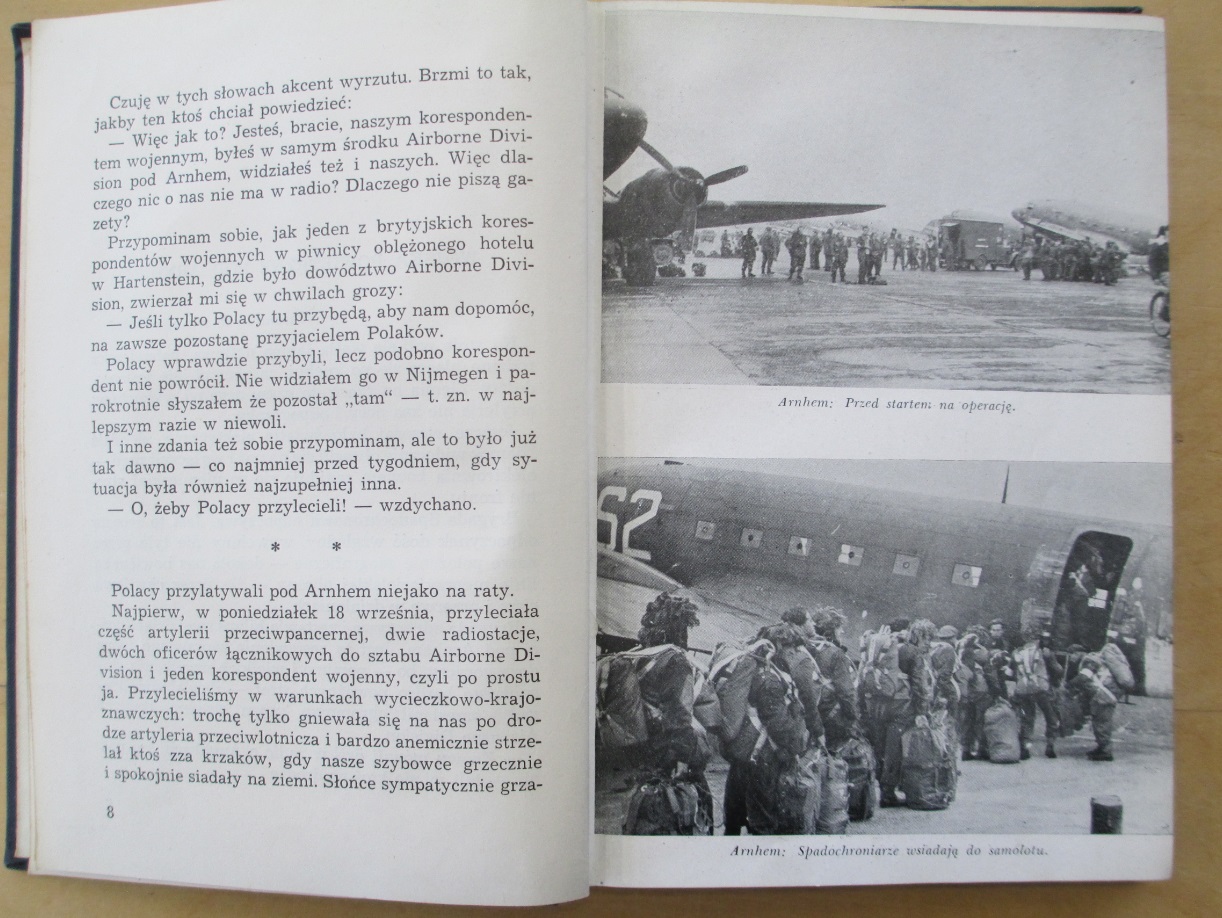
Pictures taken by M. Święcicki during Operation Market-Garden (from his book)
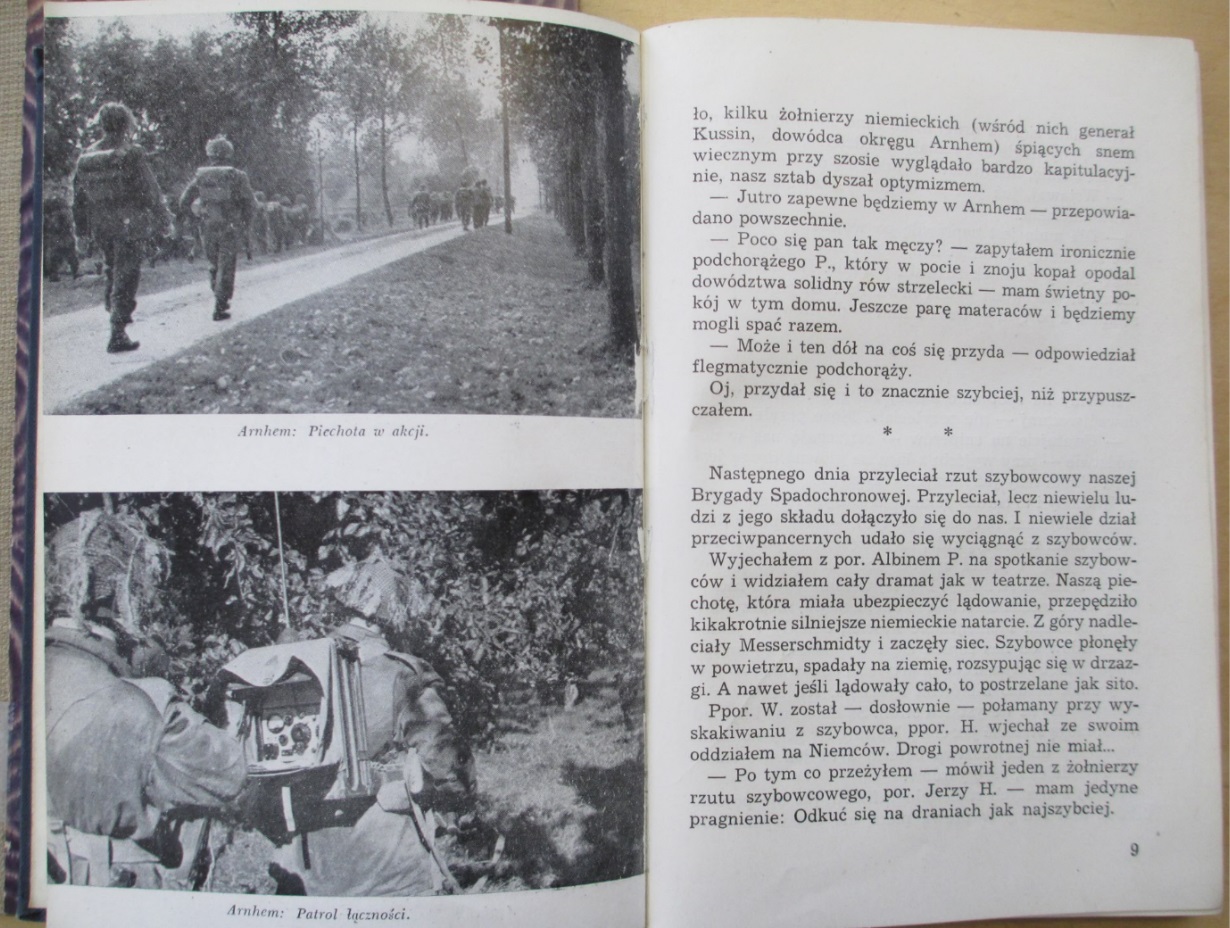
Pictures taken by M. Święcicki during Operation Market-Garden (from his book)
Since autumn 1944, he was a war correspondent in the Polish 2nd Corps led by Gen. Władysław Anders in the Apennines and Bologna campaigns. In April 1945, he entered Bologna as one of the of the first Polish journalists. Bologna was captured by the “Rud” Group, meaning troops led by Gen. Klemens Rudnicki. This part of his life brought two more books: “Seven rivers to Bologna” and “The Last Year of the War”. He became friends with Gen. Anders and his press officer, when the former served as the Supreme Commander of the Polish Armed Forces.
For his bravery, he was awarded the Cross of Valor and promoted to Second Lieutenant. During the war, he wrote about the Polish soldiers’ lives, their training and every day problems in Scotland and at various fronts. His articles were published in the following magazines: Nationalist (1940); Retribution (1941); Soldier’s Daily (1941-1943); Wings (1944-1945); Parade (1944); APW Soldier's Diary (1944-1945); Fighting Poland (1945); On the Borderlands Trail (1945), Polish Diary and Soldier's Diary (1944-1945).