
Since 1946, the western and southern borders of Poland were systematically filled with watchtowers, while the ground on the border line was harrowed and cleared of any trees and bushes. These security measures were there for two reasons: they made it harder for spies and agents to enter the country; but first and foremost, they were supposed to keep the Polish citizens from escaping.
The communist security services put the border areas under special operational supervision. They set up a wide network of informers, which comprised mostly of people who had broad means of observation.
Partially because of that reason, the communist security services put the border areas under special operational supervision. They set up a wide network of informers, which comprised mostly of people who had broad means of observation. These included drivers, railroad and forestry workers, fishermen, customs officers, but also citizens living near the border. Their main task was to inform the authorities on any cases of illegal crossings of the border or if anyone unfamiliar to them appeared in the neighbourhood.
Entry with a permit
That being said, the day to day reality of citizens living in the border zone, especially in the 1940s and 1950s, was not one of the easiest. The communists’ obsession with finding foreign agents and potential runaways brought with it even more restrictive measures. No one was allowed to own a camera in these areas, just as no one was allowed to take pictures without a permit. A special permit was also required in order to own a radio and a telephone, as well as homing-pigeons or dogs. The military marked cattle-watering spots and the river mouths were fenced off with barbed wires.
No one was allowed to own a camera in these areas, just as no one was allowed to take pictures without a permit. A special permit was also required in order to own a radio and a telephone.
Tourists and visitors coming to the border zone, naturally after having obtained an entry permit, were under constant surveillance. It has to be noted here, that only specific seaside beaches were made open to the public for rest and recreation. The military occupied some of them, while they simply closed off others. Tourists going to the border zone in the summer or winter seasons had to check in with the authorities, were forbidden from approaching the border line and all trip plans had to be presented to appropriate services.
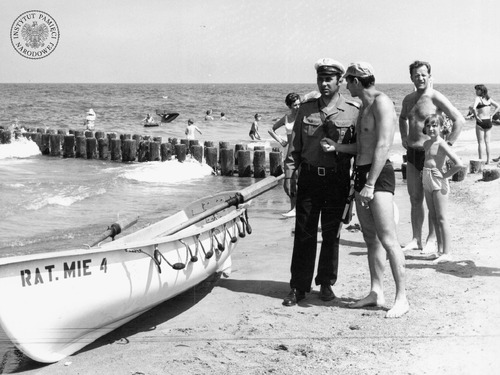
The photo shows an officer of the communist Citizens’ Militia having a conversation with a WOPR lifeguard. (IPN archives)
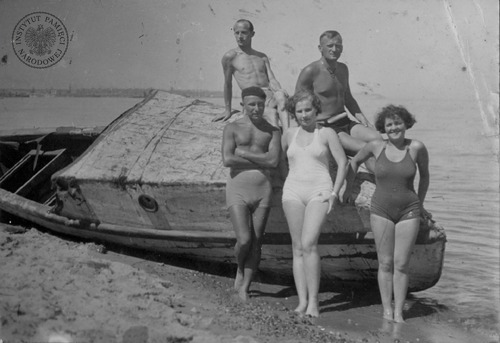
Beachgoers pose in bathing suits next to a boat at the Baltic Sea, pre-war period. (IPN archives)
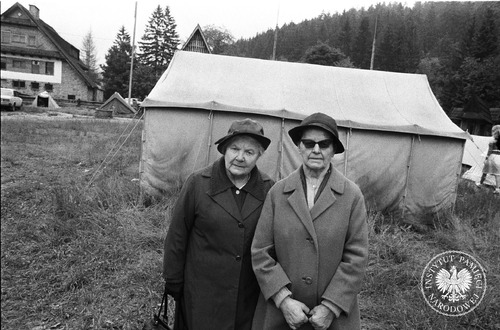
Two women at a resort in Wisła, in Beskid Śląski (photo from Jan Hausbrandt’s collection)
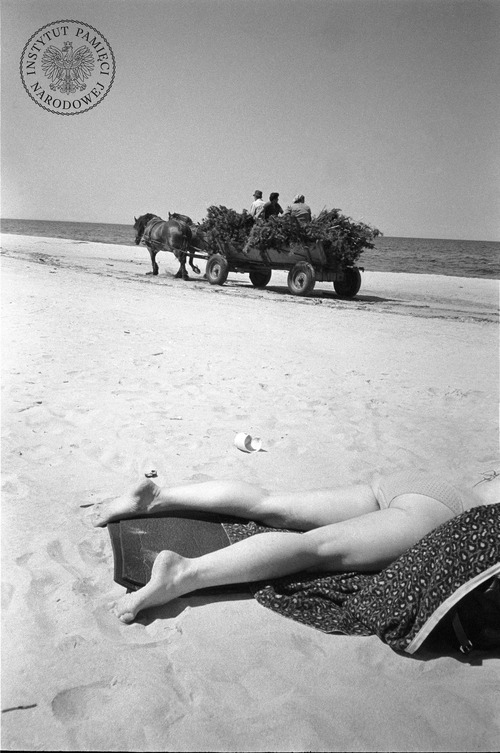
Beach in Sztutowo, the Baltic Sea (photo from Jan Hausbrandt’s collection)
Control of settling
To settle and purchase property in the border areas, the citizens had to get a special permit from the administrative authorities. Under the communist regime, to even get such a permit they also needed a positive decision from the Security Office. It was a way to control the process of settling, which was to prevent the “undesirable elements” from coming to the so-called “Recovered Territories”. The security services were also responsible for approving any sort of construction and renovation in the border zone.
The communist services and party officials used the border restrictions for their own goals. The most restrictive regulation was the law which allowed them to strip someone from the right to live there, connected with the seizing of property.
The communist services and party officials used the border restrictions for their own goals. The most restrictive regulation was the law which allowed them to strip someone from the right to live there, connected with the seizing of property. It often resulted in immediate, forced deportations. These affected the people deemed a threat to the security and order of the state. Most often, however, it was used as a tool against political opponents, undesirable elements with a troublesome past, but also those whose property was simply desired by the communists.
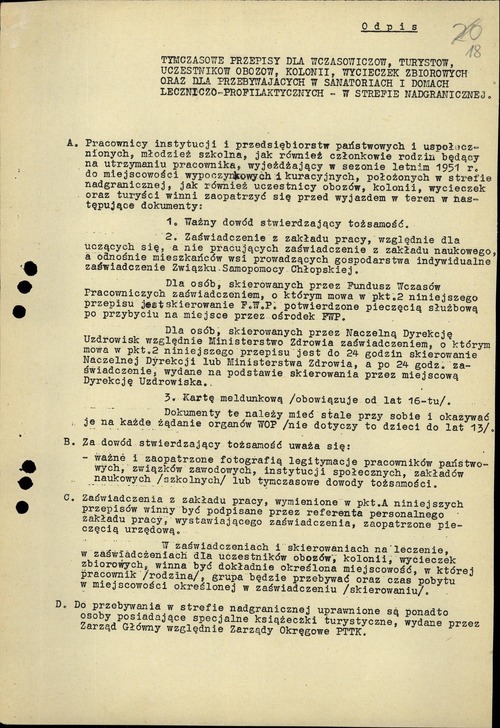
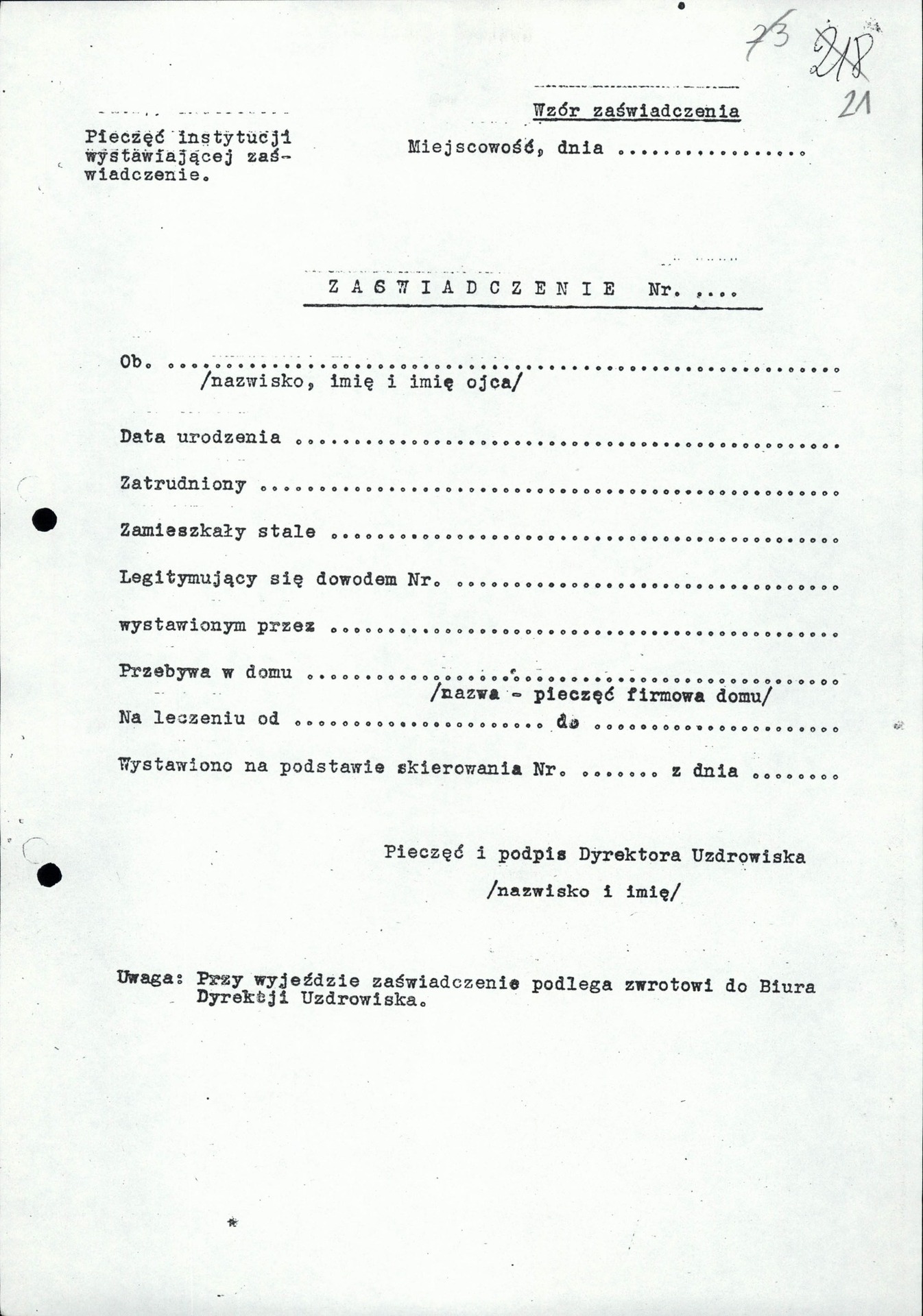
Temporary rules for tourists, camp participants, collective trips and those staying in sanatoriums and elderly homes near the border zone, issued by the communist Council of Ministers. June 16, 1951 (IPN archives). These include the need for several permits, IDs and tourist books, as well as list the restrictions of movement.
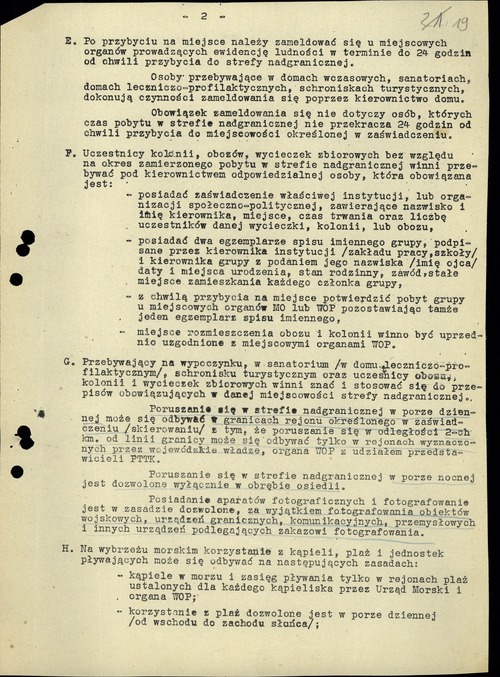
Temporary rules for tourists, camp participants, collective trips and those staying in sanatoriums and elderly homes near the border zone, issued by the communist Council of Ministers. June 16, 1951 (IPN archives). These include the need for several permits, IDs and tourist books, as well as list the restrictions of movement.
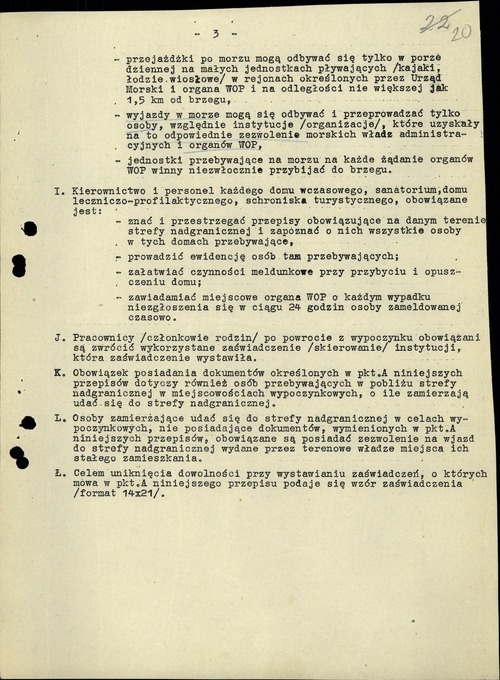
Temporary rules for tourists, camp participants, collective trips and those staying in sanatoriums and elderly homes near the border zone, issued by the communist Council of Ministers. June 16, 1951 (IPN archives). These include the need for several permits, IDs and tourist books, as well as list the restrictions of movement.
* * *
The aforementioned bans, rules and restrictions on the border zone made living there extremely difficult. Normal visits from relatives from other parts of the country were never just regular trips but “expeditions”, which had to be preceded by the acquiring of dozens of permits.
A fishing trip, mushroom picking or hunting required a report to the Border Protection Troops. The methods used by the communist services, and especially their scope, drastically destabilised the lives of Polish citizens living there, but also scared off any potential settlers and tourists.