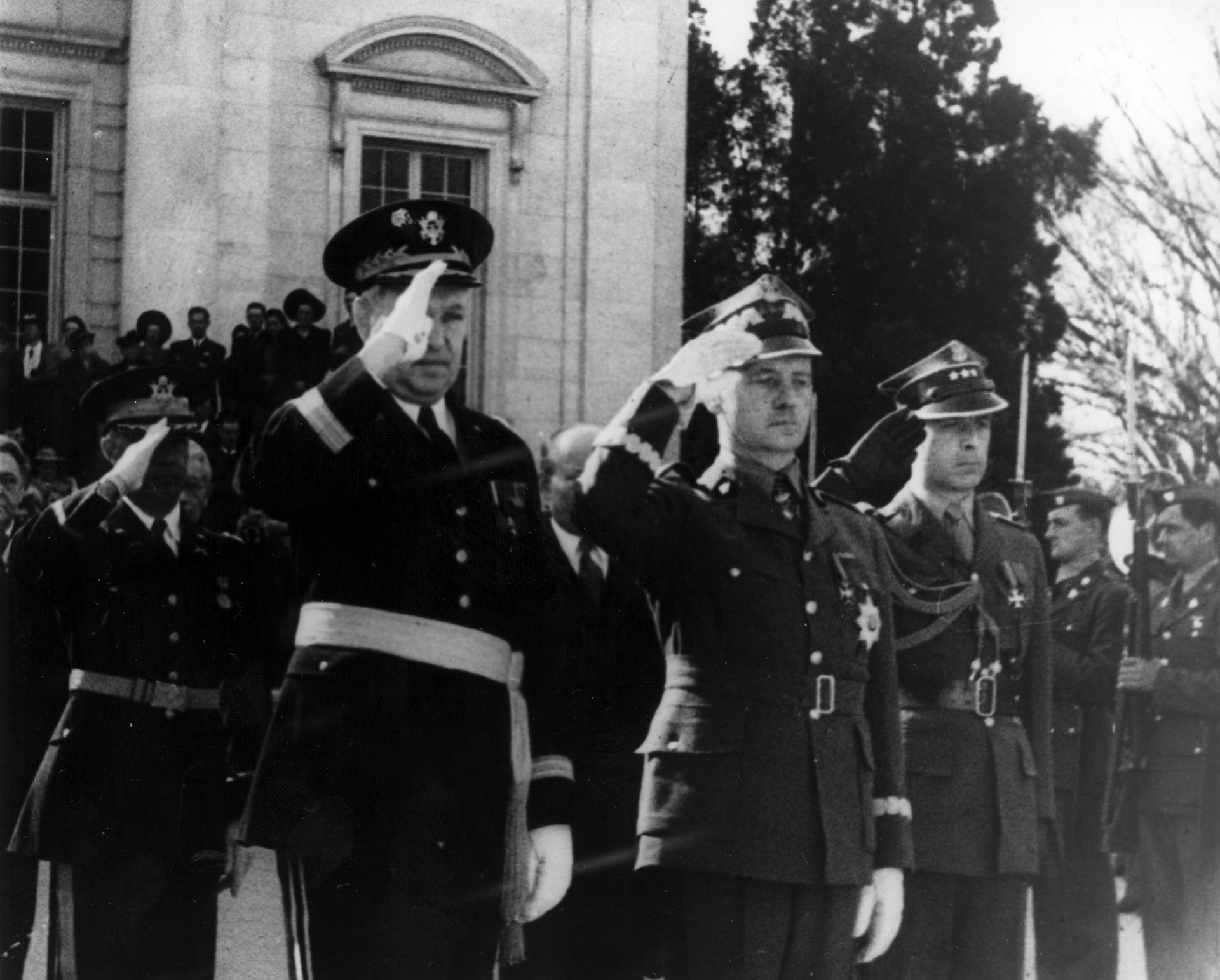
In the first years of the war, Polish citizens in the occupied country and abroad, desperately needed hope. Despite the difficult situation, they counted on the quick end to the war and subsequent peace. Every good piece of information, in the overabundance of the tragic ones, was like gold. More and more victories of the Third Reich and its allies, like the conquest of the Netherlands, Belgium and France in the year 1940, brought even more sorrow, sadness and despair to Poles.
Polish citizens under the German and Soviet occupation, who experienced a whole range of repressions, waited impatiently for the terror to end. Meanwhile, far and away from the homeland, Polish civilians and soldiers of the Polish Armed Forces, counted on the quick return to Europe and the opportunity to fight for their country’s freedom.
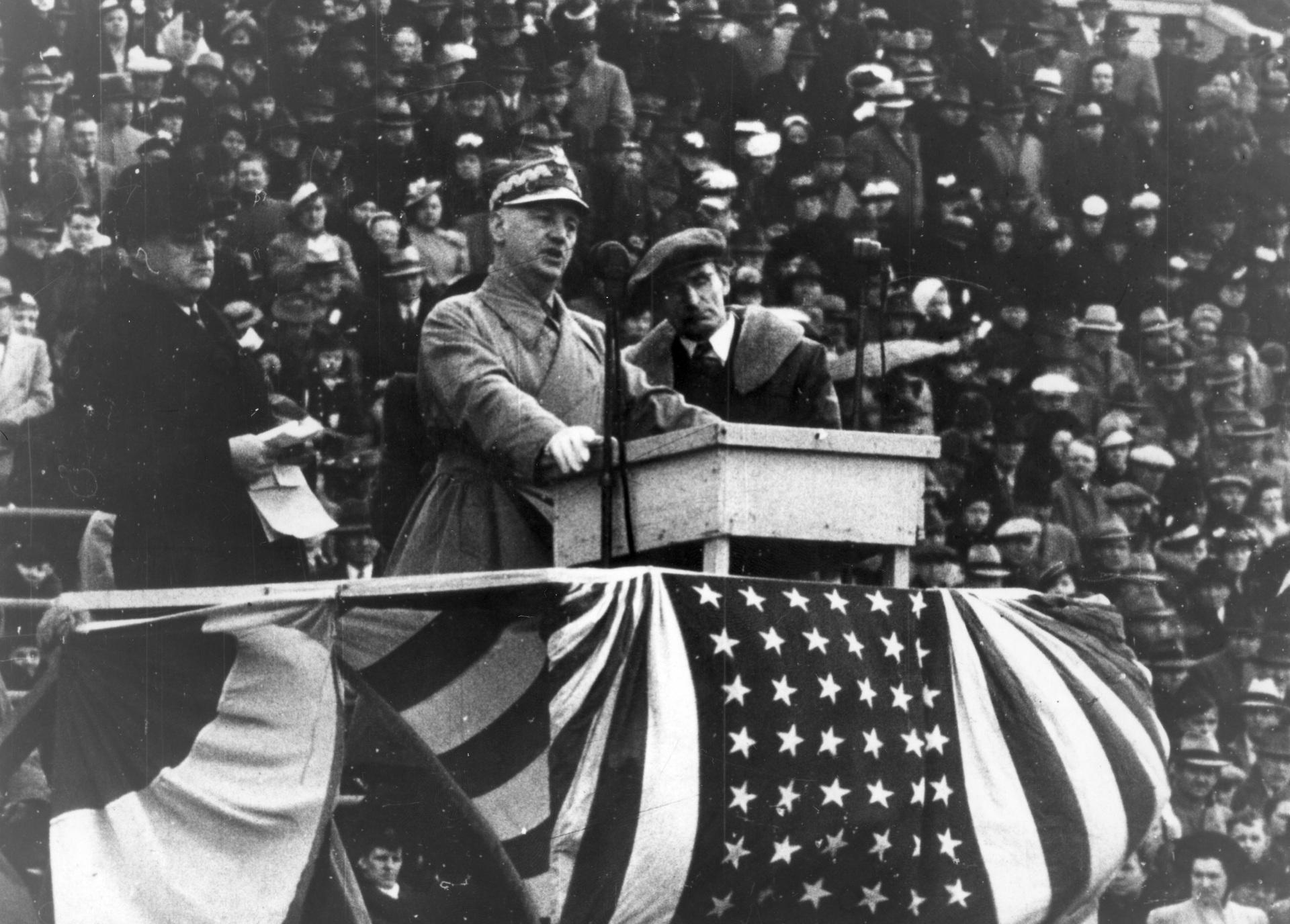
Speech by Poland’s Supreme Commander, Gen. Władysław Sikorski, in the United States, in 1941. Photo: National Digital Archives
Polish citizens in the country and in emigration had high hopes when it came to one of the biggest military mights in the world joining the war: the United States. Their hopes came true only after the Japanese air attack on December 7, 1941, on one of the most important U.S. air force and navy bases in Pearl Harbour, Hawaii. On December 11, 1941, the Third Reich and Italy backed the Japanese. As a result, the United States declared war also on the two European nations.
Polish hopes directed to the Americans
The news of the U.S. joining the war was long awaited by the soldiers of the Polish Armed Forces, stationed i.e. in the United Kingdom, the Soviet Union and the Middle East. They commented the news often and tried to predict the future. But, first and foremost, they waited for concrete American actions, leading to the Third Reich’s and their allies’ defeat.
The Polish emigration authorities lobbied for the good will of the U.S. officials since the very beginning of the war. Between March and April of 1941, Polish Supreme Commander, Gen. Władysław Sikorski came to the United States and met with president Franklin Delano Roosevelt and the Polish diaspora. A year later, Gen. Sikorski also visited North America. He again spoke with the U.S. president, but this time they both represented Allied countries taking an active part in the war.
One of the most famous American generals, Gen. George S. Patton, said the following after visiting the 2. Polish Corps: “Polish troops are the best-looking troops, including British and American, that I have ever seen.”
A few weeks before the Supreme Commander’s arrival, on the night of January 28, 1942, American radio stations broadcast the speech by Franklin D. Roosevelt addressed to the Polish nation. He began his speech with underlining the difficult civilian situation in the country, especially of children, who were deprived of the means of proper physical and mental development. Later, Roosevelt reassured his listeners that the United States would use all of its strength and capabilities to make Poland free again. The U.S. president promised military, political, material and moral support. He was also impressed by the underground resistance movements in occupied Poland and commended the heroism and sacrifice of Polish women. Roosevelt’s speech included a very fitting phrase:
“Democracy must restore freedom to Poland!”
Poland’s Supreme Commander visited the United States for the third time between November and December 1942 and stayed there until January 1943. It was his last visit to the U.S. One of the issues of the Towards Independent Poland daily bulletin, from January 20, 1942, included an article on the Supreme Commander’s visit to the U.S. and Mexico, which was available i.e. for Polish soldiers stationed in the Middle East. For them, the following words by Gen. Sikorski were especially significant:
“As a result of my conversations, the Polish-American military cooperation became even tighter. My visit to America gave me an opportunity to see with my own eyes the huge warfare potential of the United States. America’s war production and its results surprised me greatly. I am certain, it will lead to total defeat of all the countries which stand against democracy.”
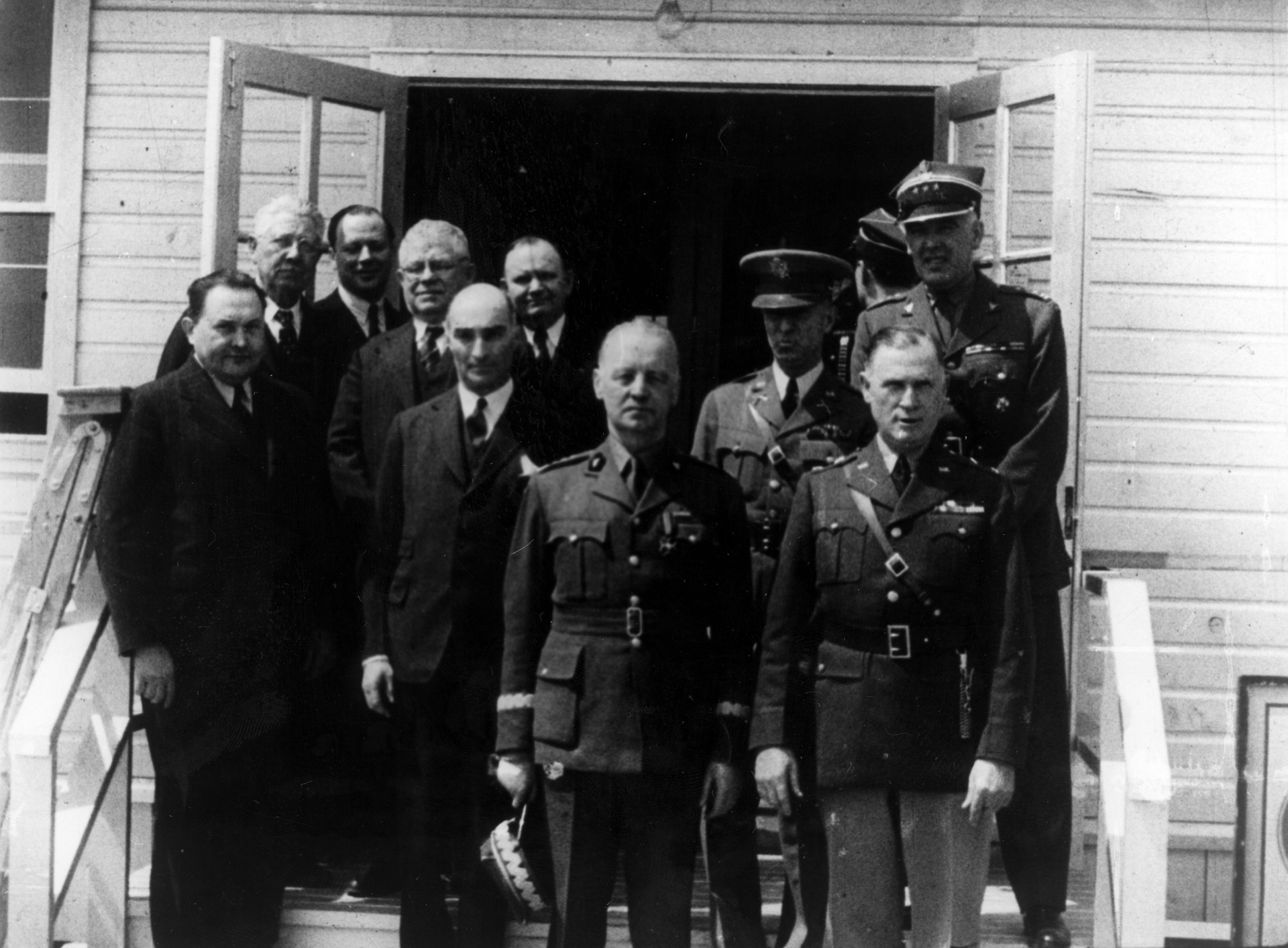
Gen. Władysław Sikorski’s visit to the United States, in 1941. Photo: National Digital Archives
U.S. Flag Day in 1942
To emphasise the good state of the Polish-American alliance, on June 14, 1942, on U.S. Flag Day, the Supreme Commander ordered the Polish Armed Forces to hold official celebrations. For example, all units stationed in the Middle East raised American flags (next to Polish flags) during the morning roll call, with ceremonial guards. During the ceremonies, the company soldiers presented arms, while the trumpeters played the Polish Army anthem. The Supreme Commander’s order was read aloud at the end of the ceremonies:
“Soldiers of the Republic of Poland! On June 14, the great American nation is celebrating the day of its standard. The Stripe and Stars of the United States of America is a proud symbol of victory, and currently, in this fateful time, it symbolises the relentless effort of 26 nations for their own independence and the freedom of man. It became the expression of freedom, described so beautifully by president Roosevelt when he spoke on the freedom of thought and expression, the freedom of faith and religion, freedom from misery, fear and terror. […] Today, the Polish flag flies proudly and honourably next to the U.S. Stars and Stripes, as a symbol of Immortal and Indomitable Poland fighting among the Allied nations. So, in the name of the unbreakable friendship between Poland and the United States, as a symbol of unwavering will to fight together until the total annihilation of our common enemy, let their standard fly on the Polish masts. The Polish Armed Forces will present their arms in front of it, while the trumpeters will play the Polish Army anthem when it is raised. Let our hearts beat together with the heartbeats of the noble American nation. May our beautiful traditions of fighting for one and undivided freedom shine the light on the Way of the Cross of the Polish nation, as the unmistakable forecast of its liberation and better, more just future.”

Meeting between Poland’s Supreme Commander Władysław Sikorski and representatives of Polish-American diaspora. Photo: National Digital Archives
Beginning of a shared path
In the following years of the Second World War, Polish and American soldiers often fought together against the German forces on various fronts, i.e. in Italy. Their common goal was to defeat the Third Reich and its allies. The soldiers of the Polish Armed Forces often gained the respect of their American colleagues with their bravery, devotion and sacrifice. One of the most famous American generals, Gen. George S. Patton, said the following after visiting the 2. Polish Corps:
“Polish troops are the best-looking troops, including British and American, that I have ever seen.”