The communist elites were split on this decision. Zdzisław Sadowski and even Messner himself voiced their concerns, but Jaruzelski held his ground.
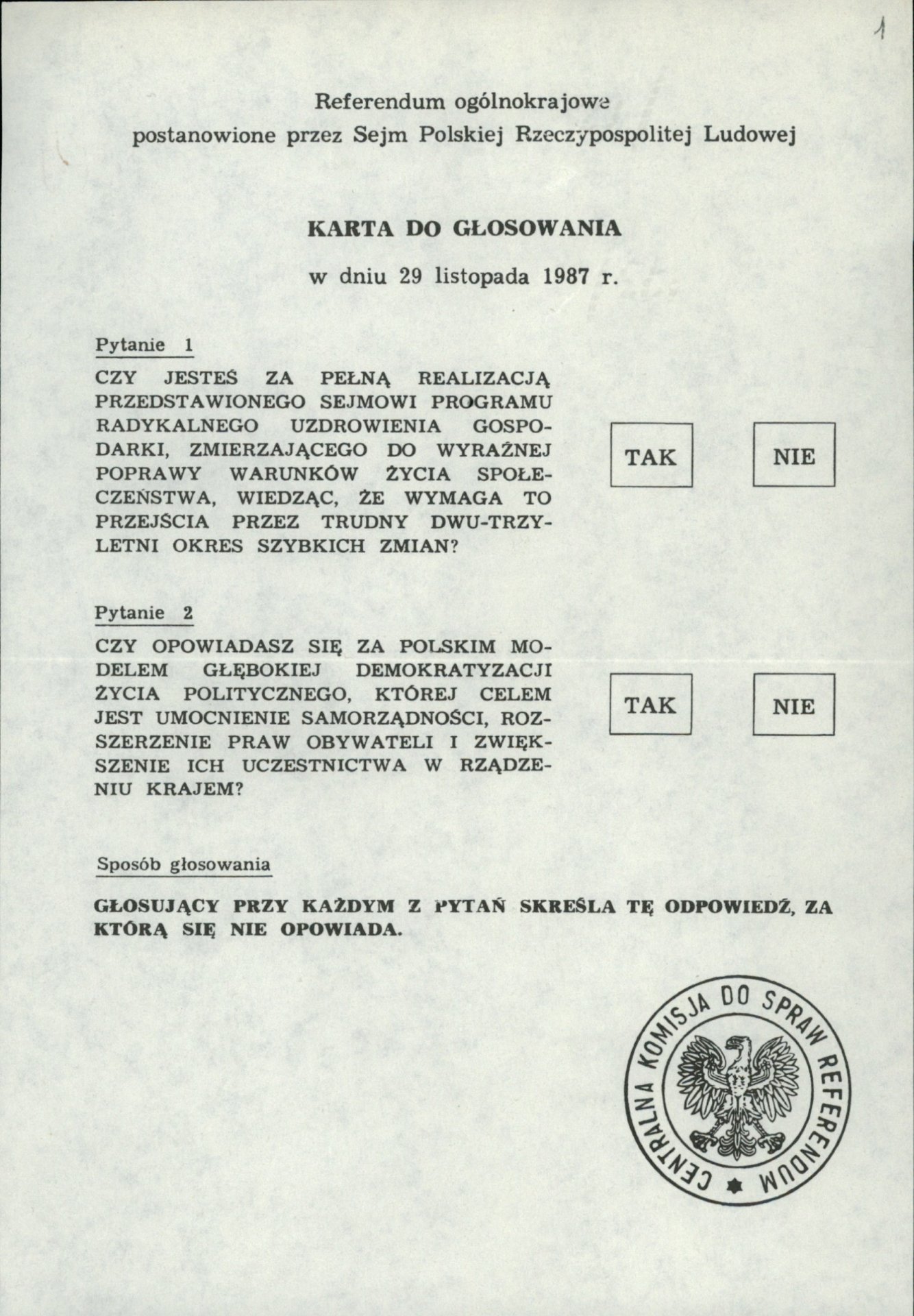
Are you in favour…
Communist propaganda portrayed the referendum as ideal medicine for any problems in the Polish People’s Republic. In principle, the wise and reserved authorities were to closely listen to the voice of the citizens, asking their opinion on how to solve the economic dilemmas seen as crucial for the future of the entire society. In reality, this was nothing but smoke and mirrors. All of it took place under the close supervision of General Wojciech Jaruzelski. He accepted the final version of the questions in the referendum on November 5, 1987, so only 24 days before the day of voting.
These were the final questions:
“1. Are you in favour of the full implementation of the program presented to the Sejm [lower house of parliament] on the radical recovery of the economy, leading to the clear improvement of living standards, knowing that it would require going through a difficult, two to three-year period of swift changes?;
2. Are you in favour of the Polish model of deep democratisation of politics aimed at strengthening self-governance, widening citizens’ rights and their inclusion in running the country?”
It’s difficult not to view these questions as confusing and seemingly purely rhetorical.
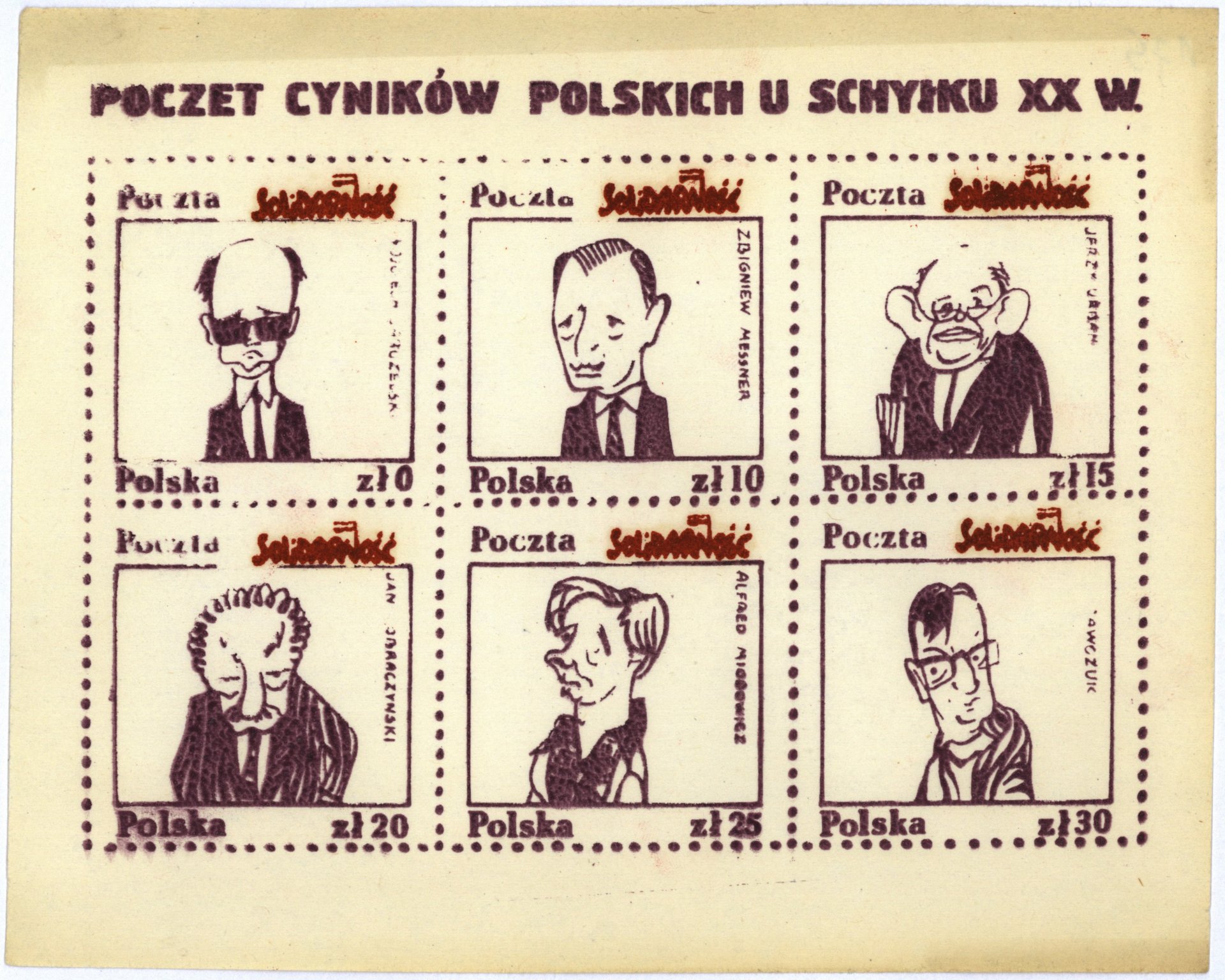
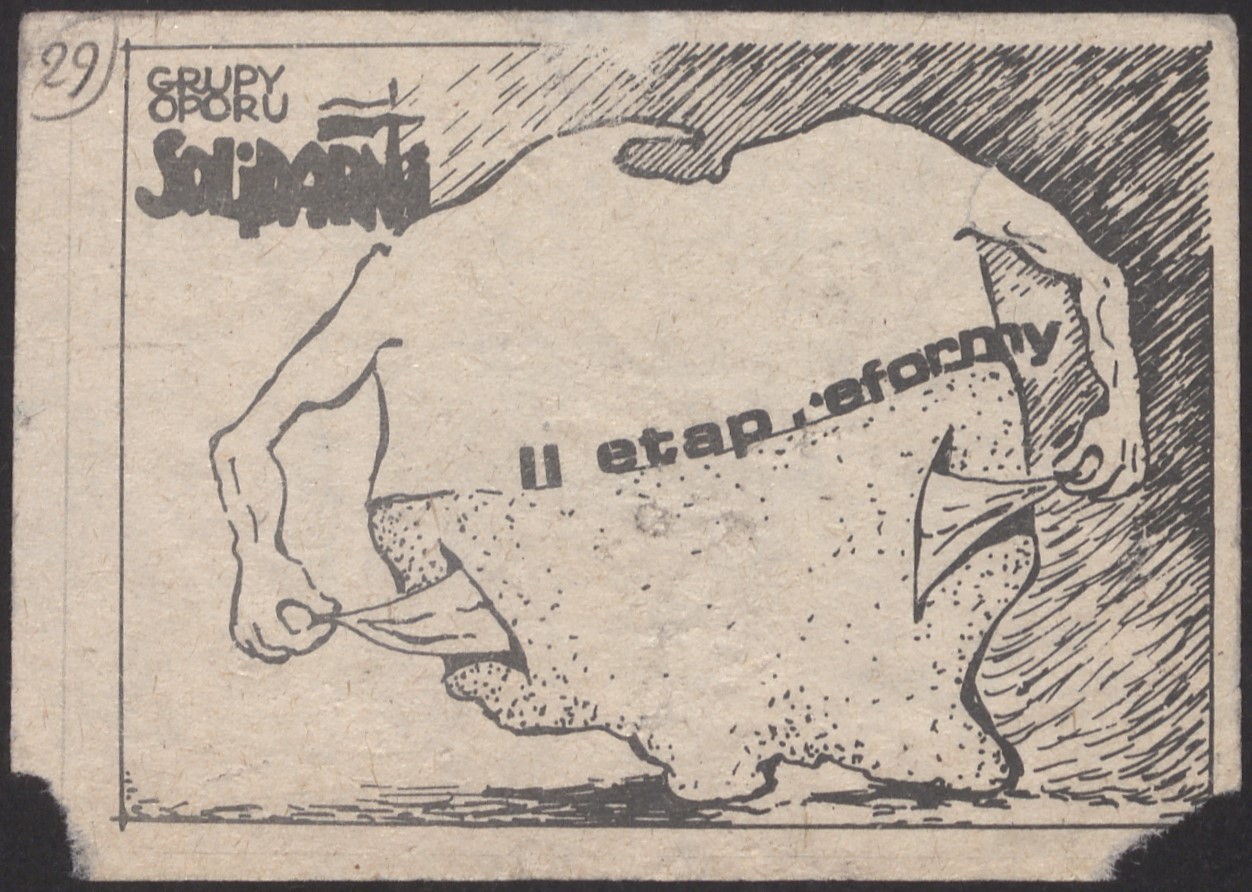
Stamps (from the anti-communist underground) from the series “Group of Polish cynics at the end of the 20th Century.” From the collections of the Institute of National Remembrance (from the Sławomir Lener collection)
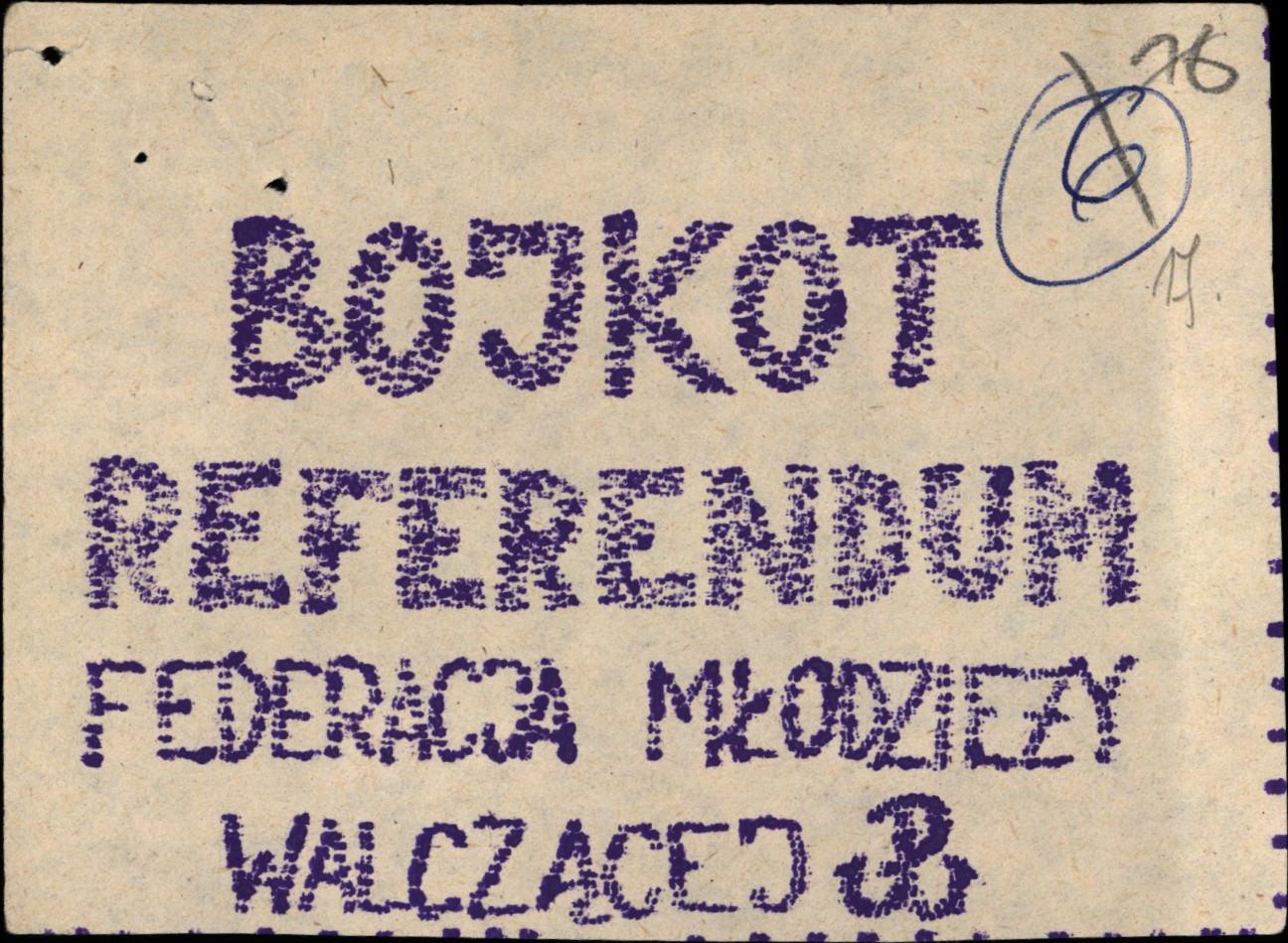
From the operational materials of the Ministry of Internal Affairs of the Polish People's Republic collected as part of the case codename “Forum” (concerning the operational security of the preparations and conduct of the referendum on November 29, 1987). From the collections of the Institute of National Remembrance
From the collections of the Institute of National Remembrance (from the collection of Czesław Butkiewicz - posters and prints signed by NSZZ Solidarity and NZS)
No one believes in anything
How did these actions of the communist authorities resonate with Poles?
“I’m going around listening to what people are saying about this referendum. They’re either laughing at it or strongly stating they’re not going to participate. No one believes in anything, and they’re only afraid of what this so-called reform is going to do. The mood is gloomy, no one is smiling. The only <<optimism>> is on the radio and in television, and it’s as false and untrue as everything the authorities are putting out.”
This was a comment from an elderly woman in the end of October. A few weeks later, the accountant from Warsaw had no doubts on what the planned political event would bring:
“The economic-political situation is terrible, we will have a referendum on November 29, 1987, which will decide on our poverty for at least the next five years.”
In this light, it’s hard not to assume that many Poles ignored the optimistic propaganda on the referendum. Instead of internalising the emotions the authorities tried to instil in the society: enthusiasm, optimism, sense of agency and hope for change in the future, the people reacted with lack of belief. It does not mean, however, that Poles did not mobilise at all. Instead, they reacted in a way that the authorities did not expect.
Why should I buy something for a bigger price?
“The authorities and I hadn’t predicted that people could support the program but also come up with their own, practical conclusions. When they read that prices are to drastically increase, they immediately rushed to clear out store shelves, especially the permanent products: washing machines, refrigerators etc. (…) The fact that I hadn’t seen that coming was a massive mistake on my part as the economy minister.”
That’s the account from deputy prime minister Zdzisław Sadowski. The phenomenon he described was confirmed by other accounts in the micro scale. Here is a page from a journal from the end of October 1987:
“I once again bought two kilograms of sugar, two of flour and a kilogram of potato flour. Why would I buy something later for a bigger price?… As it turns out, our times create small-time profiteers.”
This situation lasted until the end of January 1988.
“There is no toilet paper available anymore. They don’t even exchange it for waste paper. There’s no meat. It’s never-ending, poor improvisation.”
This was noted in a diary by author Jan Józef Szczepański.
The moment the scale of the increase of prices was revealed, announced with a public service message in the main edition of the Television Journal on January 30, 1988, those who went shopping beforehand were the lucky ones.
“They’re announcing an increase in prices to start on February 1, and it’s frightening by how much (…) No wonder that the store shelves have been cleaned out.”
That’s the description from one of the diaries.
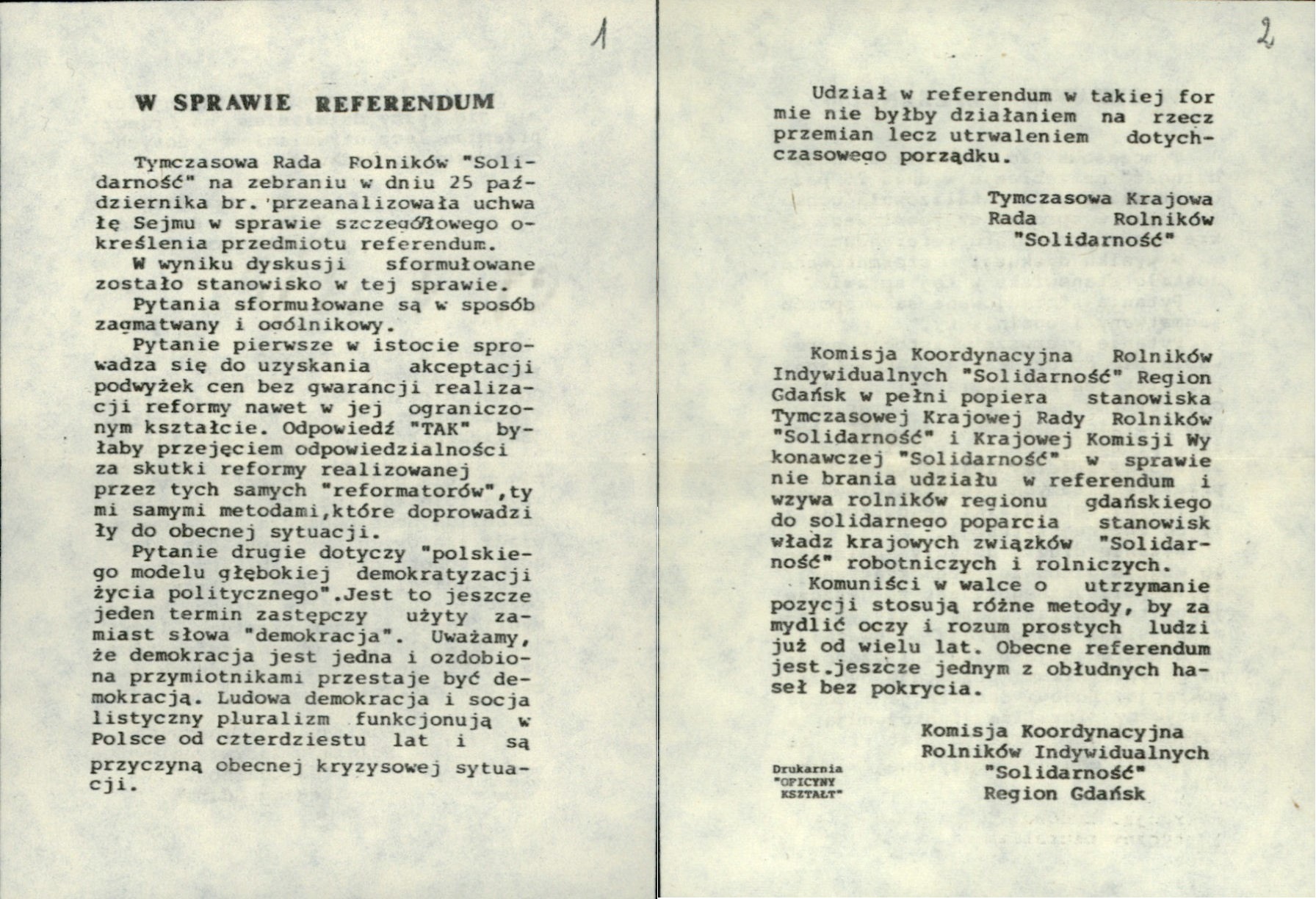
Leaflet with the position of the Provisional National Council of Farmers Solidarity and the Coordination Commission of Individual Farmers Solidarity Gdańsk Region concerning the referendum. From the collections of the Institute of National Remembrance (from the collection of Bożena Malinowska)
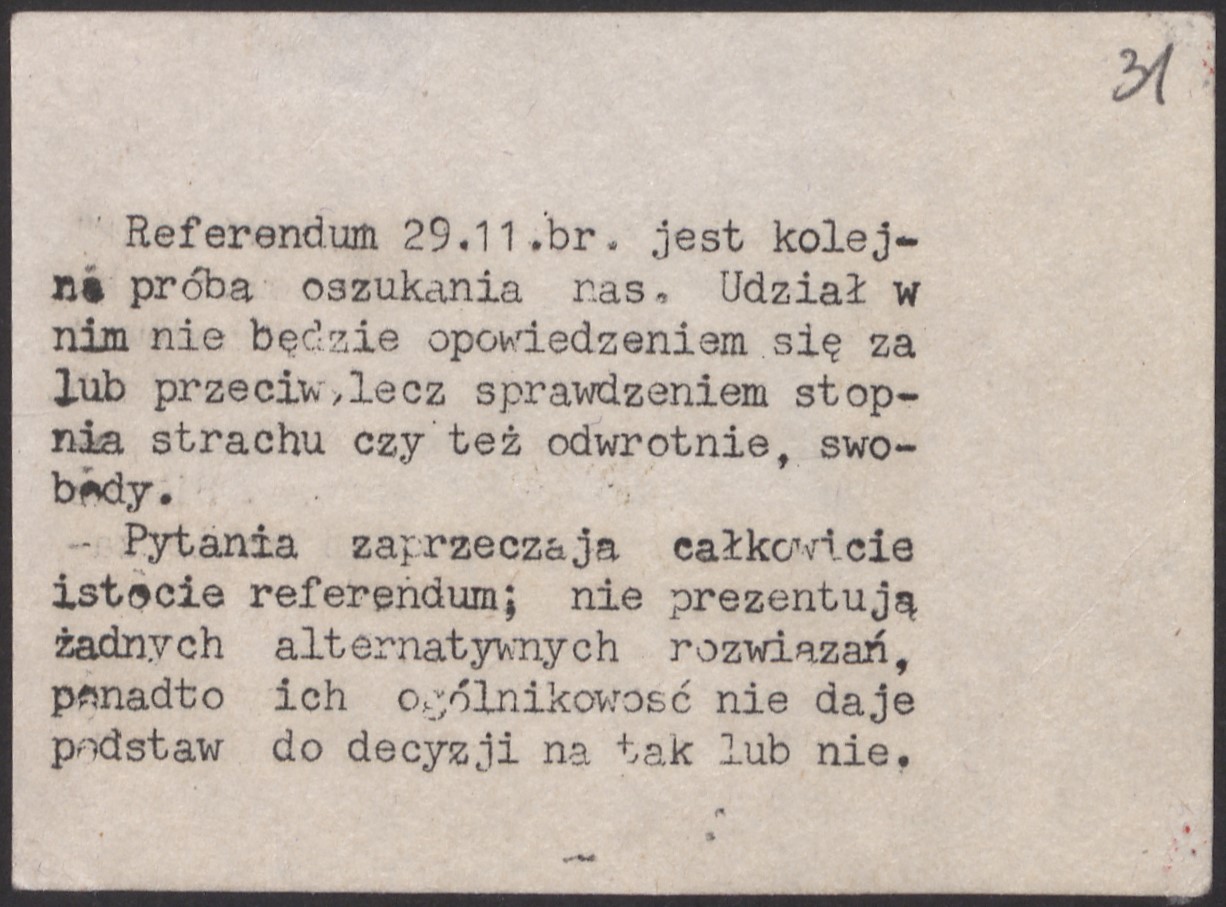
...The questions completely contradict the essence of the referendum... From the collections of the Institute of National Remembrance (from the collection of Czesław Butkiewicz - posters and prints signed by NSZZ Solidarity and NZS)
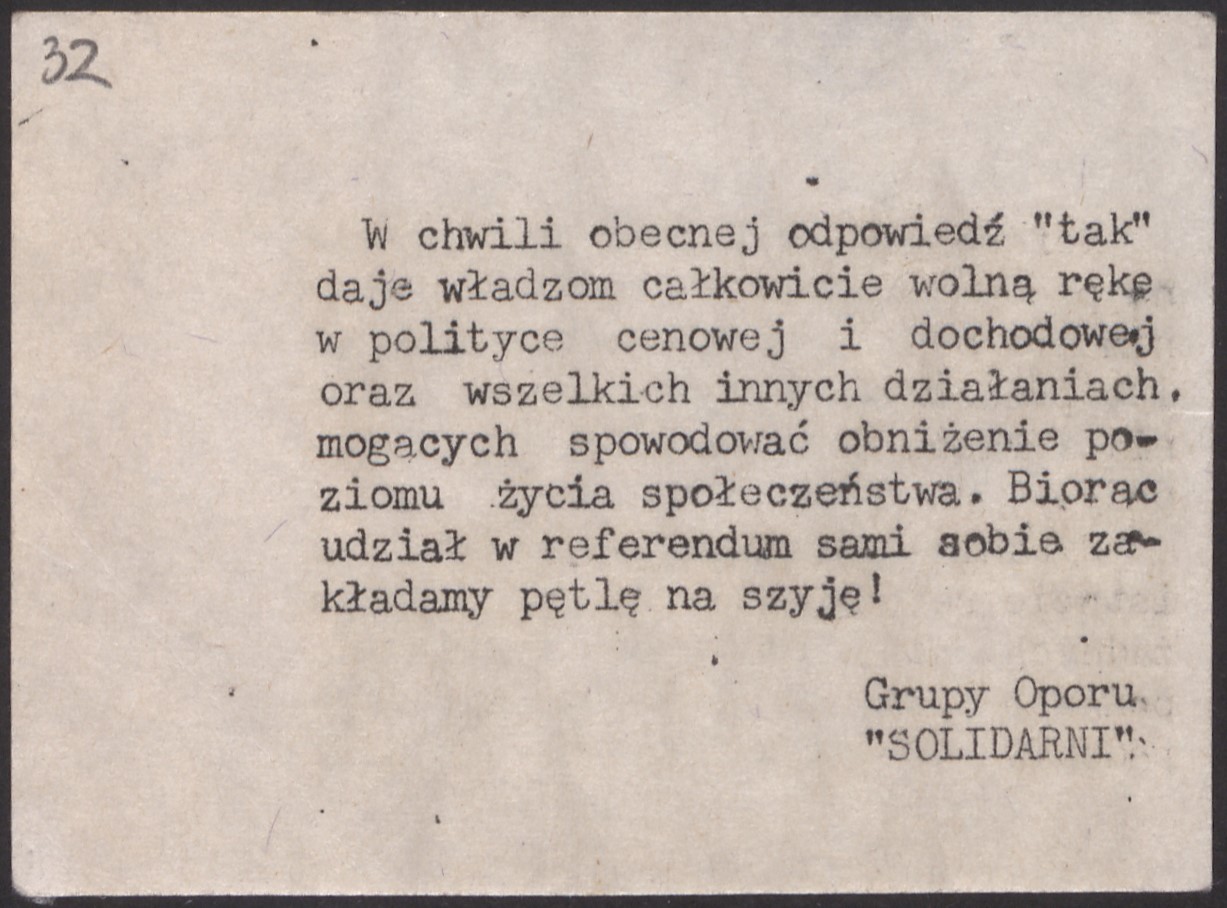
...By taking part in the referendum, we are putting a noose around our own necks! From the collections of the Institute of National Remembrance (from the collection of Czesław Butkiewicz - posters and prints signed by NSZZ Solidarity and NZS)
Strategy: distrust
The accounts from the time of the November 1987 referendum confirm the tried and tested strategy of reacting to any new government initiatives with distrust. It went so far that the public reacted in a completely opposite way to what the communist authorities predicted would happen. It’s difficult to clearly interpret the result of the referendum as well, which was also entirely different than what the authorities expected. According to official data, the turnout was 67.3%, which is also the lowest turnout in the history of the Polish People’s Republic. 66.04% responded in favour to the first question, while 69.03% did so to the second one. However, since the referendum act required a majority of over 50% of eligible voters, it turned out that 44.28% of eligible voters answered “yes” to the first question, and 46.29% to the second. This meant that, from a legal perspective, the referendum was not binding. This was an outright embarrassment. It's no wonder Antoni Dudek wrote about a “Pyrrhic referendum.”
“Contrary to expectations, the result of the referendum was unfavourable,” one diarist noted. “On Saturday, the Sejm will debate on the matter, and there will be a meeting of the Central Committee. We expect profound changes, both economic and political. Society is very depressed and sad, because there is no reason to rejoice. Prices are expected to rise by an average of 100%, a trifle!”
The political changes introduced as a result of the referendum were limited in scope, essentially limited to the appointment of Mieczysław Rakowski to the Politburo, and he could hardly be considered a new face in national politics. Something else was more substantial. The communist authorities failed, even though they had independently, of their own volition, created precisely this platform for affirming public support. The disastrous impression, deepening the disbelief in the authorities' intentions and cementing distrust towards them, led to them dismissing the results of the referendum. The authorities made no attempt to rebuild public trust. It's hardly surprising, then, that bitterness, disbelief, and a sense of disappointment prevailed.
That was an account from the host of Television Journal, Marek Tumanowicz, from the beginning of January 1988, commenting on the attempts to start a public debate on the changes to the electoral law for national councils. It’s hardly surprising, though, that Poles were not interested in dialogue when it looked like nothing else than smoke and mirrors. While the world was in awe of Mikhail Gorbachev and his bestselling book on the reforms of the Soviet Union, it was a hopeless January 1988 for the people living by the Vistula river.
“There's no 'Perestroika' in sight, and it looks less and less likely that there will be one, neither in Russia nor here,”
noted a retiree from Warsaw.
Historians dealing with politics have repeatedly emphasised the significance of the referendum's defeat for Wojciech Jaruzelski's dictatorship, sometimes calling it a turning point. As Jan Skórzyński wrote:
“The communists, having failed to secure approval for their systemic reform projects, also lost a kind of vote of confidence.”
Poles certainly refused to vote of confidence in Jaruzelski, although one could still question whether this event can be seen as a major turning point.
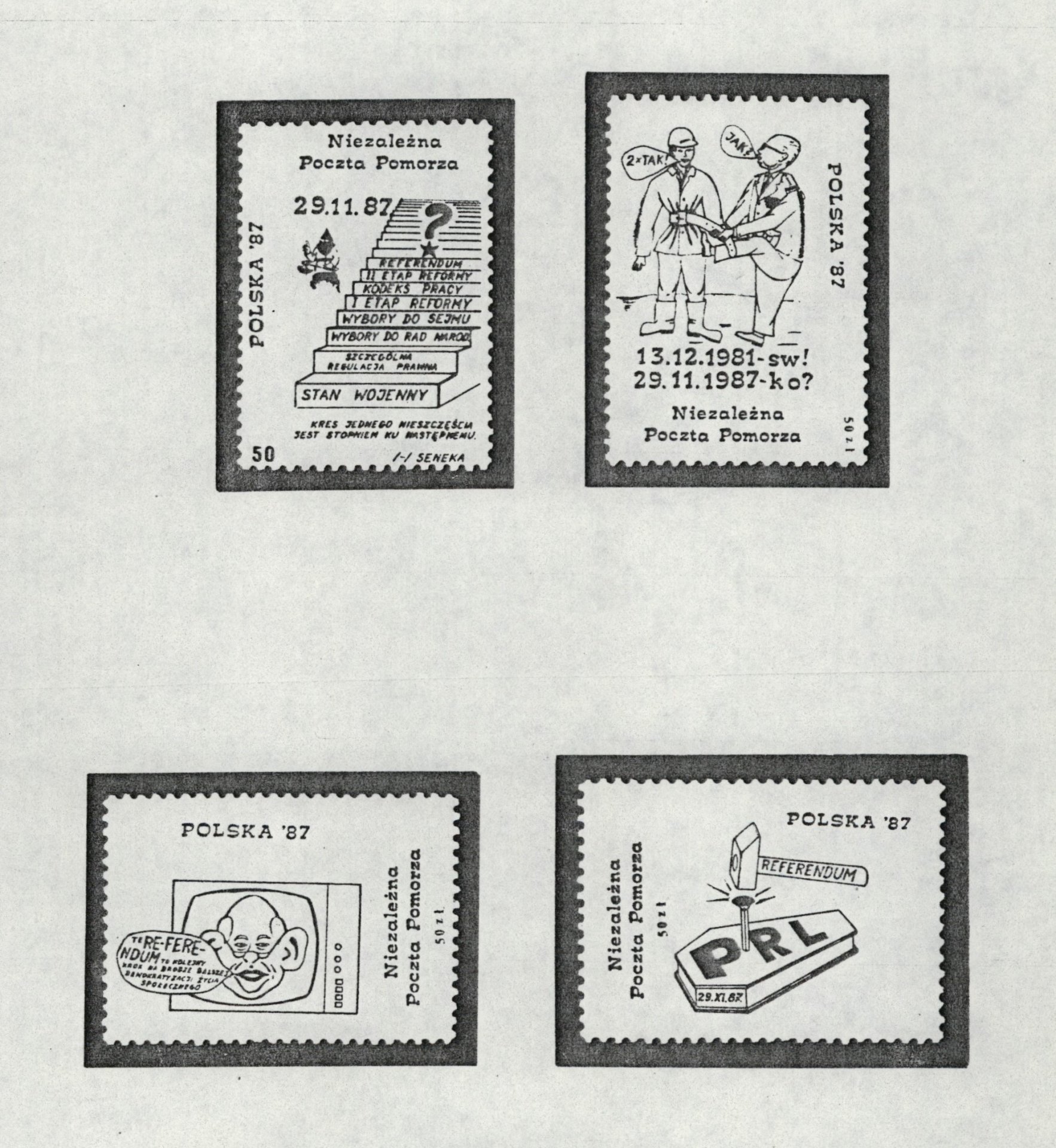
From... administrative materials collected by the Ministry of Internal Affairs of the Polish People's Republic in connection with the referendum of November 29, 1987, on the second stage of the reform. From the Institute of National Remembrance collection
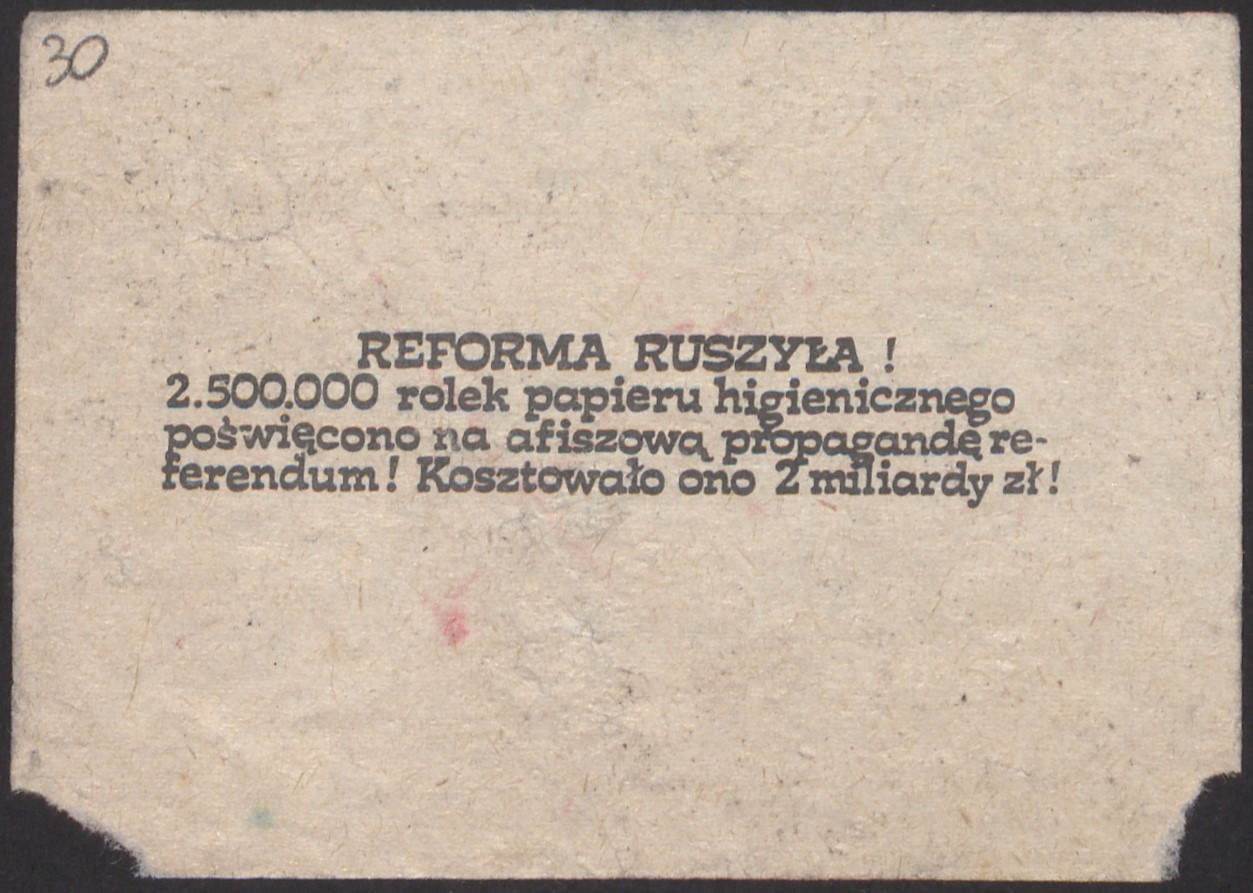
Toilet paper and Jaruzelski's referendum. From the collections of the Institute of National Remembrance (from the collection of Czesław Butkiewicz - posters and prints signed by NSZZ Solidarity and NZS)